Floating solar farms are shaking up energy markets worldwide. These water-based panels deliver 10% higher efficiency than land installations while slashing installation costs. The tech also cuts water evaporation by 70% and creates fish habitats—not bad for a power plant. With a projected market boom to $54 billion by 2032 and 30% annual growth, traditional energy producers are sweating. China and Japan already dominate, but the ripples are just starting to spread.
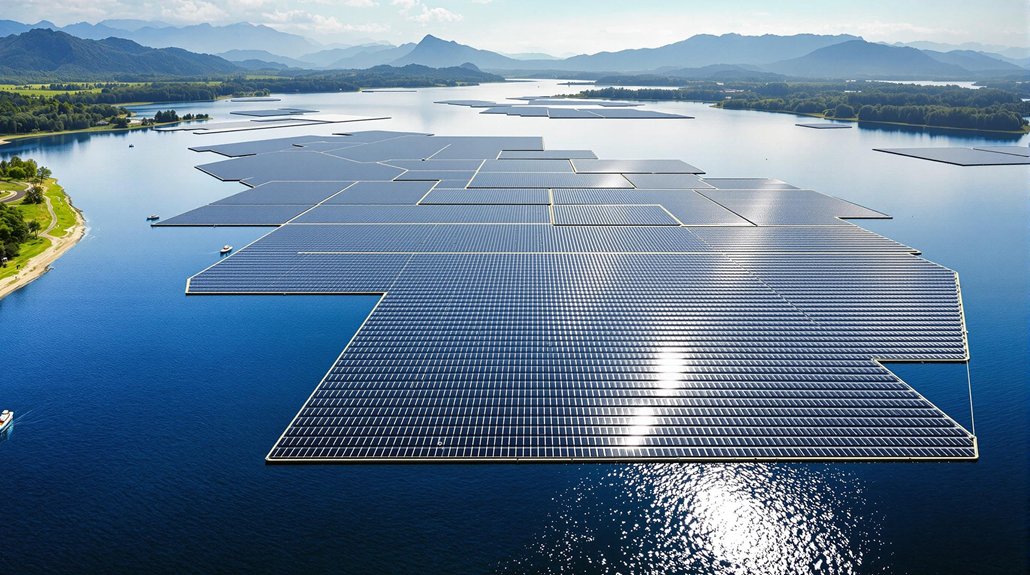
While traditional solar farms consume vast stretches of land, a revolutionary concept is making waves across the global energy sector. Floating solar farms—photovoltaic panels mounted on water bodies—are turning unused aquatic surfaces into power-generating goldmines. No competing with agriculture for land. No clearing forests. Just slap some panels on water and watch the magic happen.
The tech is pretty clever. These aren’t just regular panels getting their feet wet. They’re specially designed floating structures that resist waves and corrosion. And here’s the kicker—water actually makes them work better. The cooling effect boosts efficiency by about 10%. Who knew panels liked to swim?
Panels that splash and dash, getting a 10% performance boost just by chilling with the fishes.
These floating wonders do more than just generate electricity. They cut water evaporation by up to 70%. They fight algae blooms. They even create little habitats for fish. Talk about multitasking. Most technologies claim to save the environment; this one actually pulls its weight.
The economic math checks out too. Lower installation costs than land-based systems, higher energy yields, and they often piggyback on existing power infrastructure. No need to build new transmission lines. That’s just smart business.
The market’s exploding—projected to hit $54 billion by 2032 with a staggering 30% annual growth rate. China’s already boasting a massive 150 MW floating farm, while Japan’s gone all-in with over 70 installations. Southeast Asia isn’t far behind. With countries offering federal tax credits for renewable installations, the financial barriers to adoption are lower than ever. With 400 GW potential globally without even including nearshore areas, this technology is just beginning to tap into its vast capabilities.
It’s not all sunshine and rainbows, though. Questions remain about long-term impacts on aquatic ecosystems. Maintenance costs run higher when water’s involved. And durability in harsh marine environments? Still a question mark.
Future plans look ambitious—integration with offshore wind, saltwater-resistant technology, even powering desalination plants. These systems use magnesium alloy for lightweight construction and exceptional corrosion resistance in water environments. The potential is enormous. Floating solar isn’t just disrupting energy markets—it’s creating ripples that could reshape our entire approach to renewable energy production.