
U.S. EV sales aren’t living up to automakers’ dreams. Growth projections look sad at 9.1% for 2025. Charging headaches and high prices? No kidding. Premium models are tanking while affordable options see modest gains. California’s cooling on EVs, surprisingly. Meanwhile, China’s laughing all the way to the charging station with 50% year-over-year growth. Americans just aren’t ready to plug in yet. The $125 billion grid upgrade price tag might explain why enthusiasm hit a wall.
While electric vehicles once seemed poised to take over American roads, the EV transformation has hit a surprising speed bump. Projections show U.S. EV sales stuck at 9.1% market share for 2025. Not exactly the hockey-stick growth automakers were banking on.
What happened to America’s electric dream? For starters, nobody knows what’s happening with federal incentives. Throw in potential tariffs, and you’ve got the perfect recipe for buyer hesitation.
Even California—EV adoption’s poster child—is seeing declining interest. Meanwhile, New York, Florida, and Colorado are picking up some slack. Go figure.
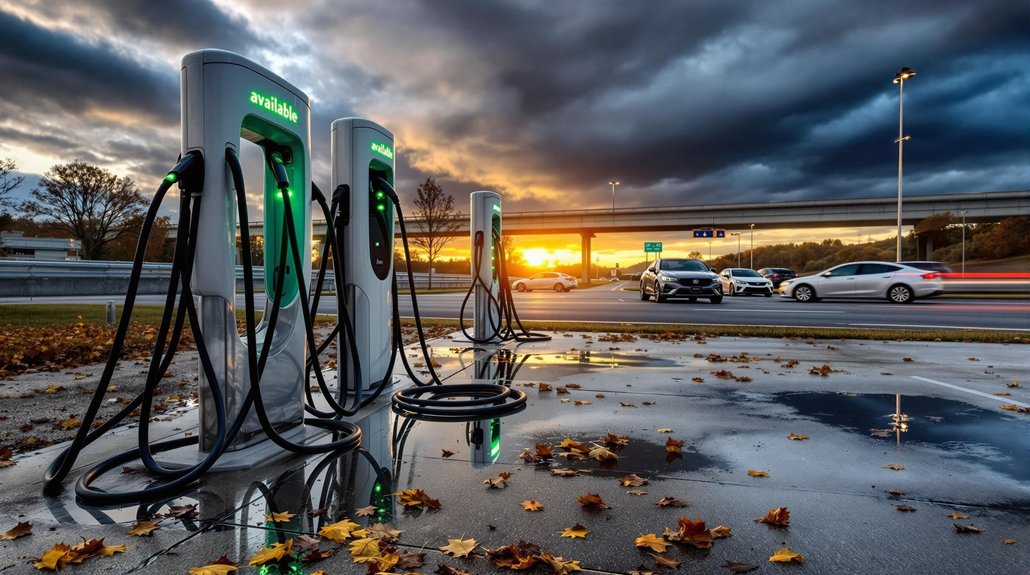
The charging situation isn’t helping either. Nothing kills EV enthusiasm faster than a road trip spent frantically searching for a functioning charger. Americans want convenience, not a scavenger hunt.
The great American road trip shouldn’t include panic attacks over finding a rare working charger between destinations.
Globally, it’s a different story. EV sales jumped 50% year-over-year in February, with China leading the charge—literally. They’re now selling more EVs than gas cars.
Southeast Asia is catching on quick, with Vietnam’s sales skyrocketing 311%. America? We’re crawling at a measly 20% increase.
The market’s shifting too. Premium EVs are yesterday’s news. Mass-market models saw franchise sales increase 58% this year. Turns out people care about affordability. Shocking.
Young, wealthy drivers are still targets for luxury brands like Jaguar, but average folks are holding back. The high cost remains a critical obstacle, with 27% of UK drivers citing it as their primary reason for not switching to electric vehicles. Battery technology and charging speeds are improving—startups like Nyobolt promise faster charging—but not fast enough to overcome consumer hesitation.
Europe’s making strides with ultra-fast charging while America lags behind. Their flexible emission standards help manufacturers avoid penalties while maintaining production.
The final months of IRA tax breaks created a temporary buying surge, but long-term prospects remain uncertain. Despite current stagnation, experts still predict EVs will reach 26% retail share by 2030, suggesting the slowdown is temporary. Established markets show fatigue despite continued policy support.
The EV evolution isn’t dead—it’s just moving in slow motion. For now, American drivers are pumping the brakes on their electric future, waiting for better infrastructure and more affordable options before they fully commit. The estimated $125 billion in required grid upgrades represents another significant hurdle that must be overcome for widespread adoption.