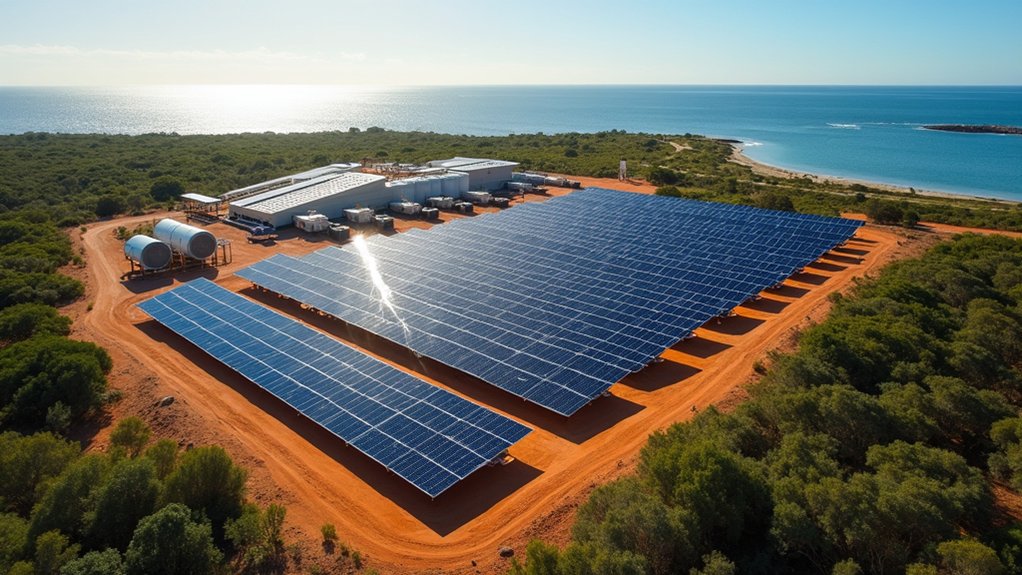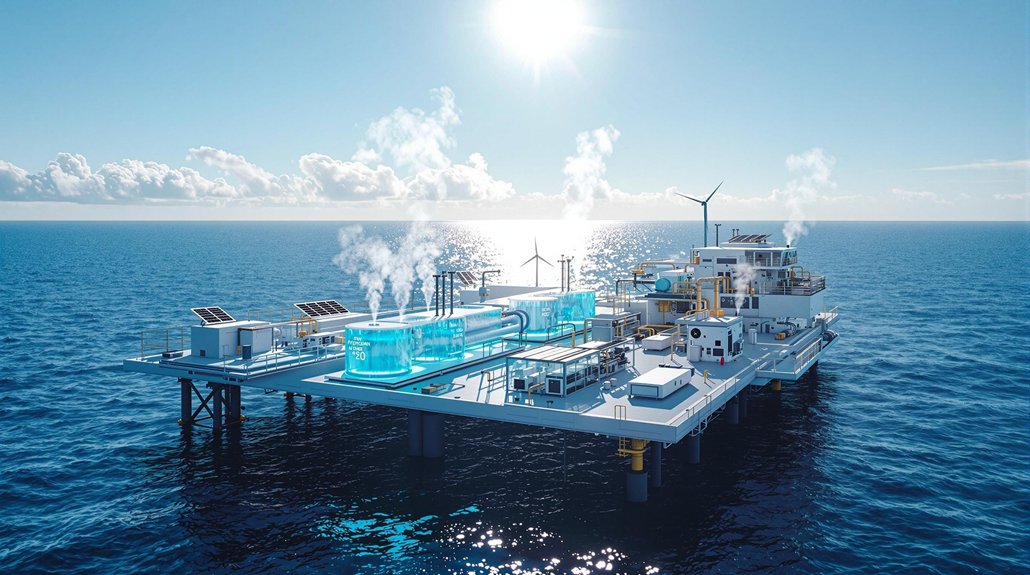

Scientists are looking to the ocean as a source of clean hydrogen fuel. The seas cover over 70% of Earth’s surface, offering an abundant resource that could help reduce dependence on fossil fuels. Recent breakthroughs in technology make extracting hydrogen from seawater more efficient than ever before. These innovations could transform global energy systems while addressing freshwater scarcity. What remains to be seen is how quickly these promising methods can move from laboratories to large-scale implementation.
As the world seeks cleaner energy solutions, scientists are turning to an unexpected source – the ocean. Seawater covers over 70% of our planet and contains hydrogen, oxygen, sodium, and other important elements. Researchers are developing new ways to extract hydrogen from this vast resource to create clean fuel.
Extracting hydrogen from seawater isn’t easy. The sodium chloride in ocean water creates challenges during electrolysis, producing unwanted chlorine byproducts. These byproducts can damage equipment through corrosion and reduce efficiency. The process also requires significant energy, making it costly.
Seawater’s sodium chloride creates corrosion issues and high energy demands, complicating hydrogen extraction efforts.
Recent breakthroughs are changing this picture. Scientists have developed bipolar membrane systems that prevent harmful oxidizing reactions. New electrode materials, including platinum and tellurium foils, work better and last longer in salty conditions. Some researchers are even mixing hydrazine with seawater to use less energy while producing more hydrogen. This approach enhances hydrogen generation efficiency significantly, though concerns about hydrazine’s toxicity remain.
One exciting development is self-powered hydrogen production. These systems don’t need external electricity, making them more sustainable and cost-effective. Unlike solar or wind energy, geothermal power offers consistent electricity generation that could potentially power hydrogen production facilities continuously. They’re also getting better at reducing chlorine production while creating purer hydrogen.
The environmental benefits are substantial. Hydrogen from seawater offers a sustainable alternative to fossil fuels. When burned, it produces only water vapor, not greenhouse gases. Unlike some land-based energy sources, seawater systems use minimal land area. They also don’t deplete freshwater resources, which are becoming scarce in many regions.
Economically, these advancements could transform energy markets. By lowering production costs and avoiding freshwater expenses, seawater hydrogen might eventually compete with fossil fuels. The technology could create new jobs in green infrastructure and help reduce dependence on imported energy.
Challenges remain, including managing corrosion in high-salt environments and safely separating hydrogen from other gases. But as research progresses, the ocean’s potential as a source of clean hydrogen grows clearer. The SLAC-Stanford team has developed a revolutionary double-membrane system that successfully generates hydrogen from ocean water without creating harmful byproducts. Our planet’s most abundant resource might help solve one of our biggest energy challenges.