
Despite Earth Day promises, AI is guzzling resources at an alarming rate. Training a single large model uses electricity equal to 120 American households annually, while data centers slurp millions of water liters daily. By 2035, AI could generate up to 1.6 gigatons of carbon emissions yearly. Yeah, there’s talk about AI optimizing renewable energy, but the rebound effect is real. Efficiency improvements often just lead to higher consumption. The climate math doesn’t add up.
As the world races toward ambitious climate targets, AI stands at a frustrating crossroads—both potential hero and environmental villain. Tech companies love touting AI’s green potential, but the dirty reality? Training a single large AI model guzzles electricity equivalent to 120 American households over an entire year. Not exactly a climate champion.
The numbers are getting worse, not better. AI could pump out between 0.4 and 1.6 gigatons of carbon emissions annually by 2035. That’s a massive climate bill coming due, and it’s arriving faster than efficiency improvements. Global electricity demand from AI keeps climbing—no plateau in sight.
The climate bill for AI’s carbon appetite is coming due—and it’s arriving faster than our solutions.
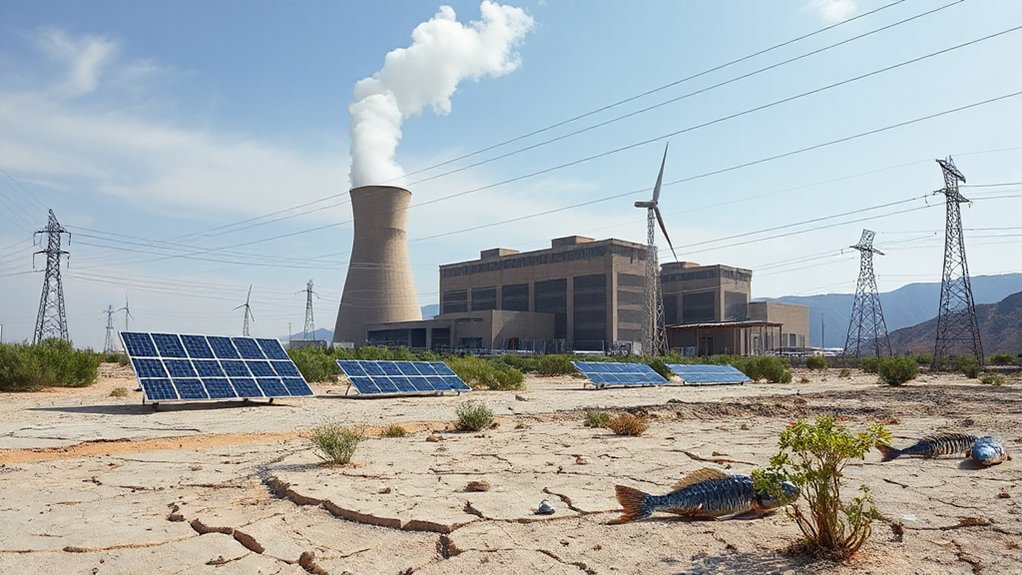
Water usage is another inconvenient truth. AI data centers are thirsty beasts, consuming millions of liters daily just to stay cool. In drought-prone regions, this creates a zero-sum game: water for AI or water for people and farms? Guess who usually wins that contest. Training GPT-3 alone can evaporate 700,000 liters of clean freshwater resources. Since 2012, the number of data centers has exploded from 500,000 to an astounding 8 million worldwide, dramatically increasing water demands.
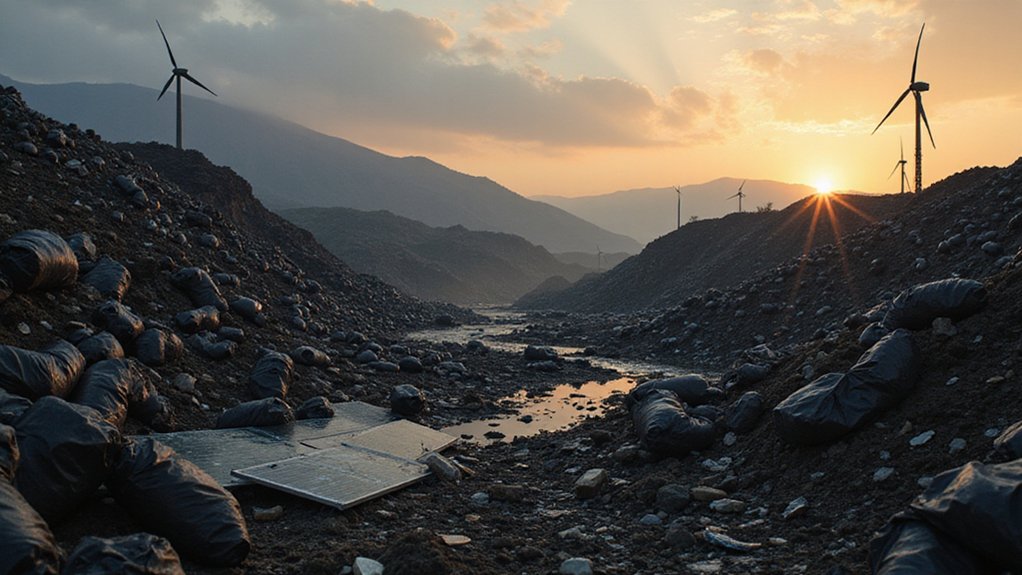
Then there’s the e-waste nightmare. AI’s constant hardware upgrades create mountains of discarded servers loaded with hazardous materials. Mining for the rare minerals these systems require devastates communities and ecosystems. The hardware becomes obsolete almost instantly. Rinse, repeat, pollute.
No wonder 42% of executives are reconsidering their climate commitments. AI’s ballooning footprint threatens to cancel out progress from renewables and efficiency measures. Paris Agreement? Good luck with that.
The irony? AI could actually help solve climate problems. It can optimize renewable energy grids, potentially cutting 1.8 gigatons of emissions annually. It accelerates alternative protein development, with potential emissions reductions of 3 gigatons yearly. Smart mobility applications could slash another 0.6 gigatons. Unlike AI servers, battery storage systems can stabilize grids while producing zero direct emissions during operation.
But here’s the catch—efficiency improvements often trigger increased consumption. Make something cheaper and people just use more of it. Classic rebound effect. Without careful management, AI’s climate benefits could evaporate in a cloud of increased resource demand.
The climate clock is ticking. AI’s thirst—for energy, water, and minerals—needs serious attention. Now.