Google just inked Taiwan’s first offshore wind power deal. They’re partnering with Copenhagen Infrastructure Partners on the Fengmiao I wind farm – a massive 495 MW project costing $3.1 billion. The 33 Vestas turbines will power Google’s Taiwanese operations by 2027. It’s part of Google’s ambitious plan to achieve net-zero emissions by 2030. Tech giants need clean energy too, especially with AI’s growing appetite for electricity. The details get even juicier.
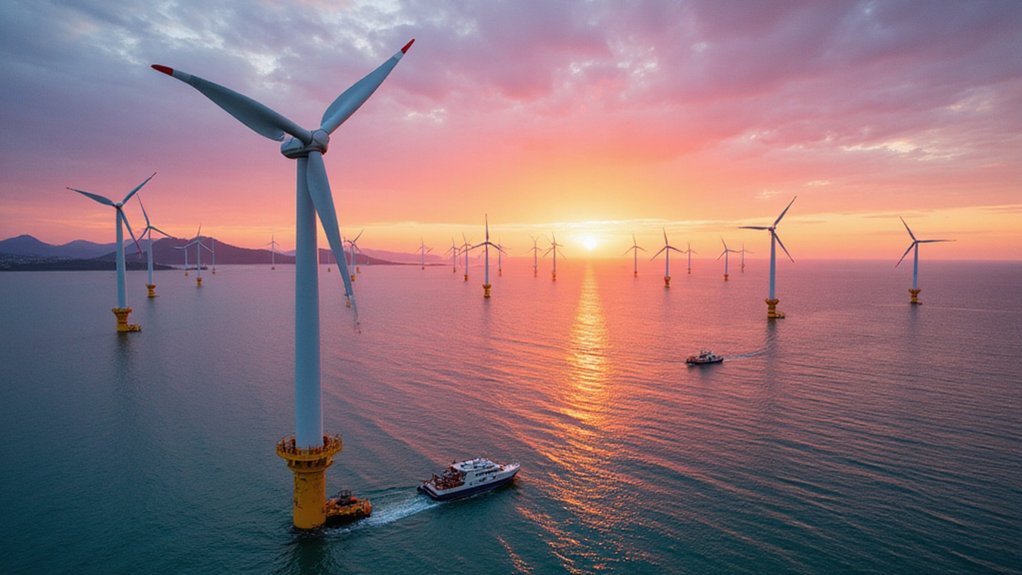
Google has inked a groundbreaking deal in Taiwan’s renewable energy sector, signing the country’s first offshore wind power purchase agreement. The tech giant partnered with Copenhagen Infrastructure Partners (CIP) for the Fengmiao I wind farm, located off Taichung’s coast. This isn’t just another corporate green initiative. It’s a massive 495 MW project that’ll power Google‘s data centers and offices across Taiwan.
Let’s talk numbers. This deal is huge – $3.1 billion in project financing. That’s no chump change. The money came from international and Taiwanese banks, with some guarantees from export credit agencies. Because renewable energy isn’t cheap, folks.
The wind farm will feature 33 Vestas turbines, each a whopping 15.0 MW. These turbines represent Vestas’ leadership in the offshore wind manufacturing sector. These aren’t your grandpa’s windmills. They’re massive, cutting-edge machines designed to harness Taiwan’s abundant coastal winds. Should be spinning by the end of 2027, if all goes according to plan.
CIP knows what they’re doing. They’ve already completed other wind farms in the region, including Changfang & Xidao. These projects are turning Taiwan into something of a renewable energy hotspot in Asia. Who would’ve thought?
For Google, this isn’t just about looking good in sustainability reports. The company has ambitious plans to achieve net-zero emissions by 2030 and run on 24/7 carbon-free energy globally. With AI usage sucking up more electricity than ever, they needed to make a move. Fast.
This project is the first from Taiwan’s Round 3.1 auction to reach financial close. It’s a big deal for Taiwan’s energy sector. More jobs. More investment. More clean energy. Win-win-win.
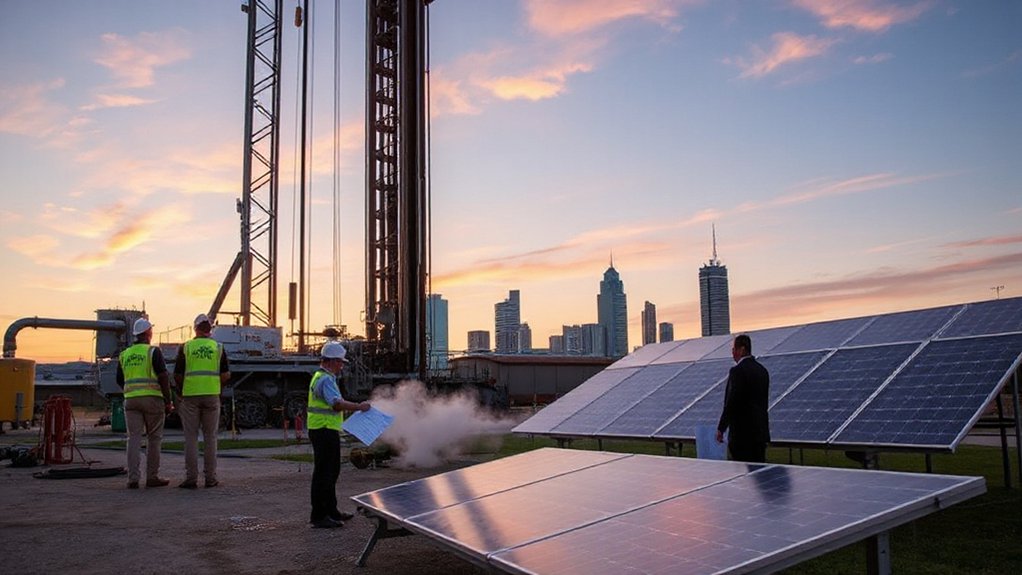
The wind farm will complement existing solar and geothermal projects in Taiwan, creating a more diverse energy portfolio. This strategic approach follows Google’s recent addition of 10 megawatts of geothermal energy through their partnership with Baseload Capital. It’ll help stabilize the grid too. Because random blackouts aren’t exactly great for a tech economy.
The initiative aligns with the broader global shift where battery storage capacity almost doubled in 2024, enabling more reliable integration of variable renewable energy sources.
In the race to carbon neutrality, Google just hit the accelerator. And Taiwan’s offshore winds are providing the fuel.
References
- https://blog.google/feed/google-offshore-wind-power-purchase-agreement-taiwan/
- https://www.esgdive.com/news/google-signs-first-offshore-wind-deal-asia-pacific-region-taiwan-cip-wind-farm/746286/
- https://www.offshorewind.biz/2025/04/22/google-inks-first-offshore-wind-ppa-in-taiwan/
- https://www.rechargenews.com/corporate-renewables/google-strikes-first-offshore-wind-deal-in-asia-pacific/2-1-1809293
- https://www.datacenterdynamics.com/en/news/google-signs-first-offshore-wind-ppa-in-taiwan-with-copenhagen-infrastructure-partners/