While America’s appetite for electricity has always been robust, it’s now surging at a pace not seen in decades. U.S. electricity demand jumped 3% in 2024 – the fifth-highest increase this century. And it’s not slowing down. Experts project 2% annual growth through 2027. That’s a lot of juice.
Behind this power-hungry trend? Data centers. Massive, humming facilities powering our digital obsessions. They consumed about 176 TWh in 2023 and added up to 55 TWh more in 2024 alone. That’s a 31% increase. Turns out all those cat videos and AI chatbots use real electricity. Who knew?
It’s not just our online habits driving demand. EVs are plugging in everywhere. Homes and businesses are ditching gas for electric appliances. Even factories are going electric. All part of America’s awkward teenage shift away from fossil fuels. Growing pains included.
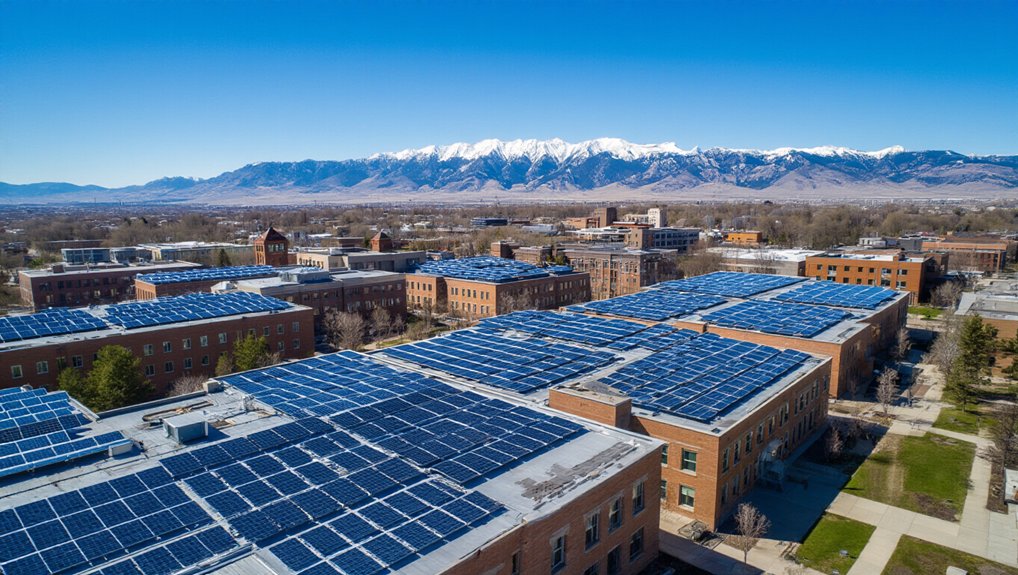
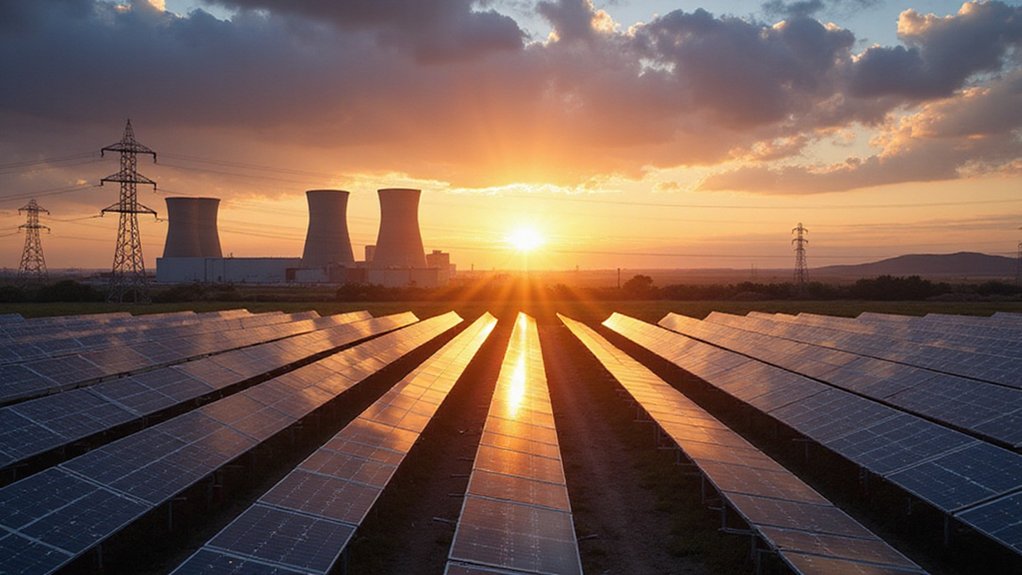
Enter solar power – America’s new energy darling. Utility-scale solar projects are sprouting across sun-drenched states like dandelions after rain. Rooftop installations aren’t far behind. The numbers keep climbing, smashing deployment records through, 2025. Solar is having its moment, finally. Solar generation rose by an impressive 27% last year, surpassing hydropower for the first time in US history.
Thank the feds and their tax credits for part of this solar boom. State renewable mandates are pushing utilities to build more, too. Plus, solar panels just keep getting cheaper. Economics 101 at work. Big corporations are also buying renewable energy like it’s going out of style. It’s not entirely altruistic – good PR comes included. Federal incentives covering 30% of installation costs make the switch increasingly attractive for businesses and homeowners alike.
Of course, the sun doesn’t always shine. Grid operators are getting creative, pairing solar with batteries and hydropower to keep electricity flowing 24/7. They’re building new transmission lines too, moving desert sunshine to power-hungry cities. This rapid growth mirrors global trends, where solar PV is projected to meet half of global electricity demand growth by 2027.
The upside to this solar transformation isn’t just reliable power. Fewer emissions mean cleaner air and healthier communities. America’s surging electricity appetite might just be the catalyst that finally alters our energy system. Maybe our power hunger isn’t such a bad thing after all.
References
- https://ember-energy.org/latest-insights/us-electricity-2025-special-report/
- https://www.eia.gov/outlooks/aeo/
- https://ember-energy.org/app/uploads/2025/03/US-Electricity-2025-Special-Report.pdf
- https://www.iea.org/reports/electricity-2025/executive-summary
- https://www.energy.gov/sites/prod/files/2018/02/f49/Hydropower-Vision-021518.pdf