Inequality crackles through Detroit’s power lines like the electricity they carry. A quarter of Motor City’s poorest households fork over at least 15% of their income just to keep the lights on. Meanwhile, DTE Energy shut off power to 150,000 customers for nonpayment in 2024. Guess when most disconnections happened? Between May and September. You know, when it was hot as hell.
Detroit’s electricity grid doesn’t just distribute power—it distributes injustice, with the poorest paying the highest price to keep their lights on.
Speaking of hell, 2024 temperatures in May, June, and July ranked among the top 3% ever recorded. Nothing says “equal opportunity” like cutting power during a heat wave. Black households are three times more likely to face disconnection than white ones. Hispanic families? Four times more likely.
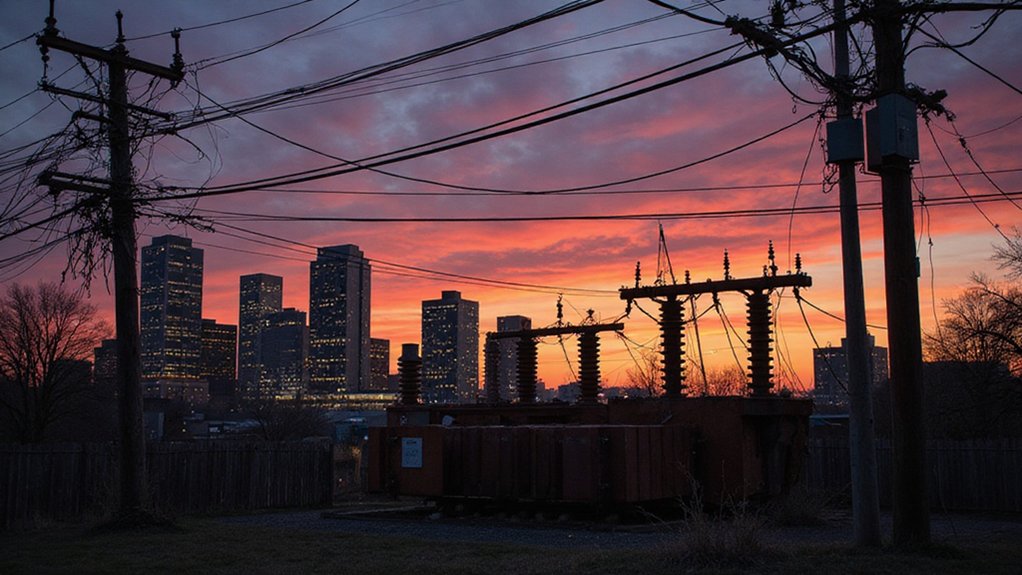
The infrastructure tells the same story. Poor Detroit residents get their juice through an ancient 4.8-kilovolt system while the wealthier, whiter suburbs enjoy a modern 13.8-kV grid. Transformers and power lines in the city are decades past their expiration date. No wonder 45% of customers suffered eight or more hours without power in 2023.
DTE’s corporate earnings soared while they were busy disconnecting hundreds of thousands of customers. Between 2020 and October 2022, they cut off 378,000 customers. Record profits, record shutoffs. Funny how that works. During this profitable period, the company paid 607 million dollars to shareholders while customers struggled to keep their lights on.
Want solar panels to save money? Good luck. The outdated grid in minority neighborhoods creates barriers to renewable energy access. Solar, batteries, EV charging – all harder to implement where they’re needed most. Historical redlining practices continue to haunt these communities through underpowered electrical service and higher costs.
When blackouts hit Detroit’s poorest neighborhoods, it’s not just inconvenient. After three days without power, as one community leader put it, “strands of civilization get tested.” Pretty dramatic, but try living without electricity for 72 hours in extreme weather. While the U.S. celebrates its status as the world’s top oil producer with record exports of distillate and jet fuel, Detroit’s poorest residents can barely afford to keep their lights on.
DTE has thrown a bone – $1.2 billion for downtown infrastructure upgrades and connecting customers to $144 million in energy assistance in 2024. They’re running a pilot program capping energy costs too. A drop in the bucket when you’re burning poor people’s last dollar.
References
- https://planetdetroit.org/2025/05/epa-grants-energy-redlining-detroit/
- https://planetdetroit.org/2025/02/dte-energy-disconnects-customers/
- https://www.wwno.org/2025-05-15/redlining-shaped-the-power-grid-communities-of-color-are-still-paying-the-price
- https://ir.dteenergy.com/news/press-release-details/2025/DTE-Energy-reports-2024-accomplishments-investments-and-earnings/default.aspx
- https://www.dteenergy.com/us/en/business/about-dte/the-future.html