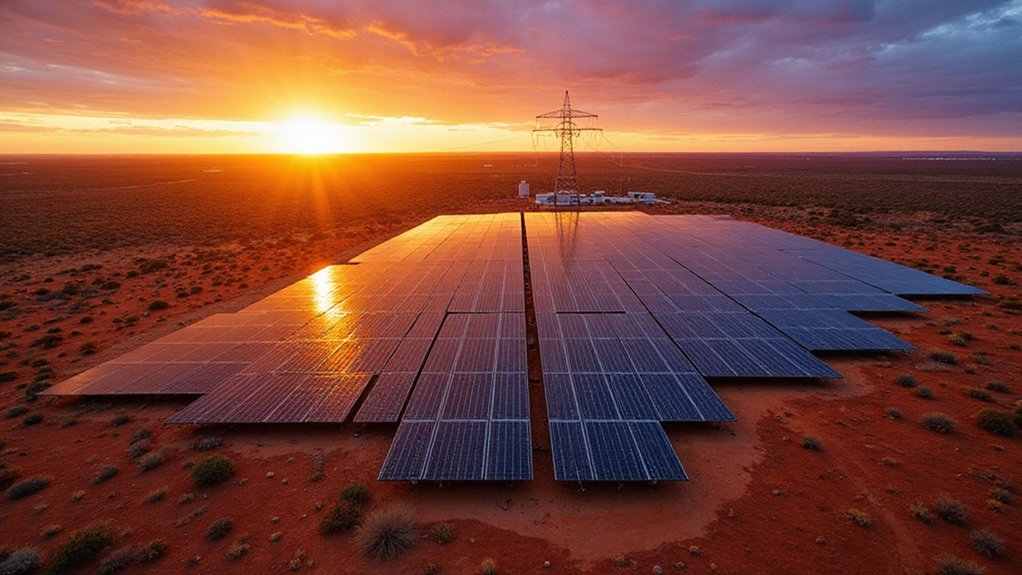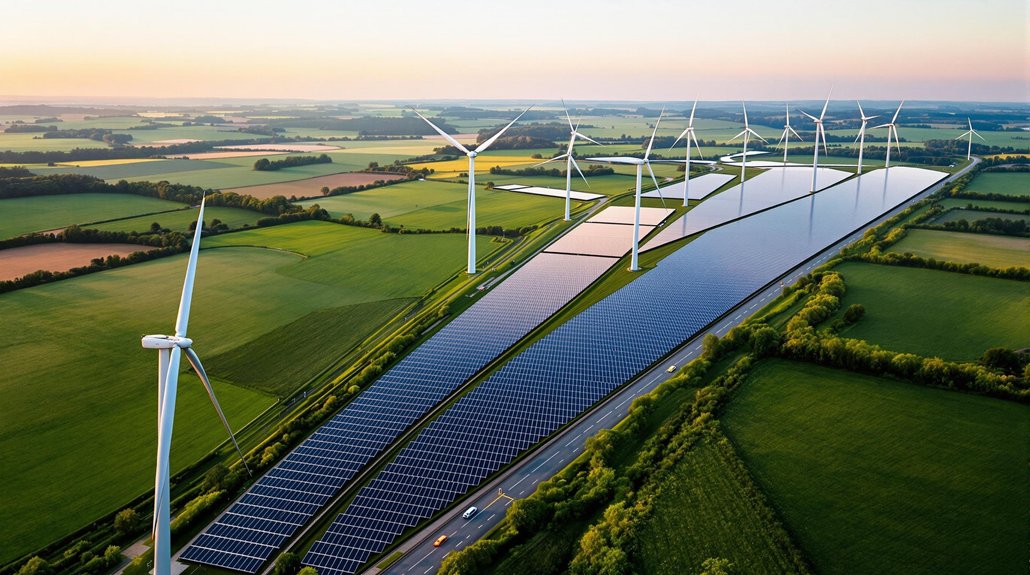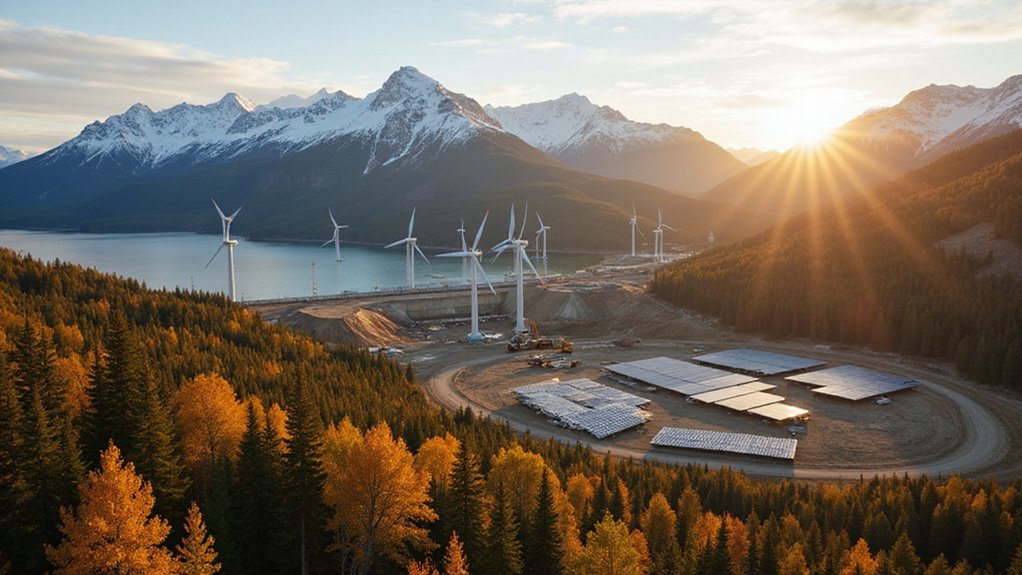
While most countries were still debating whether wind turbines kill birds, Canada quietly built 24 gigawatts of wind, solar, and storage capacity by the end of 2024. Not bad for a country people assume runs entirely on maple syrup and hockey rinks.
The numbers tell an interesting story. Wind energy dominates with 18 GW, while solar contributes over 5 GW, and energy storage sits at 330 MW. That’s a 46% jump in total capacity since 2019. Energy storage saw the wildest ride, exploding 192% in five years. Apparently, someone in Ottawa discovered batteries exist.
Canada now ranks sixth globally in renewable energy production, churning out 2% of the world’s total. Sure, that sounds small, but considering the country has fewer people than California, it’s respectable. The real crown jewel remains hydroelectricity, where Canada ranks third worldwide, producing 9% of the global total. All those rivers finally paying off. The country’s hydro dominance shows in the numbers, with hydroelectric sources accounting for 62% of electricity generation nationwide.
Canada produces 9% of global hydroelectric power despite having fewer people than California
The renewable mix breaks down like this: hydro dominates at 67.7%, solid biofuels grab 21.5%, and wind takes 6.4%. Overall, 70% of Canada’s electricity comes from renewables, with 82% generated from non-greenhouse gas sources. Take that, coal. Meanwhile, wind and solar together now meet more than 8% of demand in Canada’s electricity market, marking a significant milestone in the country’s energy transition.
Wind projects dot the terrain with 341 installations nationwide. Solar isn’t far behind with 217 major projects plus nearly 96,000 onsite installations. Ontario leads the wind charge with 5,535 MW, followed by Quebec at 3,970 MW and Alberta at 3,618 MW. Quebec, because it’s Quebec, hosts the three largest utility wind projects in the country.
The investment numbers are where things get serious. Canada has 233 clean technology projects worth $159 billion in the pipeline. Foreign direct investment in energy dipped to $132 billion in 2023, but nobody seems too worried. Wind generation has nearly quadrupled since 2011, proving that sometimes government actually gets things done. Canada’s rapid growth mirrors the global trend, with renewable energy contributing to 10% of GDP growth worldwide in 2023.
Canada’s renewable push isn’t slowing down. With vast untapped wind and solar resources and aggressive climate goals, the country’s positioning itself as North America’s clean energy powerhouse. Who knew bureaucrats could move this fast when they wanted to?
References
- https://renewablesassociation.ca/by-the-numbers/
- https://energy-information.canada.ca/en/energy-facts/clean-power-low-carbon-fuels
- https://borrumenergysolutions.ca/blogs/blog/canadian-2024-2025-renewable-energy-statistics
- https://energy-information.canada.ca/en/energy-facts/investment
- https://renewablesassociation.ca/news-release-canrea-marks-fifth-anniversary-with-special-industry-data-report/