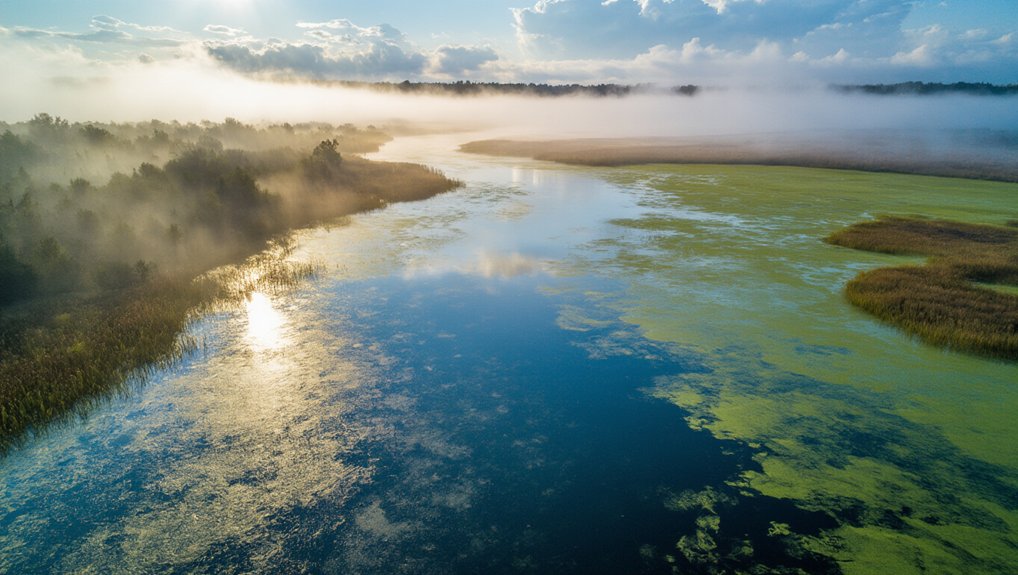
While Minnesota prides itself on being the “Land of 10,000 Lakes,” more than 6,000 of those water bodies are literally too polluted to function properly. That’s not exactly the pristine wilderness the tourism boards advertise.
Minnesota’s pristine lakes? Over 6,000 are too polluted to function properly.
The Minnesota Pollution Control Agency tracks 2,904 water bodies with a staggering 6,168 separate impairments. Fish can’t survive. Insects are dying off. Over half the state’s streams and lakes fail basic standards for aquatic life. Nice legacy for the grandkids.
The pollution cocktail is predictable: phosphorus, nitrogen, bacteria, and mercury. Agriculture dumps 70% of the nitrogen pollution through fertilizers and manure. Industrial facilities pump 1.4 million pounds of toxic chemicals into rivers annually.
Here’s the kicker – cropland nitrogen sources get a free pass from the Clean Water Act. Because apparently corn fields deserve special treatment. The MPCA conducts intensive monitoring in all 80 of Minnesota’s watersheds every two years, yet the pollution keeps spreading faster than they can document it.
The human cost keeps mounting. Twenty-seven percent of monitored streams have nitrate levels that make drinking water dangerous. Thousands of wells are contaminated. Infants can develop blue baby syndrome, which sounds cute until you realize it’s potentially fatal.
At least 69 streams and beaches post swimming advisories because E. coli levels make a dip more like Russian roulette. The contamination spreads underground too, with 59 closed landfills leaking PFAS chemicals above safe health levels.
Minnesota’s pollution problem races ahead of any cleanup efforts. While 511 new water bodies joined the impaired list recently, only 13 got removed. That math doesn’t work.
The state spent a decade evaluating 80 watersheds and discovered what everyone already knew – things are getting worse. By 2020, nearly a third of state waters were officially polluted.
For Indigenous communities, this isn’t just about recreation. These are sacred waters supporting cultural practices, subsistence living, and spiritual connections spanning generations.
Wild rice beds choke on sulfate and nutrients. Treaty rights supposedly protect these resources, but enforcement remains spotty at best.
Minnesota contributes 211 tons of nitrogen annually to the Gulf of Mexico‘s dead zone, where nothing lives. The state’s water pollution travels far, destroying ecosystems thousands of miles away.
Meanwhile, regulatory rollbacks and weak enforcement guarantee the problem keeps flowing downstream, literally and figuratively.
References
- https://www.pca.state.mn.us/air-water-land-climate/water-quality-trends-and-data
- https://www.pca.state.mn.us/air-water-land-climate/minnesotas-impaired-waters-list
- https://environmentamerica.org/minnesota/media-center/terrifying-but-true-facts-about-pollution-in-minnesotas-waterways/
- https://minnesotago.org/application/files/5216/2214/2468/Water-Quality.pdf
- https://www.minnpost.com/environment/2019/11/more-than-half-of-minnesota-waters-including-the-st-croix-river-are-impaired-what-does-that-mean/