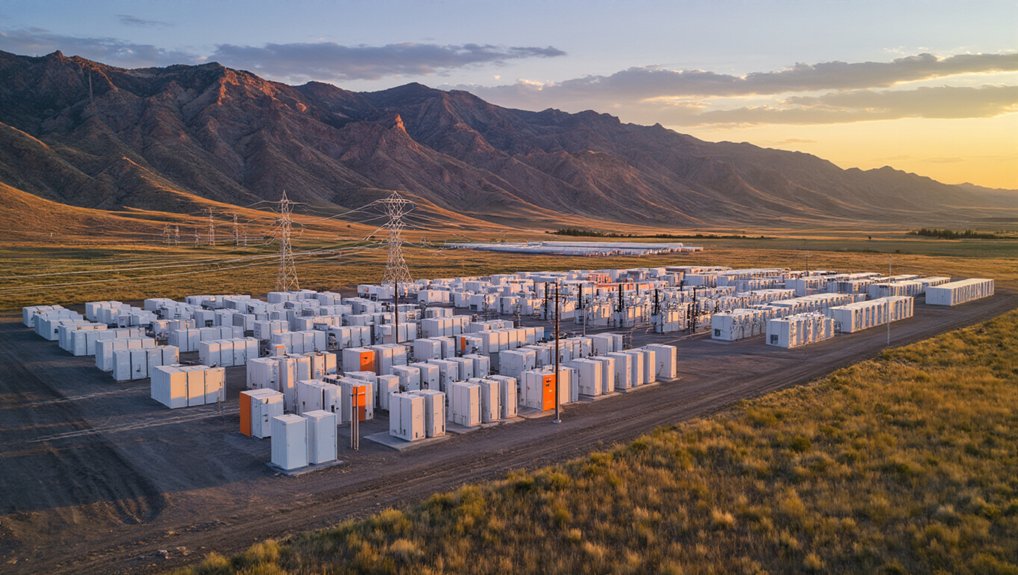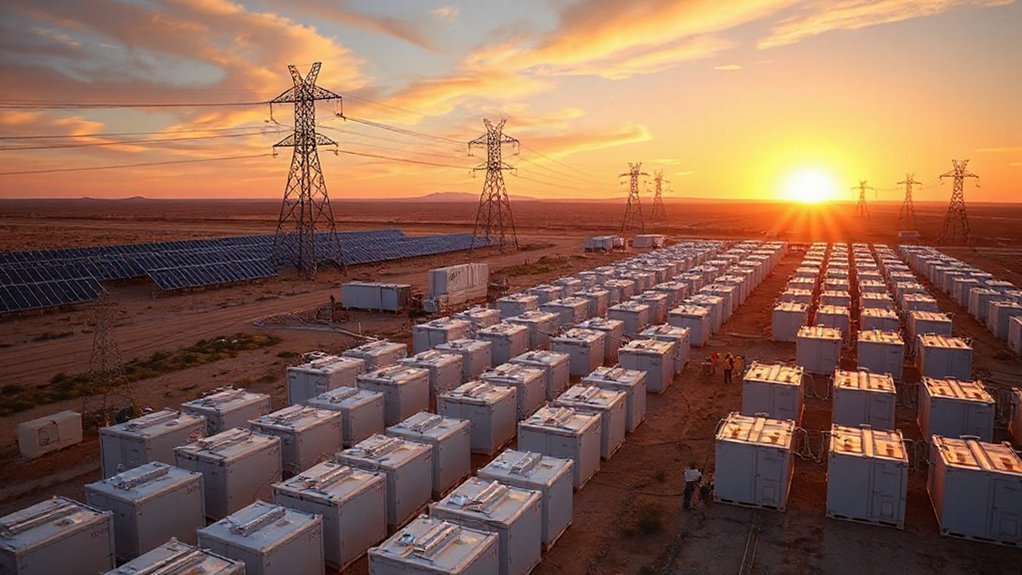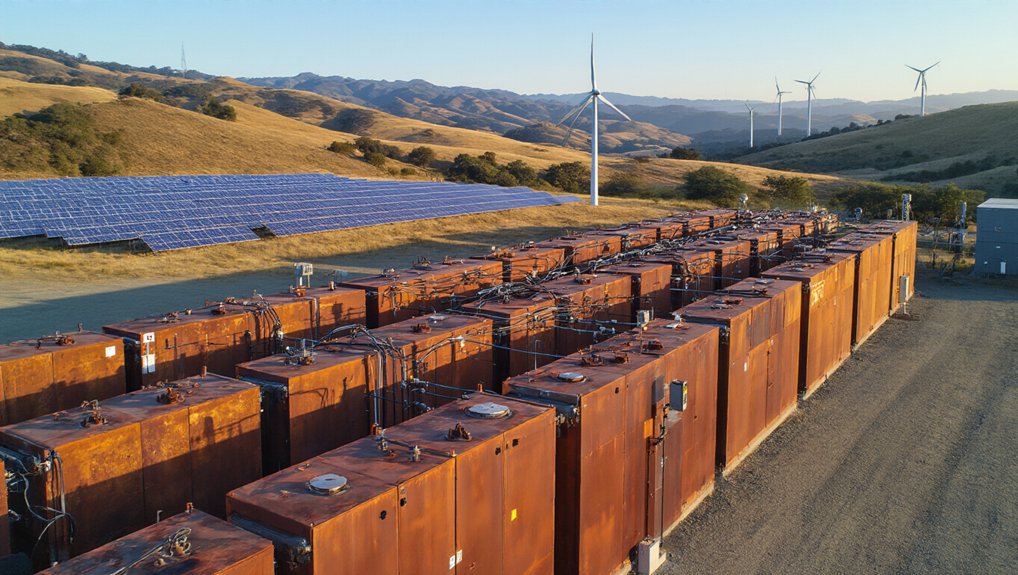
While California scrambles to meet its ambitious clean energy goals, a peculiar solution is emerging from the most unlikely source: rust. The California Energy Commission just dropped $30 million on what sounds like a science experiment gone wrong—a battery that literally rusts to store power. Form Energy‘s iron-air battery system will squat at a Pacific Gas and Electric substation in Mendocino County, promising to keep the lights on for 100 hours straight.
California’s $30 million bet: a battery that literally rusts to store clean energy for 100 hours straight.
Here’s how it works. Iron oxidizes when it meets oxygen from the air, creating rust and releasing energy. Want to charge it? Reverse the process. The iron goes back to its metallic state, oxygen gets expelled. Simple as that. No fancy materials, no flammable lithium-ion drama—just iron, air, and water-based electrolyte doing their thing.
The 5 MW, 500 MWh system will be California’s largest long-duration battery installation when it fires up by late 2025. That’s a big deal. While typical lithium-ion batteries tap out after a few hours, this rust bucket keeps chugging for four straight days. Perfect for those awkward moments when the wind stops blowing and the sun decides to hide behind clouds for a week.
California needs this desperately. The state’s current 13.4 GW of storage needs to hit 52 GW by 2045 to clean up its grid completely. Battery capacity has been doubling every 1.2 years, putting that target within reach around 2026. With proposed energy storage projects exceeding 275 GW, the state has a massive pipeline ready to transform its grid infrastructure.
But here’s the twist—iron-air batteries cost way less than lithium-ion for long-term storage. Even with potential tariff bumps pushing battery costs from $200/kWh to $260/kWh in 2026, the economics still make sense. Form Energy’s CEO Mateo Jaramillo, who previously worked at Tesla, is steering the company through this critical commercialization phase. The project could benefit from clean energy incentives that have received bipartisan support as essential for national security and economic stability.
This isn’t just another battery project. It’s California betting that rust—yes, the same stuff eating your old car—can solve its renewable energy headaches. The technology tackles the biggest problem with solar and wind: they don’t work when you need them most. A 100-hour battery changes that math entirely. If this demonstration works, expect rust batteries to pop up across the grid like mushrooms after rain.
References
- https://www.energy-storage.news/startup-form-energys-100-hour-iron-air-battery-tech-attracts-another-us-utilitys-attention/
- https://pv-magazine-usa.com/2025/04/10/california-battery-dominance-coming-into-view/
- https://www.utilitydive.com/news/puget-sound-energy-form-energy-long-duration-iron-battery/704026/
- https://www.renewableenergyworld.com/energy-storage/long-duration/form-energy-receives-30m-cec-grant-for-its-100-hour-iron-air-battery-system/
- https://www.rtoinsider.com/104597-california-banks-solar-storage-summer-2025-peaks/