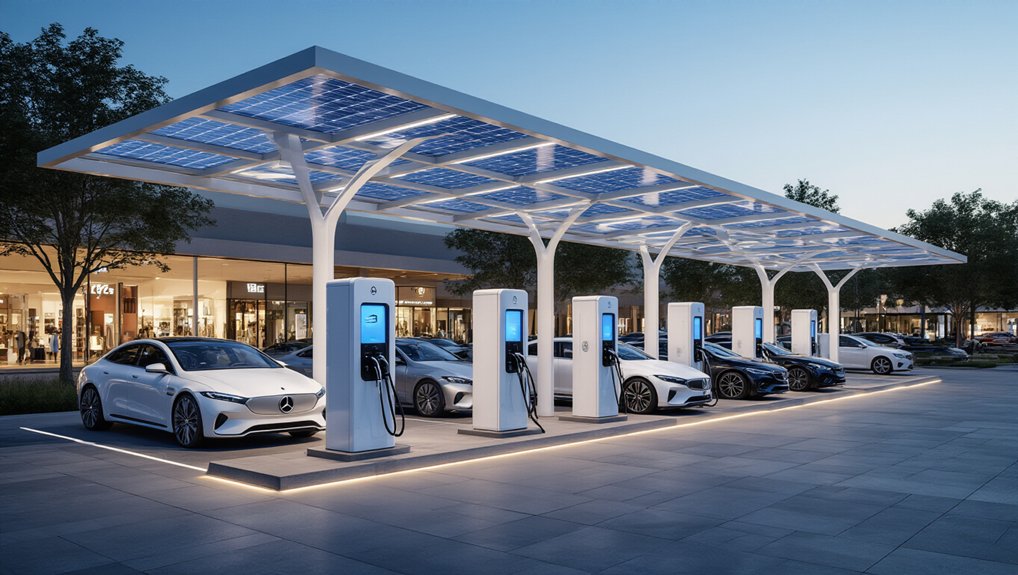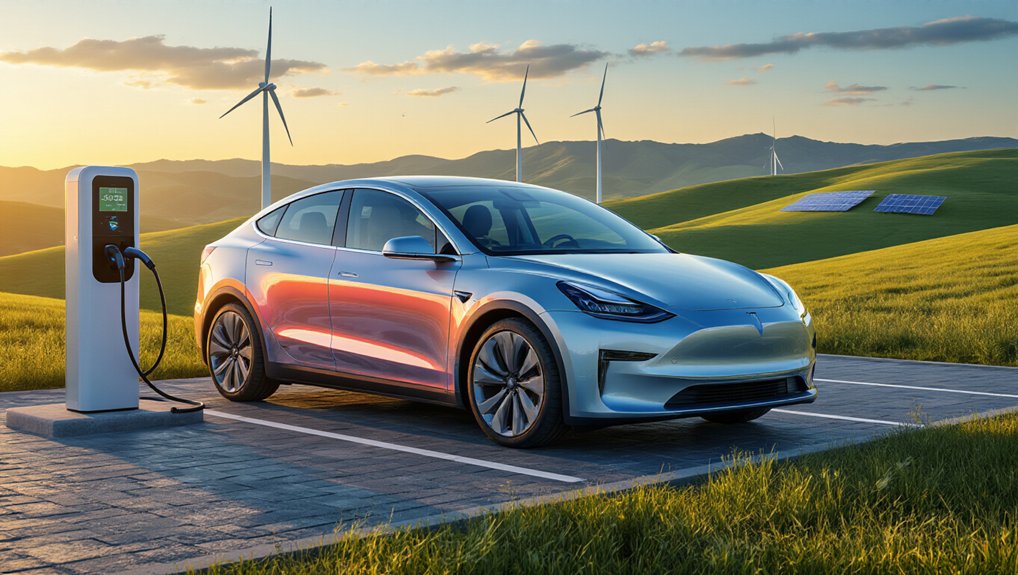

While electric vehicles have been hailed as environmental saviors, the truth about their carbon footprint is more complicated than most people realize. Manufacturing an EV pumps out over twice the CO₂ compared to making traditional gas guzzlers. Those fancy lithium-ion batteries? Major carbon culprits. Mining cobalt and nickel isn’t exactly a tree-hugging affair.
But here’s where things get interesting. Once they hit the road, EVs produce zero tailpipe emissions. None. Zip. Meanwhile, conventional cars keep belching out carbon dioxide until they’re sent to the scrapyard. The electricity to charge EVs isn’t always squeaky clean, though. It depends on your local grid. Battery electric vehicles sold in 2023 emit half as much as conventional internal combustion engine vehicles over their lifetime. Charging in West Virginia (hello, coal country) isn’t the same as plugging in in sunny California.
Still, the numbers don’t lie. Over a 15-year lifespan or 200,000 kilometers, EVs emit about half the carbon of their gas-powered counterparts. In the best-case scenarios—think regions powered by wind, solar, or hydropower—that advantage stretches to a whopping 73% reduction. A standard gas car will cough up about 38 tons of CO₂ equivalent during its life. An EV? Just 15 tons. According to MIT’s research, gasoline vehicles emit approximately 350 grams of CO2 per mile, significantly more than battery electric vehicles. The transition to renewable energy, which reached 507 gigawatts of new capacity in 2023, will further reduce the carbon footprint of EVs as electricity generation becomes cleaner.
The longer you drive an EV, the better the math works. More miles means spreading out those upfront manufacturing emissions. Even if your electric car only makes it to 90,000 miles (tough luck!), it still beats hybrids and conventional cars for total emissions.
Geography matters, obviously. Norwegian EV owners, with their hydropower-rich grid, can feel smugger than those in coal-dependent Poland. But even in the dirtiest grids, EVs typically outperform traditional gas cars.
And here’s the twist—the future only gets brighter. As electricity grids clean up their act, EVs get greener without lifting a finger. Same car, lower emissions. Try pulling that trick with your gas guzzler.
References
- https://climate.mit.edu/ask-mit/are-electric-vehicles-definitely-better-climate-gas-powered-cars
- https://www.iea.org/reports/global-ev-outlook-2024/outlook-for-emissions-reductions
- https://science.feedback.org/in-most-cases-electrifying-cars-reduces-their-emissions/
- https://www.epa.gov/greenvehicles/electric-vehicle-myths
- https://afdc.energy.gov/vehicles/electric-emissions