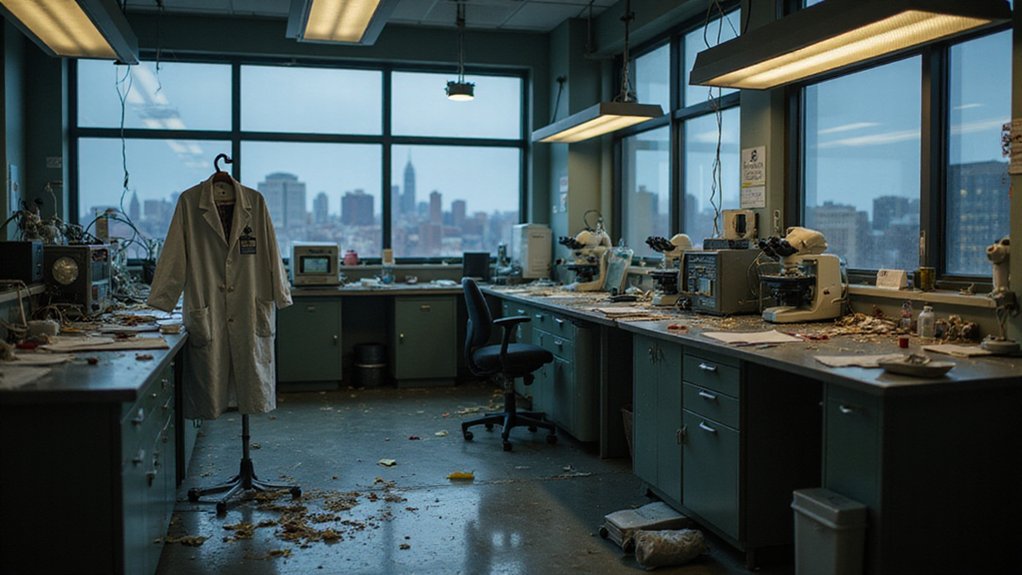

The Environmental Protection Agency is slashing its scientific heart, planning to eliminate up to 75% of its research staff and completely shuttering its Office of Research and Development. The workforce reduction will cut EPA employees from 16,155 down to 12,448 – a 23% drop overall. And that’s just the starting point.
The EPA’s gutting its own scientific backbone—firing researchers and killing its research division in a sweeping purge of environmental expertise.
Scientists are getting hit hardest. The Office of Research and Development (ORD) – you know, the folks who actually figure out what’s poisoning people – will see between half and three-quarters of its staff shown the door. Cincinnati’s regional labs, with their decades of expertise, are basically being gutted.
In place of ORD, the administration is creating something called the “Office of Applied Science and Environmental Solutions.” Sounds impressive on paper. Probably comes with a fancy logo too. Meanwhile, critical research on PFAS “forever chemicals” and climate-linked diseases like Valley Fever is grinding to a halt.
Officials are packaging this demolition job as an “improvement in effectiveness and efficiency.” Because nothing says efficiency like firing the scientists who keep your water safe. They’re merging financial departments and creating a “streamlined one-stop shop” for administrative operations. How innovative.
The EPA insists this restructuring aligns with “statutory requirements” and the president’s promise to shrink government. They’re “committed to delivering results for American communities” – just with fewer people who understand science, apparently.
Cincinnati’s EPA research center has roots going back to the 1970s, with water research stretching back a century. All that institutional knowledge? Going, going, gone.
Labor leaders are raising alarms about lost expertise. Environmental watchdogs warn communities could face increased pollution exposure. Without proper scientific oversight, we risk repeating disasters like Flint, Michigan where unsafe water decisions endangered public health. These cuts come at a crucial time when rising sea levels threaten coastal communities across the nation. But hey, the administration assures us science will remain important – just in “different forms.”
Different forms. Like unemployment forms, perhaps? For hundreds of environmental scientists. With the third round of deferred resignation program just ending, the workforce cuts may continue to deepen.
References
- https://www.wvxu.org/environment/2025-03-20/scientists-trump-eliminate-epa-research-division
- https://allwork.space/2025/07/u-s-environmental-protection-agency-closing-research-division-cutting-workforce-by-23/
- https://www.politico.com/news/2025/07/17/environmental-protection-agency-reorganization-buyouts-00459651
- https://frey.wordpress.ncsu.edu/2025/03/18/what-are-the-benefits-of-taking-the-science-out-of-a-science-based-agency-epa-tldr-none/