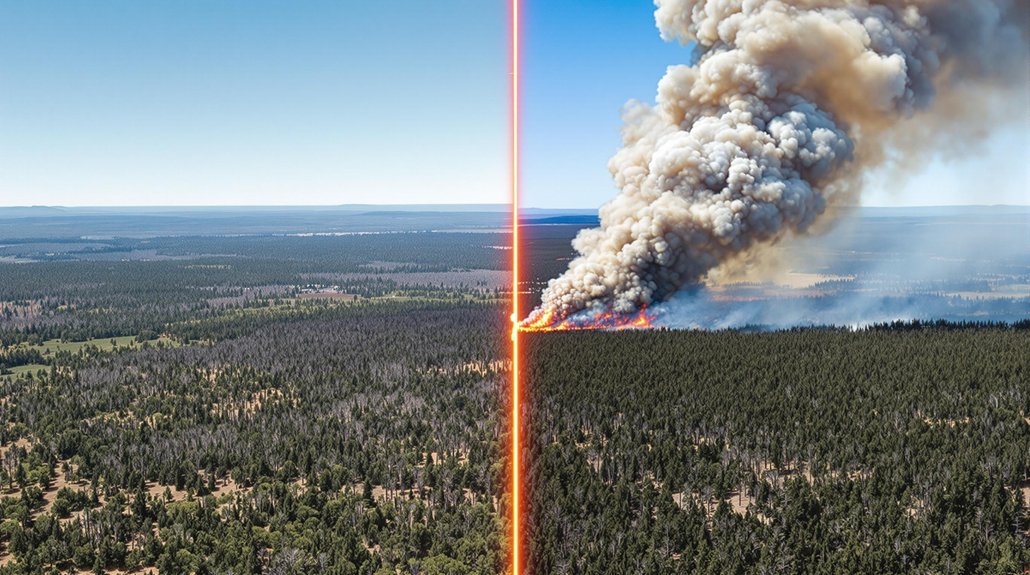
As the Dragon Bravo Fire continues its relentless march through Grand Canyon National Park, the North Rim has effectively been erased from visitor maps for 2025. The monster blaze, sparked by lightning on Independence Day, has devoured over 123,000 acres, making it the largest wildfire currently burning in the United States. Not exactly the kind of “number one” Arizona was hoping for.
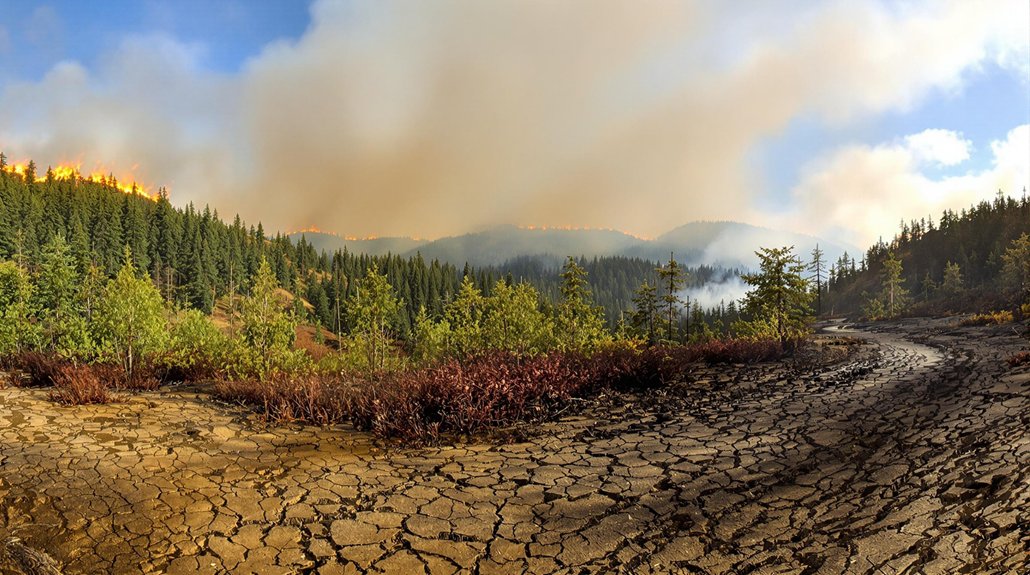
The fire’s appetite has been voracious. Approximately 70 structures now exist only in photographs, including the historic Grand Canyon Lodge and North Rim Visitor Center. Gone. Just like that. The blaze has scorched through mixed conifer, aspen, ponderosa pine, and pretty much anything else in its path, burning a staggering 86.3% of the Bright Angel Creek watershed above the North Rim.
Despite 1,189 firefighting personnel battling the inferno, containment sits at a measly 13%. Not great odds. Fast spread driven by dry, windy conditions throughout July and August hasn’t helped matters. The warm and dry weather has created ideal fire conditions similar to those that fueled recent large fires in southern Utah and northern Arizona. Neither have federal workforce reductions that hampered fire response capacity. Approximately 900 people were evacuated from the area as the wildfire threatened populated sections of the park. Funny how budget cuts seem less important when iconic national landmarks are literally going up in smoke.
The Dragon Bravo isn’t alone in its destruction. It’s just the biggest bully on the playground. Thirty-nine large wildfires are currently burning across the U.S., covering about 523,000 acres. Arizona alone is hosting seven large concurrent fires – more than any other state. Must be that famous desert hospitality.
Ecologically speaking, the damage is severe. Major loss of forest cover, altered watershed hydrology, and elevated risk for flash floods during monsoon season. Wildlife habitat? Compromised. Stream water quality? Threatened. Soil stability? Let’s just say erosion will have a field day when the rains come.
The 2025 fire season may have burned fewer total acres nationally than 2024’s 8.9 million, but that’s small consolation for Grand Canyon visitors. Both the North Rim and Inner Canyon remain closed for the rest of the year. Nature’s way of saying “come back later.”
References
- https://insideclimatenews.org/news/04082025/grand-canyon-fire-largest-in-nation/
- https://www.mountainweather.com/2025/08/are-wildfires-getting-worse/
- http://www.fs.usda.gov/r03/kaibab/newsroom/releases/dragon-bravo-fire-daily-update-august-1-2025
- https://www.nps.gov/grca/northrimstatus.htm
- https://www.nps.gov/grca/learn/management/fireinformation.htm