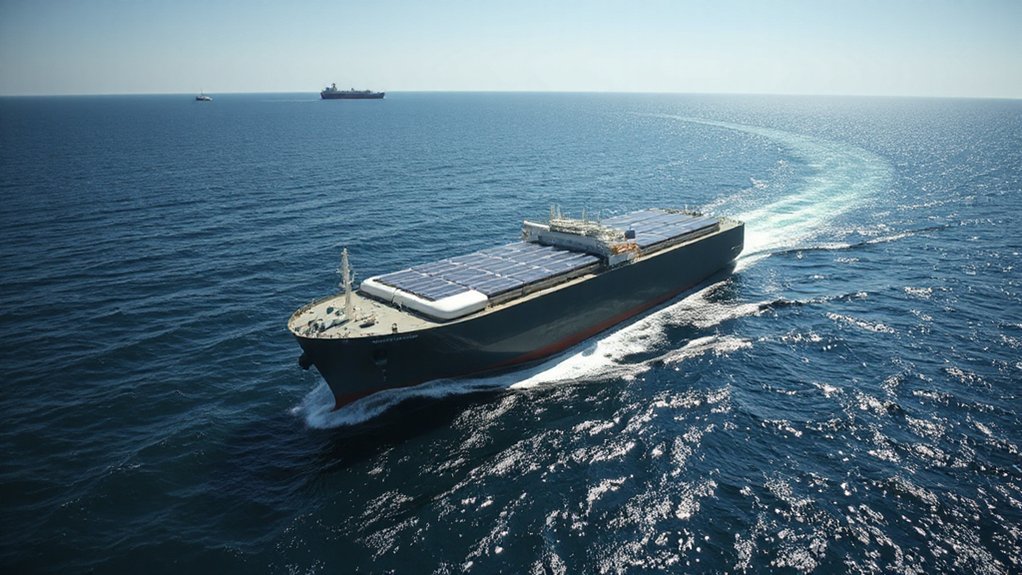
While the shipping industry races to embrace ammonia as the next miracle fuel for a climate-conscious world, this chemical compound presents a classic case of solving one problem while potentially creating several others. Ships powered by ammonia emit zero carbon dioxide at the point of use—pretty impressive compared to today’s dirty fuel oil.
But here’s the catch: it’s only truly “green” if produced using renewable energy. Make it with fossil fuels and you’ve basically just moved the carbon problem somewhere else.
The numbers tell an interesting story. Converting global shipping to low-carbon ammonia could slash the industry’s climate impact to just 5.8% of current levels. Not bad.
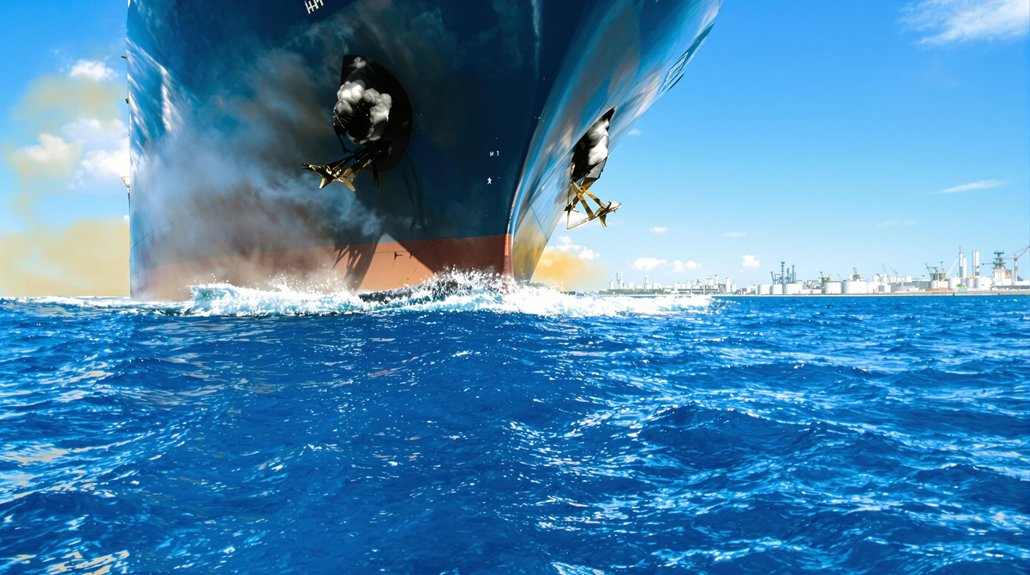
But ammonia combustion produces nitrous oxide—a greenhouse gas roughly 300 times more potent than CO2. Oops. And that’s before we talk about the nitrogen oxides (NOx) spewing from ammonia engines, creating that lovely cocktail of air pollution that damages lungs and hearts.
Then there’s “ammonia slip”—unburned ammonia escaping into the air, forming dangerous particulate matter. Without proper controls, ports could become even more hazardous to nearby communities than they already are. Some engine designs mixing ammonia with hydrogen show promise for reducing these emissions, but they’ll need scrubbers. Lots of scrubbers.
The ocean itself isn’t thrilled about this plan either. Ammonia is acutely toxic to marine life, with spills particularly devastating in warmer, less saline waters—exactly where many major shipping routes run. The shift to ammonia fuel could potentially result in up to 600,000 additional premature deaths annually if current regulations remain unchanged. A comprehensive study by Ricardo for the Environmental Defense Fund confirms that higher temperatures significantly amplify the negative impact of ammonia on aquatic ecosystems. Imagine a tanker collision in a tropical strait. Not pretty.
The shipping industry does have some experience handling ammonia as cargo and refrigerant, but using it as fuel? That’s a whole different ballgame. Similar to how AI systems require energy optimization to reduce their environmental impact, the maritime sector needs advanced technological solutions to address ammonia’s potential hazards.
The International Maritime Organization is developing lifecycle standards that will push for cleaner ammonia pathways, but the question remains: are we trading our carbon problem for a toxic one? Sometimes progress comes with a side of new problems.
References
- https://www.ricardo.com/en/news-and-insights/press-releases/2022/ricardo-report-examines-ecological-impact-of-ammonia-as-a-shipping-fuel
- https://news.mit.edu/2024/study-finds-health-risks-switching-ships-to-ammonia-fuel-0711
- https://www.lr.org/en/knowledge/press-room/press-listing/press-release/2022/new-report-examines-the-ecological-impact-of-ammonia-as-a-shipping-fuel/
- https://environment.ec.europa.eu/news/shipping-ammonia-fuel-could-reduce-sectors-greenhouse-gas-emissions-air-pollution-controls-would-be-2025-02-24_en
- https://blogs.edf.org/energyexchange/2025/05/28/clarifying-the-environmental-impacts-of-ammonia-as-a-shipping-fuel-a-call-for-deeper-understanding-and-effective-management/