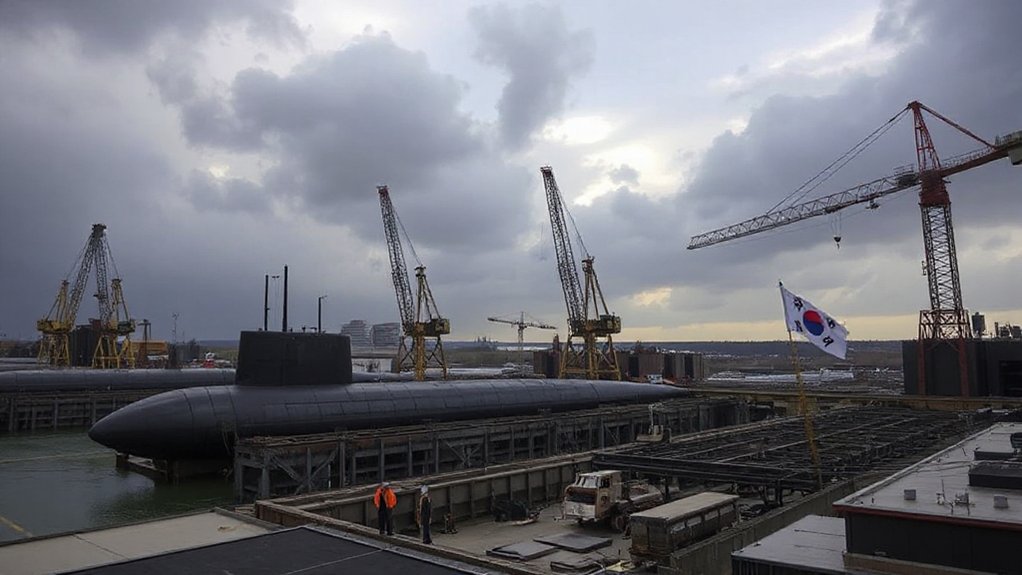

Despite its grand shipbuilding heritage, Philadelphia Shipyard isn’t anywhere close to producing nuclear submarines for South Korea. The facility, recently acquired by South Korean conglomerate Hanwha in 2024, lacks pretty much everything needed to build nuclear subs. No radiation shielding. No reactor installation equipment. Zero experience with submarines of any kind. But hey, minor details, right?
Philadelphia Shipyard building nuclear submarines is like asking a pancake chef to create a wedding cake. Ambitious but missing key ingredients.
Former President Trump made headlines when he gave the “green light” for South Korea’s nuclear submarine ambitions, specifically highlighting Hanwha Philly Shipyard as a potential construction site. Nice thought. Ambitious. Also wildly impractical given current capabilities.
The shipyard has been building commercial vessels. Building a nuclear submarine? That’s like going from assembling bicycles to constructing space shuttles. Not exactly a weekend upgrade project.
South Korea’s submarine fleet currently consists of 24 diesel-electric submarines across three classes. All conventional. No nuclear propulsion anywhere in sight. Their latest domestically developed KS-III submarines are impressive, but they’re still diesel boats. Nuclear submarines would represent a massive leap in capability, offering virtually unlimited range and superior underwater endurance.
The technical challenges are enormous. Nuclear subs require specialized infrastructure, advanced manufacturing techniques, and highly skilled labor—particularly for integrating those pesky nuclear reactors safely. The Korean workforce faces significant skill shortages in these specialized areas. The Korean shipbuilders have only developed diesel submarine technology since the late 1980s, making nuclear propulsion an entirely new frontier. South Korea has been conducting design studies for miniature nuclear reactors suitable for submarine propulsion since 2003, but theory and implementation remain far apart.
Transforming Philly Shipyard would require substantial upgrades. We’re talking years of work and billions in investment before the first keel could be laid.
The geopolitical stakes are high. South Korea wants nuclear submarines primarily to counter China’s expanding naval power. But wanting something and having the capability to build it are two very different things.
References
- https://koreajoongangdaily.joins.com/news/2025-10-31/business/industry/Building-nuclear-subs-no-easy-task-but-could-pay-off-big-for-Korea/2434059
- https://www.twz.com/sea/south-koreas-nuclear-submarine-ambitions-take-major-step-forward
- https://www.navalnews.com/naval-news/2025/10/usa-gives-south-korea-green-light-to-build-nuclear-submarines/
- https://gcaptain.com/trump-says-south-korea-to-build-nuclear-submarine-at-philadelphia-shipyard-lacking-the-capability/