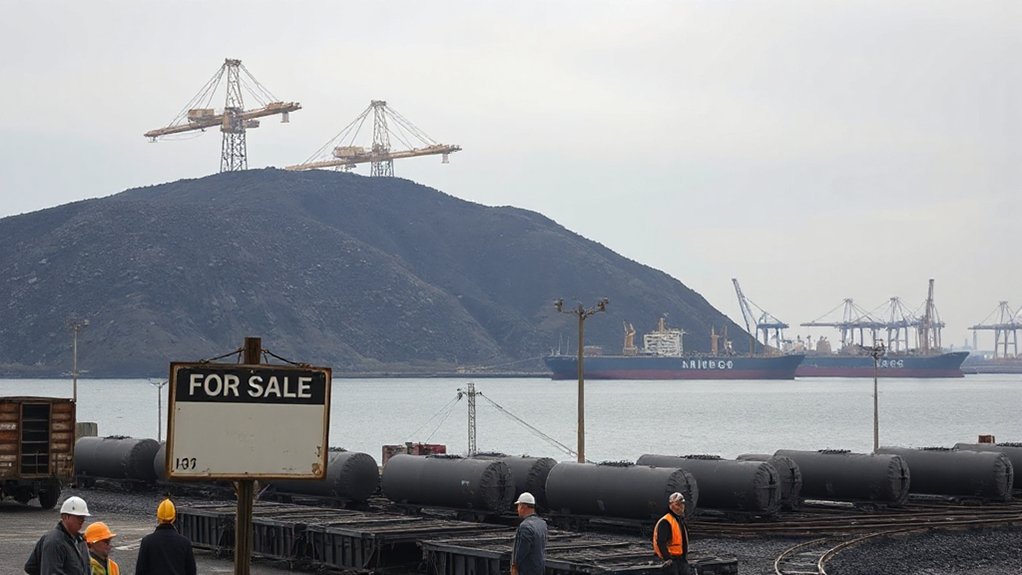

The hammer has fallen on American coal. US exports plummeted 11% in the first half of 2025 compared to last year, with China responsible for roughly 75% of the overseas decline. Both thermal and metallurgical coal shipments are down, leaving ports in Baltimore and Virginia noticeably quieter. The victims? About 500 coal workers in southern West Virginia lost their jobs in August. Just another month in America’s industrial heartland.
China’s 15% tariff on American coal, imposed in February, was the knife twist that did it. Part of an escalating trade war where China targeted US energy and agricultural products while America slapped tariffs sometimes exceeding 50% on Chinese goods. China’s average tariff on US exports now sits at 32.6%. The math isn’t complicated: American coal just costs too much now.
The timing couldn’t be worse. US metallurgical coal exports had actually recovered in 2024, reaching 50.34 million metric tons, with Asian markets accounting for 22.64 million tons. Then came the crash – a brutal 48% year-over-year decline in Q1 2025. The irony? Chinese buyers say the tariffs barely mattered. American coal was already too expensive even before they added the extra 15%.
It’s not just miners feeling the pain. Rail companies like CSX and Norfolk Southern report significant drops in coal tonnage. Rail transport infrastructure has been particularly hard hit by the reduced shipments. These retaliatory measures mirror China’s strategy of redirecting energy exports to more favorable markets with fewer trade barriers. Local businesses in coal country are suffering too. When miners don’t work, they don’t spend. Simple as that.
The US-China trade deficit stood at $295.4 billion in 2024 – about a quarter of America’s total deficit. Recent retaliatory tariffs of 34% imposed by China on April 4, 2025, effective April 10, further exacerbate the trade imbalance. Both sides keep punching. America raises tariffs, China responds. American coal gets caught in the crossfire.
Meanwhile, in places like southern West Virginia, families are figuring out how to make ends meet. The coal trains aren’t running as often. The mines are quieter. And China? They’re buying coal elsewhere. The great coal war continues, with American miners paying the price.
References
- https://wvpublic.org/story/energy-environment/u-s-data-china-trade-tiff-drives-decline-in-export-coal/
- https://www.spglobal.com/commodity-insights/en/news-research/latest-news/metals/040825-us-china-tariff-spat-clouds-met-coal-market-outlook
- https://thefulcrum.us/business-democracy/trump-china-tariffs
- https://www.piie.com/research/piie-charts/2019/us-china-trade-war-tariffs-date-chart
- https://equitablegrowth.org/tariffs-impact-u-s-industries-differently-with-manufacturing-the-most-exposed/
- https://en.wikipedia.org/wiki/China–United_States_trade_war
- https://budgetlab.yale.edu/research/state-us-tariffs-october-17-2025