While scientists debate the merits of emissions reduction strategies, a more radical approach looms on the horizon: geoengineering. The Royal Society has sounded the alarm that tinkering with our planet’s thermostat might just lead to disaster. Who knew playing god with the atmosphere could backfire?
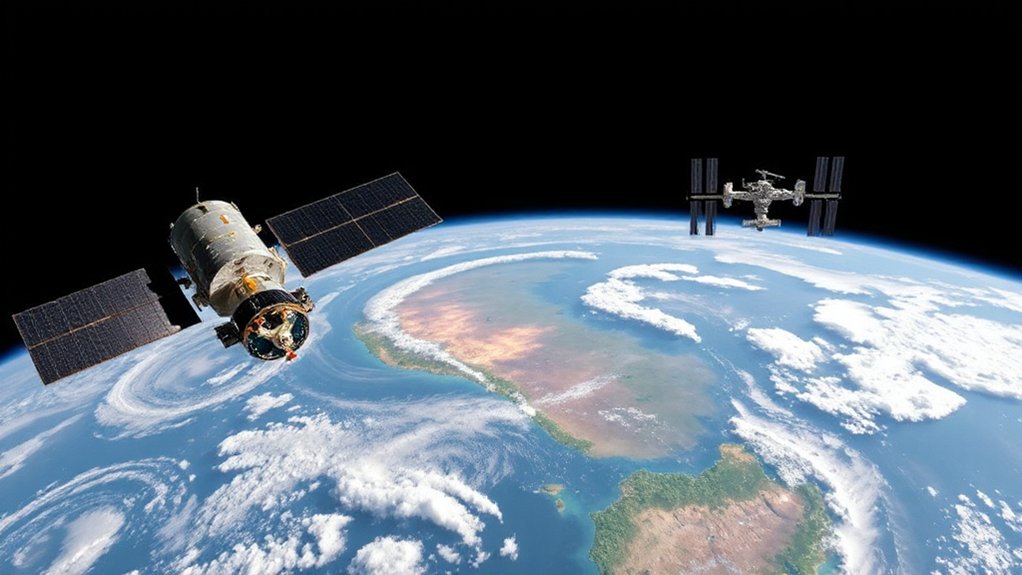
Geoengineering comes in various flavors. Solar Radiation Management aims to reflect sunlight away using atmospheric mirrors or aerosols. Carbon Dioxide Removal tries to suck CO₂ from the air. Then there’s cloud brightening, ocean fertilization, and massive reforestation. Sounds fancy, right?
Geoengineers dream up planetary Band-Aids while nature holds its breath. From sky mirrors to carbon vacuums—we’ve got options.
But here’s the kicker – these interventions come with massive risks. SRM could wreck regional rainfall patterns. Nobody knows exactly where, but someone’s getting a drought. That’s just math. And if we ever stop these interventions? Temperatures could skyrocket faster than concert ticket prices.
The political mess would be spectacular. Imagine China deciding to cool things down while India wants it warmer. International tension? You bet. There’s zero global governance for this stuff. None.
Scientists are practically flying blind here. Limited modeling data means we’re fundamentally guessing at outcomes. And these aren’t short-term fixes – we’d be signing up for centuries of maintenance. Stop the program? Enjoy your rapid warming!
The economics aren’t pretty either. These projects would cost billions. Money that could go toward actually reducing emissions. Talk about a distraction. Instead, we could be investing in renewable markets that create jobs and drive economic growth while addressing the root cause.
Meanwhile, nobody’s talking enough about how geoengineering could trash entire ecosystems. Marine life already struggling with acidification won’t appreciate our oceanic experiments.
The ethical questions are just as thorny. Who gave us permission to alter the planet for generations to come? Nobody, that’s who.
The Royal Society’s message is clear: geoengineering might seem like a quick fix, but it’s more like performing heart surgery with a butter knife. Possible? Maybe. Advisable? Not unless you’re desperate. A recent study emphasizes the severe unintended consequences that could impact humanity for generations to come. The report explicitly concludes that geoengineering should never be viewed as a substitute for emissions reduction, regardless of its potential effectiveness.
References
- https://cleantechnica.com/?p=363427
- https://www.bosch-stiftung.de/sites/default/files/publications/pdf/2018-05/GGF2025_Geoengineering_RZ_Web.pdf
- https://www.oxfordmartin.ox.ac.uk/news/geoengineering-royal-society
- https://carnegieendowment.org/research/2025/07/geoengineering-assessing-risks-in-the-era-of-planetary-security?lang=en