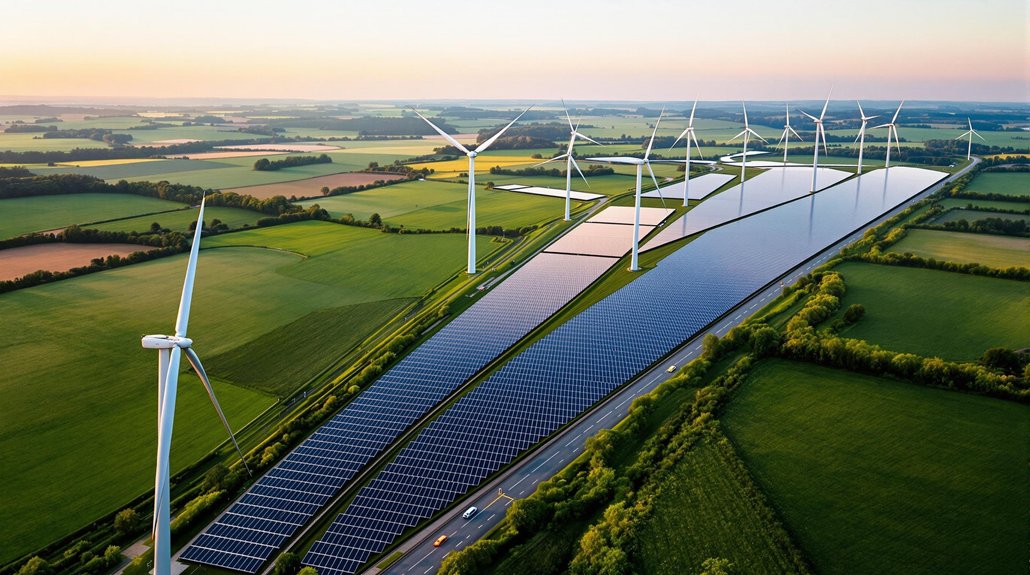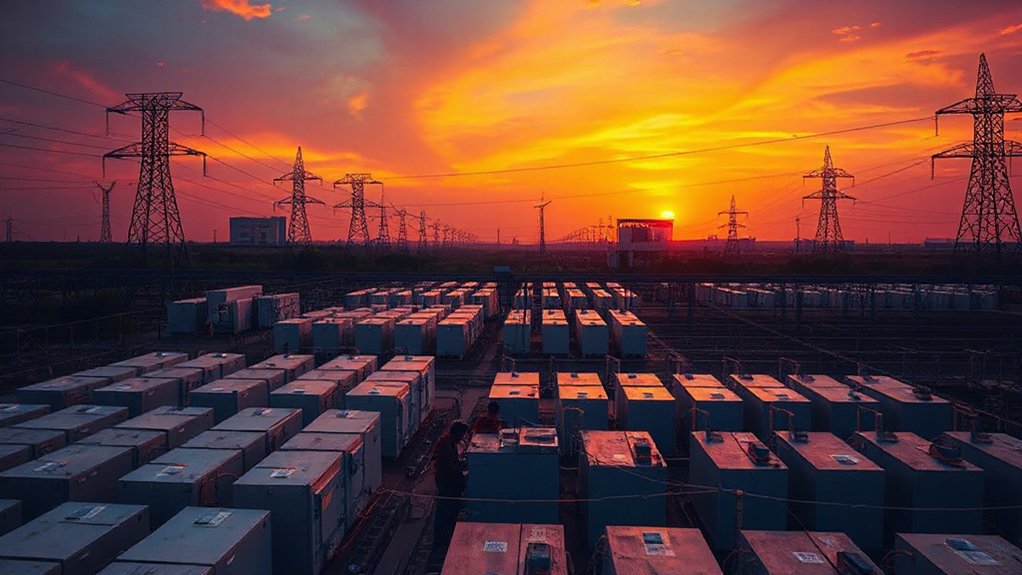
Progress in renewable energy faces a brutal reality check. Those grand climate pledges from governments worldwide? They’re hitting walls. Big ones. Grid infrastructure can’t keep up, with transformer and cable prices jumping 33% since 2022. Want critical grid components? Get in line and wait 2-3 years—double the previous timeline.
Meanwhile, a staggering 1,650 GW of solar and wind capacity sits in limbo, waiting for grid connections. That’s six times Germany’s entire generation capacity, just twiddling its thumbs.
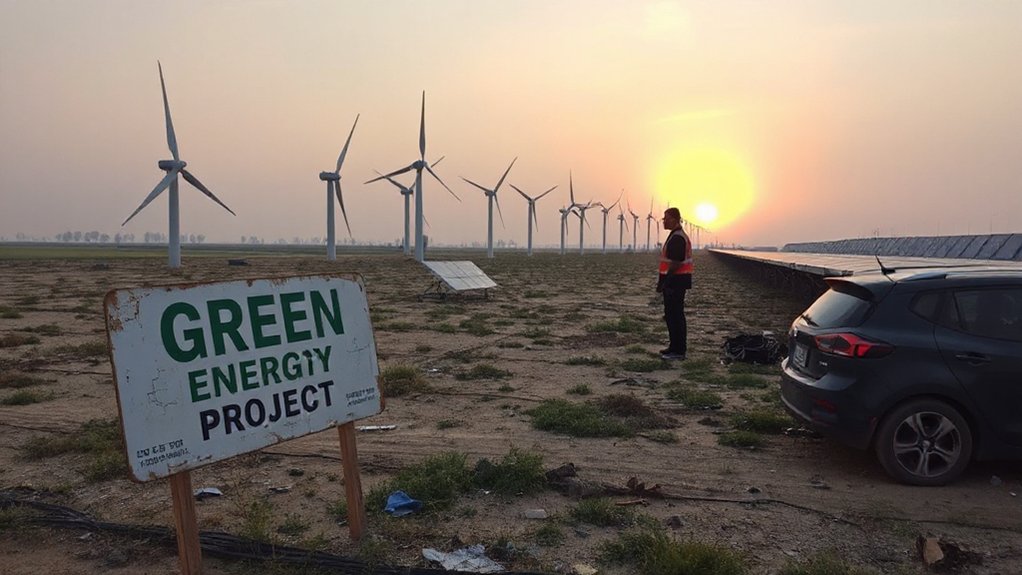
Bureaucracy isn’t helping either. Permitting delays are like quicksand for renewable projects. Some regions are trying to streamline the process—Europe’s making noise about nuclear and mineral supply reforms—but let’s be real, it’s still a maze of red tape.
Projects get stuck in planning purgatory while paperwork piles up.
Then there’s the materials problem. Need lithium for batteries? Cobalt? Rare earth elements? Good luck. Supply chains remain fragile, costs are up, and timelines stretch like cheap elastic.
Everyone wants to build green tech, but nobody’s solved the fundamental question of where all these minerals will come from. Recycling programs? Still in their infancy. How convenient.
The money situation isn’t any better. Governments spent ten times more subsidizing fossil fuels than supporting renewables in 2023. Ten. Times. More. Talk about mixed messages.
Emerging economies face massive investment gaps for the infrastructure needed to support green growth, while private-public financial cooperation moves at glacial speed. The existing power grid’s D+ grade reflects serious capacity concerns that could undermine renewable energy integration efforts.
Even energy efficiency gains are slowing down—from 2% in 2022 to just 1% in 2023. Not nearly enough to offset growing demand from data centers and cooling needs. This decline is happening despite EV battery costs dropping below cost parity levels with fossil fuels in 2024. Programs like DOE’s R-STEP initiative are attempting to address these bottlenecks by providing technical support to local governments for renewable energy siting.
And methane? Still spewing into the atmosphere, undoing progress elsewhere.
The renewable revolution isn’t dead—but it’s definitely hitting some serious speed bumps. Grand visions are colliding with harder realities: physical constraints, bureaucratic inertia, material shortages, and financial shortsightedness.
The clean energy evolution needs more than just ambitious targets. It needs solutions to these very real, very stubborn problems.
References
- https://www.mckinsey.com/mgi/our-research/the-hard-stuff-2025-taking-stock-of-progress-on-the-physical-challenges-of-the-energy-transition
- https://rmi.org/the-energy-transition-in-2025-what-to-watch-for/
- https://www.energy.gov/eere/look-ahead-clean-energy-2025
- https://www.eia.gov/outlooks/aeo/
- https://ember-energy.org/latest-insights/renewable-additions-in-2025-are-once-again-expected-to-surge-putting-tripling-within-reach/
- https://www.ren21.net/gsr-2025/downloads/pdf/go/GSR_2025_GO_2025_Full_Report.pdf