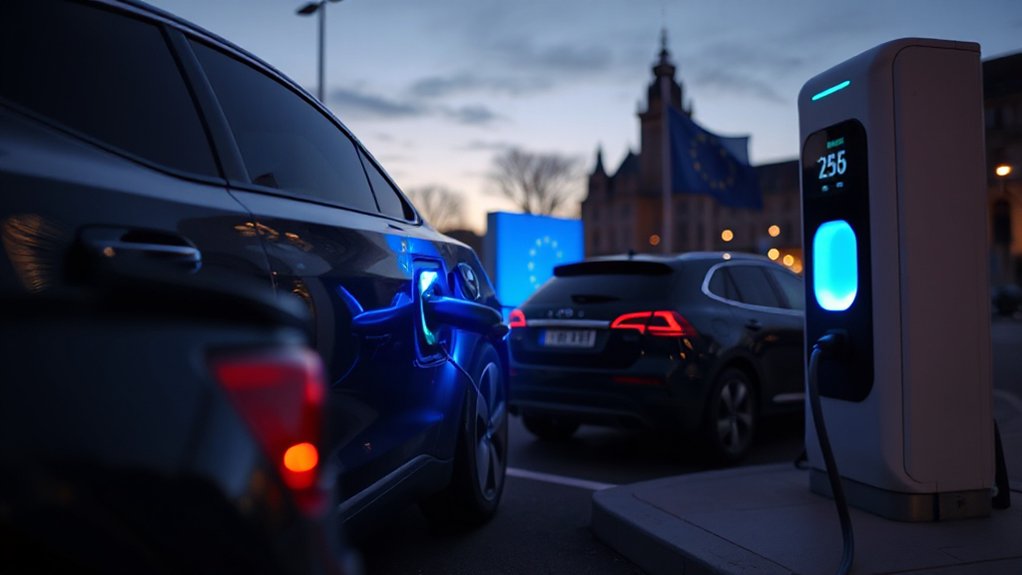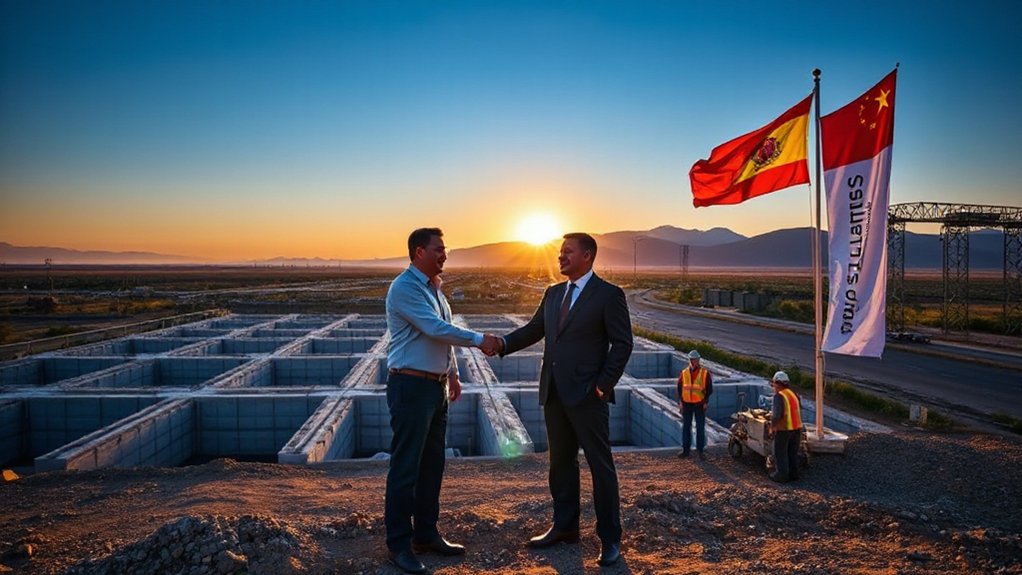
CATL, the world’s largest EV battery maker, is joining forces with automotive powerhouse Stellantis in a massive €4.1 billion joint venture. The deal will see a new lithium iron phosphate (LFP) battery plant rise from the ground in Zaragoza, Spain. Not your average factory announcement. This one’s a biggie.
The 50-50 partnership represents one of the largest Chinese industrial investments in Spain. Ever. The European Union is throwing in more than €300 million to sweeten the deal. Because nothing says “we believe in you” like a few hundred million in funding.
Production won’t kick off until late 2026, but when it does, watch out. The plant aims to pump out up to 50 gigawatt-hours of batteries annually. That’s a lot of juice. These aren’t just any batteries either – they’re LFP cells known for being both durable and affordable. Some can last up to 12 years or a million kilometers. Try killing one of these things.
Jobs, jobs, jobs. About 4,000 of them when fully operational. Initially, around 2,000 Chinese workers will handle construction, but that number will drop as local hiring ramps up. Eventually, about 3,000 Spaniards will run the show, with Chinese workers making up less than 10% of the workforce. Culture shock, anyone?
Spain’s not complaining. The country is positioning itself as Europe’s battery hotspot, thanks to lower labor and energy costs. Smart move. The Zaragoza site already boasts clean energy credentials, making it ideal for “green” manufacturing. This venture adds to the global battery market that’s projected to reach nearly $330 billion by 2030. The facility is designed to be completely carbon neutral, supporting both companies’ ambitious climate goals. Spain’s impressive renewable energy generation exceeded 50% last year, making it an attractive location for sustainable manufacturing.
For Stellantis, it’s all part of their Dare Forward 2030 plan to flood the market with affordable electric vehicles. CATL gets to expand its European footprint beyond existing plants in Germany and Hungary. Win-win.
Europe needs the capacity desperately. Even if it means admitting they still depend on non-European suppliers for the technology. Pride’s expensive these days.
References
- https://www.stellantis.com/en/news/press-releases/2024/december/stellantis-and-calt-to-invest-up-to-4-1-billion-in-joint-venture-for-large-scale-lfp-battery-plant-in-spain
- https://www.euronews.com/business/2025/11/27/catl-and-stellantis-break-ground-on-spains-largest-ev-battery-plant
- https://www.globaltimes.cn/page/202511/1349251.shtml
- https://evertiq.com/news/2025-11-27-catl-stellantis-starts-construction-on-major-battery-plant-in-spain
- https://auto.economictimes.indiatimes.com/news/auto-components/chinas-catl-breaks-ground-on-huge-spanish-battery-plant-bringing-its-own-workers/125607482
- http://en.people.cn/n3/2025/0908/c90000-20363089.html
- https://batteriesnews.com/chinas-catl-breaks-ground-on-huge-spanish-battery-plant-bringing-its-own-workers/