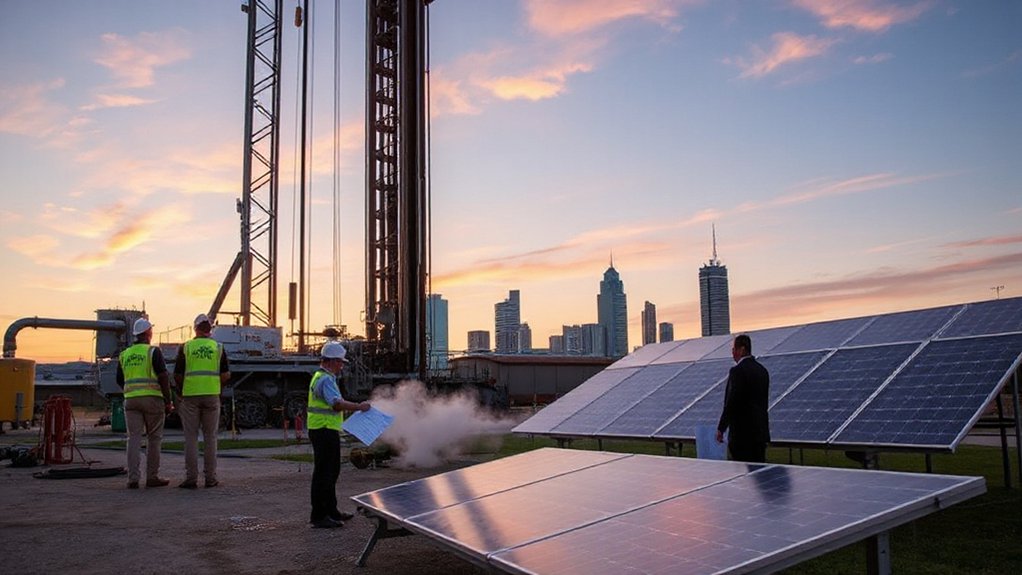
As Scandinavian nations race to claim their stake in Europe’s green energy revolution, Denmark’s Bornholm island is transforming from a quiet Baltic Sea outpost into a renewable powerhouse. This natural island, nestled near Sweden’s southern tip, isn’t just pretty scenery anymore. By 2030, it’ll be humming with 3 gigawatts of offshore wind power. That’s enough juice to power 13 million European homes. Not too shabby for a modest Baltic island.
The transformation isn’t cheap—$8.4 billion doesn’t just fall from the sky. But with the EU kicking in €645 million in subsidies and private investors footing most of the bill, Denmark’s wallet won’t be completely emptied. Companies like Ørsted, Vestas, and Siemens Energy are diving in headfirst. They smell money in the wind, literally.
Bornholm’s strategic location makes it perfect for sharing electricity. Two massive cable systems will connect the island to northern Germany (2 GW) and Denmark’s Zealand (1.2 GW). Siemens Energy is building high-voltage converters worth a cool $1.2 billion. These underwater electricity highways don’t build themselves.
Bornholm isn’t just going green—it’s becoming Europe’s renewable crossroads, with underwater power highways connecting nations through billion-dollar infrastructure.
The timeline is ambitious. Environmental permits and archaeological studies wrap up by 2025, then construction kicks off. Operations begin in 2030, with high-voltage converters fully online by mid-2030s.
Meanwhile, the North Sea island project keeps hitting snags. Classic.
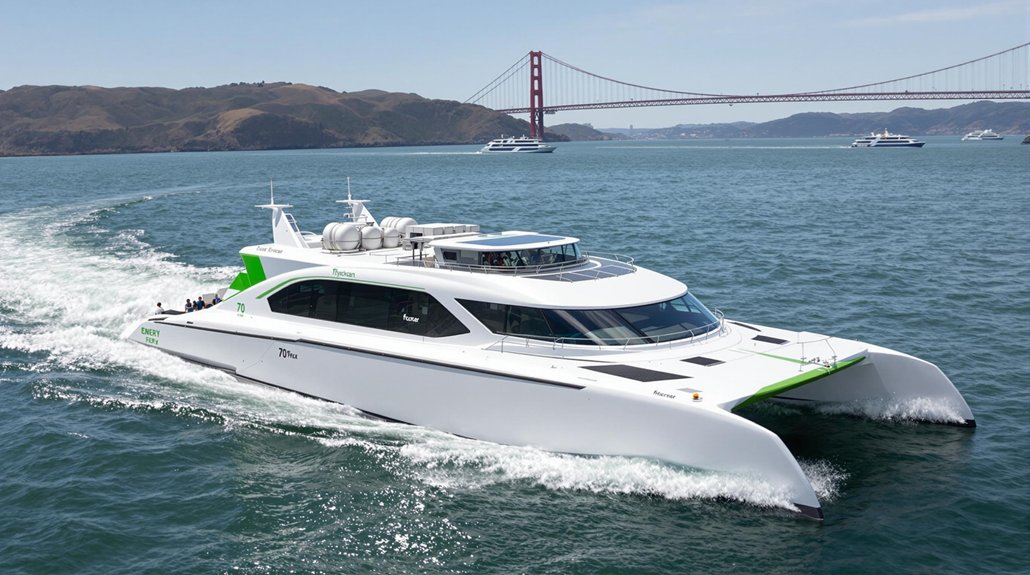
What makes Bornholm truly revolutionary is its potential for maritime electrification. Ships spew massive amounts of carbon. Now imagine them plugging into clean wind power instead of burning bunker fuel. Game changer. The project will enable production of renewable hydrogen through electrolysis, offering new fuel alternatives for shipping. The Bornholm hub will act as a critical component in stabilizing green energy flows throughout northern Europe, ensuring reliable power even when winds are variable. The integration of battery storage systems will be essential for maintaining grid balance when solar or wind generation fluctuates.
The project’s international connections are impressive. Germany, the Netherlands, Poland, and Sweden will all tap into this renewable gold mine. The Germans even agreed to take the blame for transmission problems. That’s true friendship in the energy world.
When complete, Bornholm will quadruple Denmark’s offshore wind capacity. Europe’s energy map is being redrawn, and this little island is holding the pen.
References
- https://windeurope.org/news/energy-islands-denmark-continues-to-count-big-on-offshore-wind/
- https://whogreen.com/contentstories/denmarks-energy-islands-powering-a-greener-europe/
- https://www.bssc.pl/2025/08/30/bornholm-the-baltic-island-energy-hub/
- https://mediaenviron.org/article/125711-from-wind-turbines-to-energy-islands-wind-as-model-power-in-denmark
- https://www.powersystems.technology/siemens-energy-wins-1-2b-contract-for-baltic-sea-energy-island-project/
- https://windtech-international.com/industry-news/stillstrom-and-port-of-roenne-examine-role-of-energy-island-bornholm-in-maritime-electrification
- https://www.energy.gov/sites/default/files/2021-08/Offshore Wind Market Report 2021 Edition_Final.pdf