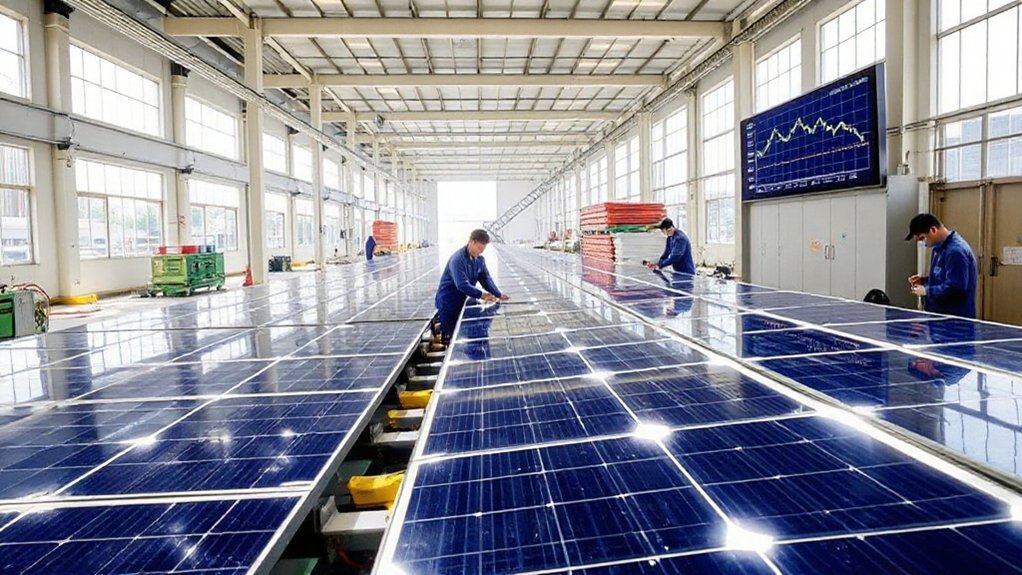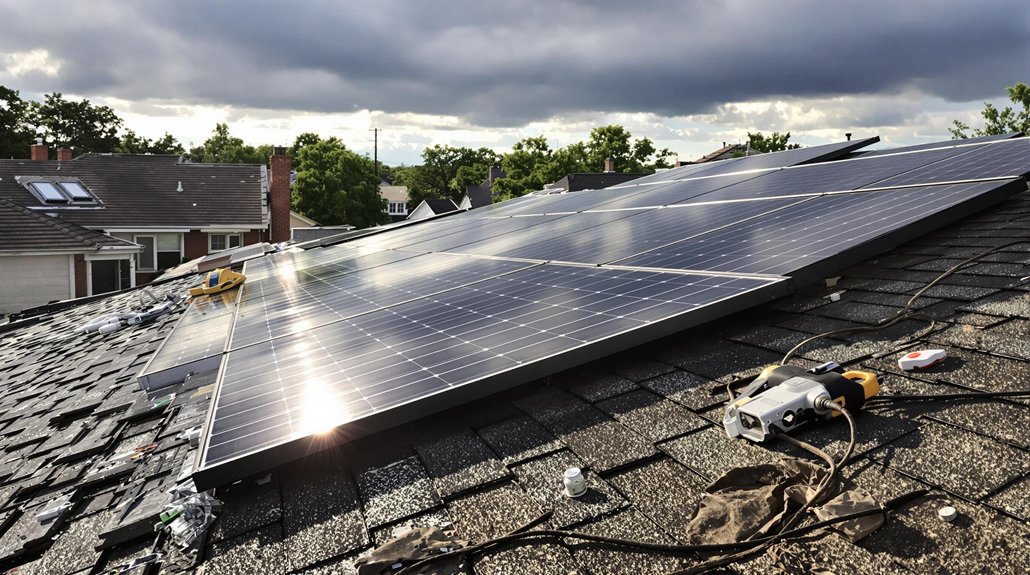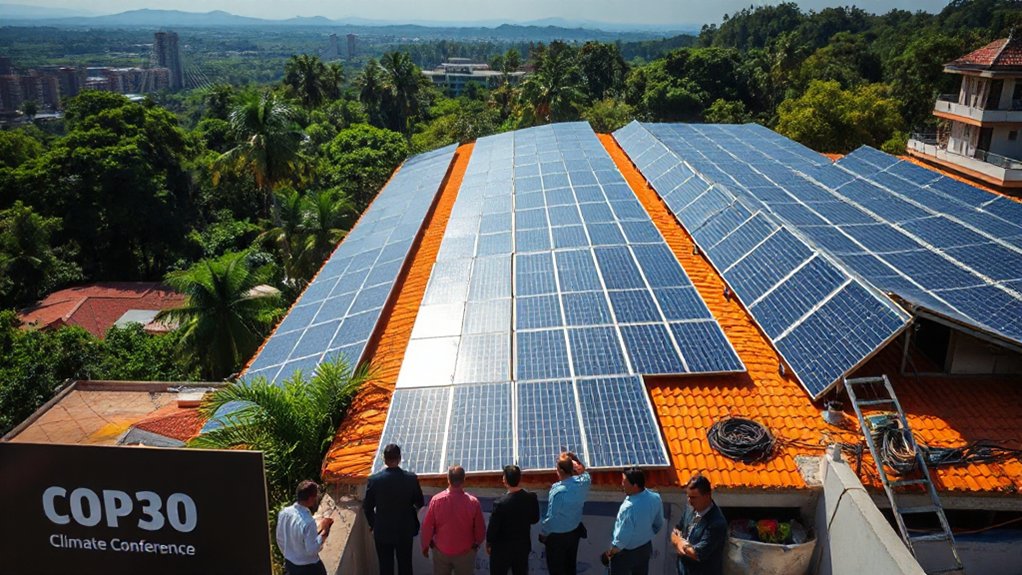
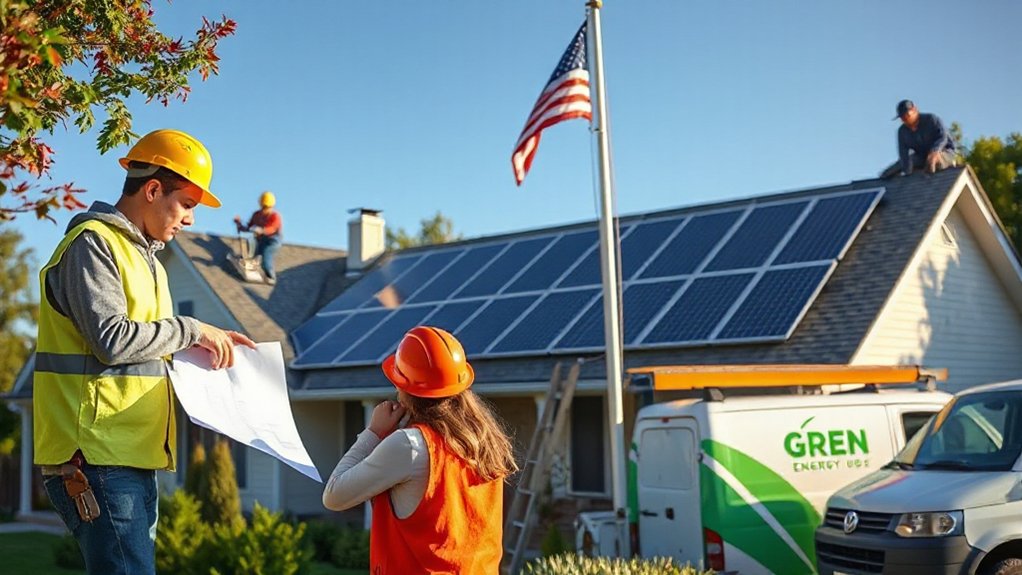
While experts have long debated which energy technology would dominate the future grid, distributed solar has quietly settled the argument. The numbers don’t lie. Solar PV employment surpassed five million globally in 2024, with distributed systems driving the biggest chunk of that growth—adding a whopping 225,000 jobs in just one year. That’s more than double what utility-scale projects managed. Not bad for the little guy on the roof.
Despite representing only about 43% of installed capacity, distributed solar accounts for roughly two-thirds of all solar jobs worldwide. Why? These systems create nearly triple the jobs per megawatt compared to their utility-scale cousins. Every roof needs its own design, permits, and installation team. No copy-paste here.
Small but mighty: distributed solar creates 3x more jobs per megawatt than utility-scale projects, powering local economies roof by roof.
Global solar capacity ballooned to around 540 GW recently, with distributed generation making up a staggering 63% of new additions. In the U.S., solar now represents 13.7% of net summer capacity and 6.9% of annual generation. The utility folks are trying to catch up with 12 GW added in early 2025, but distributed keeps stealing the show. The race for solar dominance is most evident in Texas, where 27% of capacity was added in the first half of 2025 alone.
The economic forces aren’t complicated. Net-metering, retail price differences, and on-site consumption incentives have made rooftop solar irresistible in many markets. When policies shift—like China’s pricing reforms—the market notices immediately. Turns out people respond to financial incentives. Shocking. The 30% tax credit at the federal level has been particularly effective at driving residential adoption across economic demographics.
Fixed-mount distributed PV already beats natural gas combined-cycle generation in many places, even without credits. No wonder deployment is booming. And with residential storage growing fivefold since 2020 to about 4.8 GW, the distributed revolution is just getting started.
Market forecasts suggest global PV growth might slow to around 10% in 2025, but distributed segments remain strong in most regions. As the sector expands, demand for skilled tradespeople like electricians continues to rise, representing over 20% of the total solar workforce. Virtual power plants and aggregation policies are helping monetize these assets further. The writing’s on the wall—or rather, the roof. Distributed solar isn’t just competing; it’s winning.
References
- https://www.pv-magazine.com/2025/12/08/distributed-solar-employment-vastly-outpaces-utility-scale-solar-globally-iea-reports/
- https://docs.nrel.gov/docs/fy25osti/95135.pdf
- https://www.eia.gov/todayinenergy/detail.php?id=65964
- https://www.deloitte.com/us/en/insights/industry/renewable-energy/renewable-energy-industry-outlook.html
- https://www.solarpowereurope.org/insights/outlooks/global-market-outlook-for-solar-power-2025-2029/detail
- https://emp.lbl.gov/utility-scale-solar