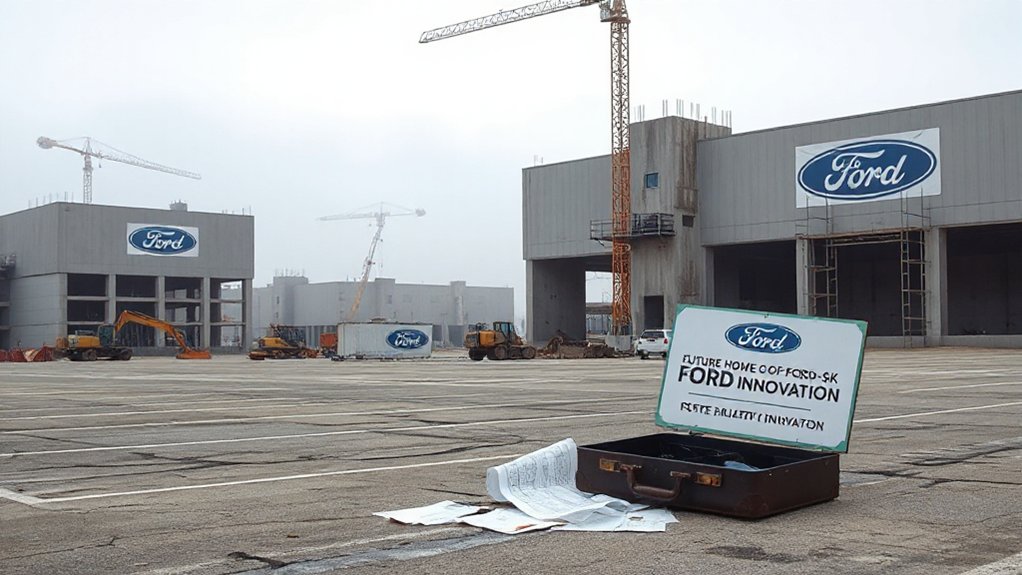
The divorce settlement gives Ford the Kentucky complex where F-150 Lightning batteries started rolling out just this August. SK On gets the Tennessee plant, which they’re pivoting to energy storage systems. Smart move, considering nobody’s buying EVs like they expected.
Let’s be honest about what happened here. SK On has been bleeding money – a Q3 operating loss of 124.8 billion won (that’s about $84.7 million), doubling their previous quarter’s losses. Ouch.
The harsh reality? SK On’s bleeding cash faster than they can plug the leak.
Ford isn’t doing much better, especially after that sweet $7,500 federal tax credit evaporated on September 30th. CEO Jim Farley even warned EV sales could plummet by half. Not exactly confidence-inspiring.
The timing couldn’t be worse. Just as the first Kentucky production line started making batteries, the second line was already on pause. So much for those state incentives tied to hiring targets. Kentucky officials must be thrilled.
Both companies are trying to spin this as a response to “market shifts” rather than a colossal failure. This major decision was announced on December 11, marking a significant shift in U.S. electric vehicle battery partnerships. The partnership had originally led to the establishment of two battery plants in Hardin County. But the numbers don’t lie. When you’re hemorrhaging cash while staring down weaker demand, something’s gotta give. That something was an $11.4 billion partnership.
The fallout creates flexibility for both companies. Ford keeps producing batteries for its own vehicles in Kentucky, while SK On can chase utility and data center customers for its Tennessee facility. This pivot reflects broader challenges in the industry, where energy storage remains critical for managing the intermittent generation of renewable power sources.
Everyone saves face, nobody admits defeat. But make no mistake – this wasn’t the outcome either company envisioned when they broke ground together. Sometimes, battery empires just don’t last.
References
- https://www.freep.com/story/money/cars/ford/2025/12/11/south-korea-ford-motor-end-battery-joint-venture/87719157007/
- https://www.wdrb.com/news/business/ford-ends-sk-on-partnership-takes-full-control-of-kentucky-battery-plant-amid-ev-downturn/article_31999428-a218-4ca9-a25c-5d366c3a6b21.html
- https://www.supplychainbrain.com/articles/42987-sk-on-and-ford-motor-to-end-us-battery-factory-partnership