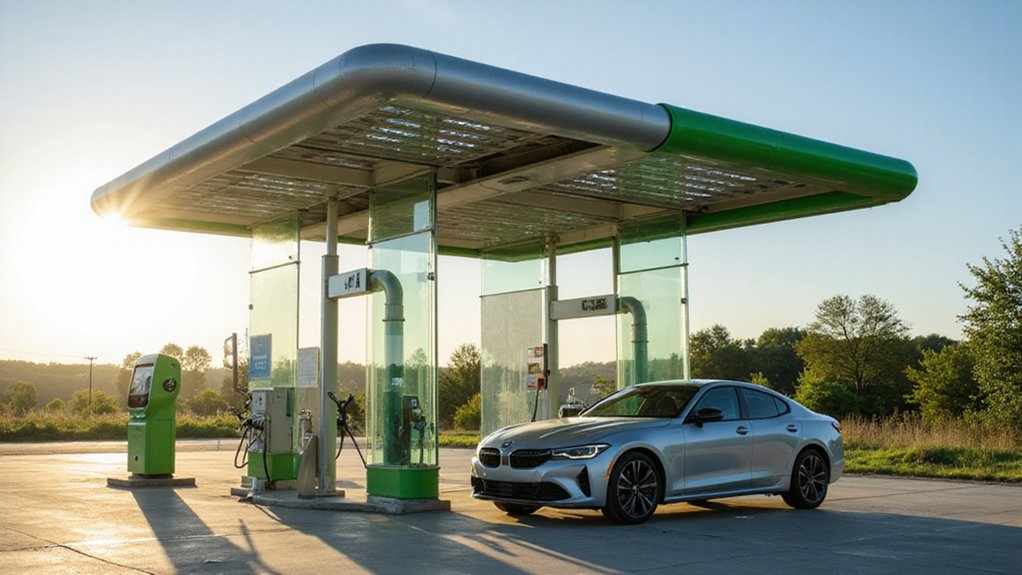
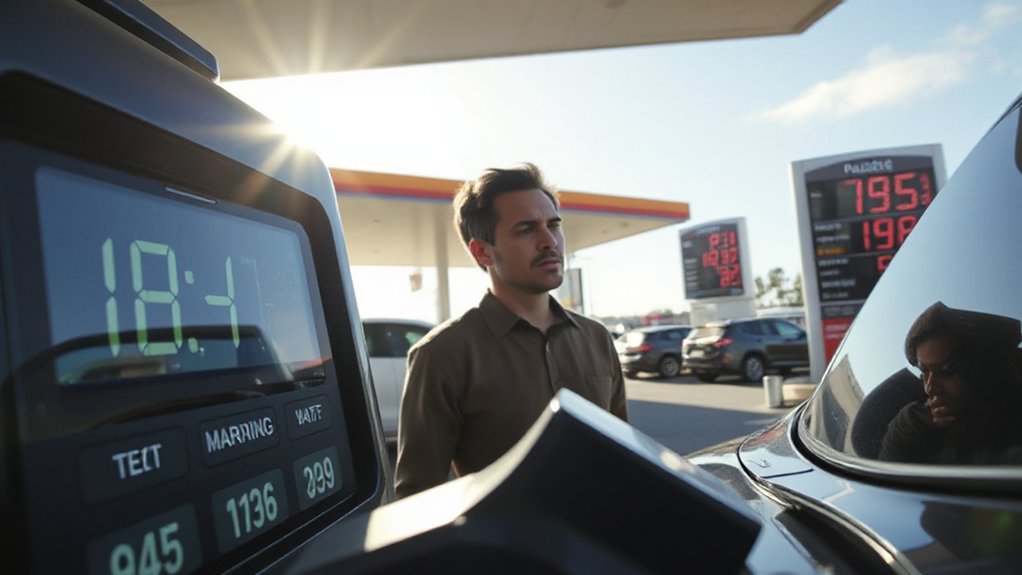
Nearly all discussions about hydrogen vehicles dance around one uncomfortable truth: they’re not as green as they seem. The auto industry loves to tout hydrogen fuel cells as the clean future of transportation. Zero tailpipe emissions! Just water vapor! Problem solved, right? Not exactly.
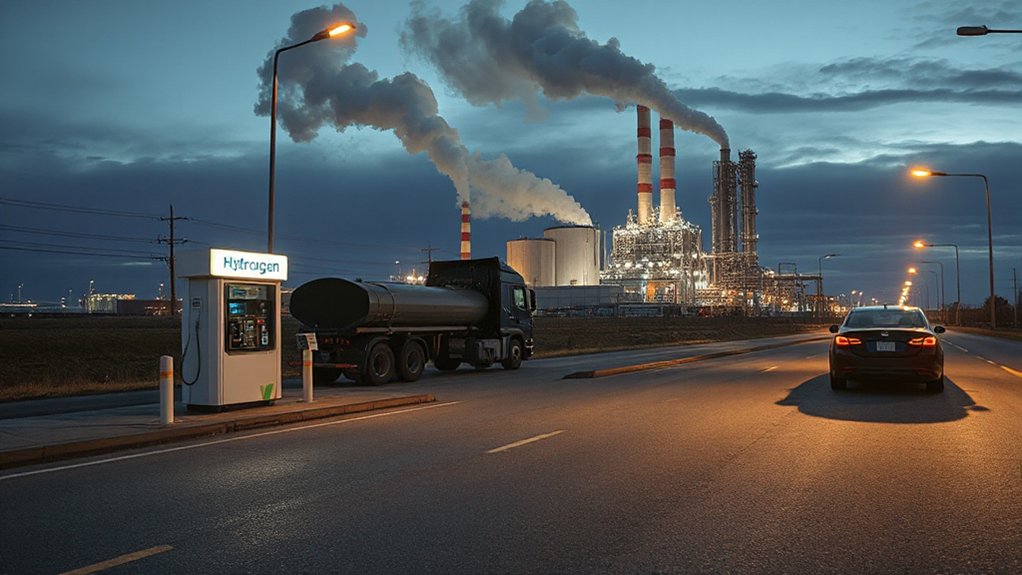
Let’s get real about hydrogen’s dirty secret: most of it comes from natural gas. This “gray hydrogen” has an emission intensity of 12.4 kgCO2e/kgH2, which actually exceeds diesel’s 11.3 kgCO2e/gal in some scenarios. Surprise! Your “clean” hydrogen vehicle might be worse for the climate than the diesel truck you’re replacing.
Most hydrogen comes from natural gas, making your “clean” hydrogen vehicle potentially dirtier than the diesel it replaces.
The math doesn’t lie. Hydrogen FCVs using electrolysis consume a whopping 40-55% more energy per mile than diesel vehicles. That energy has to come from somewhere, and that somewhere isn’t pretty. When using hydrogen from steam methane reforming, fuel cells smaller than 600 kW actually produce higher lifetime emissions than diesel. Let that sink in.
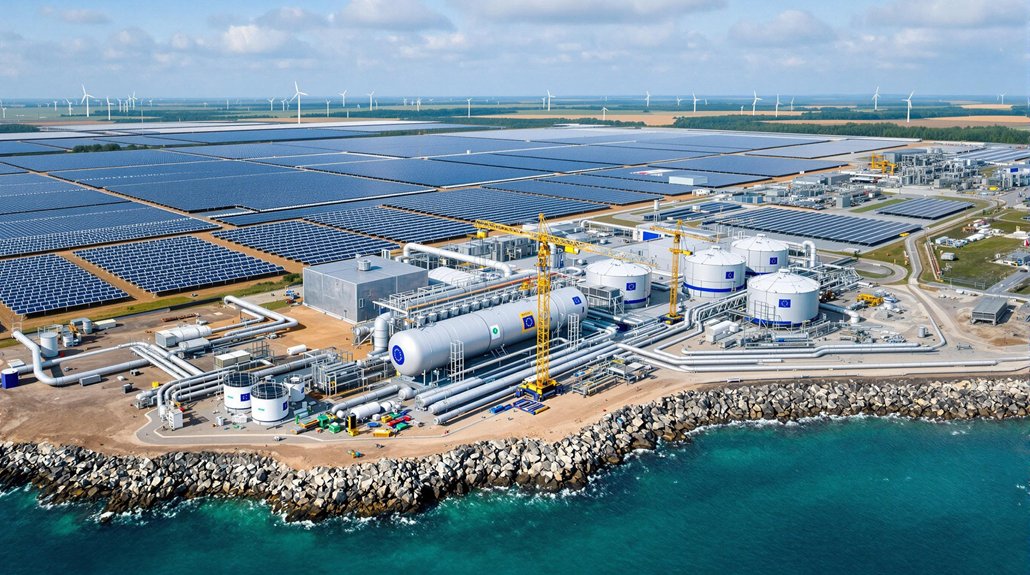
Sure, green hydrogen exists. It could reduce emissions by up to 89% compared to diesel. But that’s not what’s filling tanks today. Most hydrogen comes from fossil fuels, limiting real-world emission reductions to just 15-33%.
Meanwhile, battery electric trucks crush hydrogen with at least 63% lower emissions on standard grid electricity.
The inconvenient truth? Those “dirty” diesel engines have gotten cleaner. Modern clean diesels using renewable diesel often outperform hydrogen FCVs across multiple environmental metrics. They’ve reduced particulate matter by over 100% compared to 1990 levels.
Hydrogen vehicles do eliminate tailpipe pollutants, improving urban air quality. They refuel quickly like diesel, unlike their battery-powered cousins. But when counting well-to-wheels emissions—the complete picture—hydrogen’s green halo dims considerably.
The reality check hurts: hydrogen vehicles won’t save us from climate change until the hydrogen itself gets a whole lot cleaner. A comprehensive lifecycle assessment shows that duty cycles significantly impact overall emissions, with long-haul trucks showing different environmental profiles than those with variable driving patterns. Sometimes the future isn’t what we expected. Even on a cost basis, FCVs are significantly more expensive, costing twice as much to buy, maintain, and fuel compared to conventional diesel vehicles.
References
- https://stillwaterassociates.com/how-does-hydrogen-compare-to-biomass-based-diesel-on-ghg-pm-and-petroleum-reduction/
- https://sesamesustainability.com/sesame-insights-understanding-emissions-in-hydrogen-powered-trucks-key-factors-and-insights/
- https://theicct.org/publication/lca-ghg-emissions-hdv-fuels-europe-feb23/
- https://www.youtube.com/watch?v=-Atr0yC2LpE
- https://www.nuvera.com/hydrogen-is-the-new-diesel/