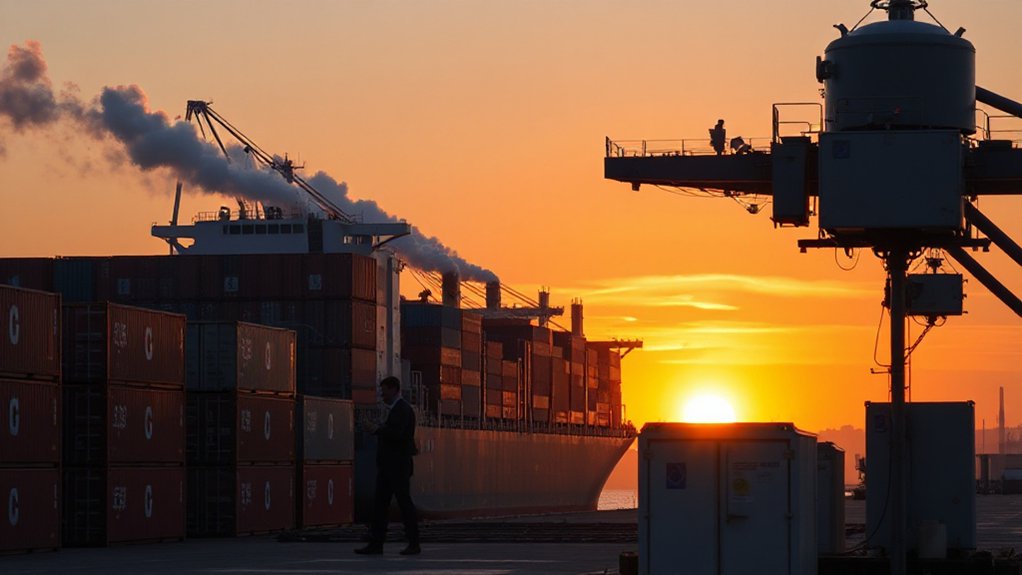

As the European Union continues its climate crusade, the Carbon Border Adjustment Mechanism (CBAM) has emerged as its latest weapon against global emissions. The system is pretty straightforward – if you want to sell carbon-intensive goods to the EU, you’ll pay for the pollution created making them. No exceptions. It mirrors the EU’s domestic carbon pricing system but applies it to imports, ensuring foreign producers can’t undercut EU companies that already pay for their emissions.
The rollout has been careful and calculated. An adjustment reporting phase kicked off in 2023, giving everyone time to adapt. But January 1, 2026? That’s when the real fun begins – actual financial obligations start. No more free passes. Importers will purchase CBAM certificates matching the embedded emissions in their products, with prices tied to the EU’s carbon market.
Not all industries face the music immediately. The initial focus is on the usual suspects: cement, iron and steel, aluminum, fertilizers, electricity, and hydrogen. You know, the stuff that belches carbon during production. Together they represent over half the emissions from sectors already covered by the EU’s carbon market. More industries will join the party later.
Companies have options for calculating their carbon footprint. Use actual emissions data and potentially pay less. Or go with default values and likely pay more. Your choice. Smart producers are already figuring out how to document their emissions accurately.
The system isn’t totally merciless. Carbon prices already paid in the country of origin can be deducted from CBAM obligations. But you better have receipts. Proper documentation is everything in this new carbon-conscious world. This approach stands in stark contrast to the EPA’s recent deregulation rampage affecting air quality and emissions standards in the United States.
Small businesses may find some relief as a proposed de minimis threshold exemption would exclude importers bringing in less than 50 tonnes of goods, potentially freeing up to 90% of importers from the administrative burden. The EU is also providing technical assistance programs to help developing countries and least developed countries adapt to the new requirements.
Global manufacturers face a new reality: pollute and pay, or clean up production. The EU’s message is crystal clear – climate action isn’t optional anymore. The rest of the world can either adapt or lose access to one of the planet’s largest markets.
References
- https://ecovadis.com/regulations/carbon-border-adjustment-mechanism-cbam/
- https://taxation-customs.ec.europa.eu/carbon-border-adjustment-mechanism_en
- https://trade.ec.europa.eu/access-to-markets/en/news/carbon-border-adjustment-mechanism-cbam
- https://www.life-climate.com/en/blog/cbam-2026-new-rules-strategic-preparation-compliance
- https://www.bruegel.org/analysis/case-delaying-application-eus-carbon-border-levy-electricity
- https://ccsi.columbia.edu/content/event-highlights-carbon-border-adjustments-eu-us-and-beyond