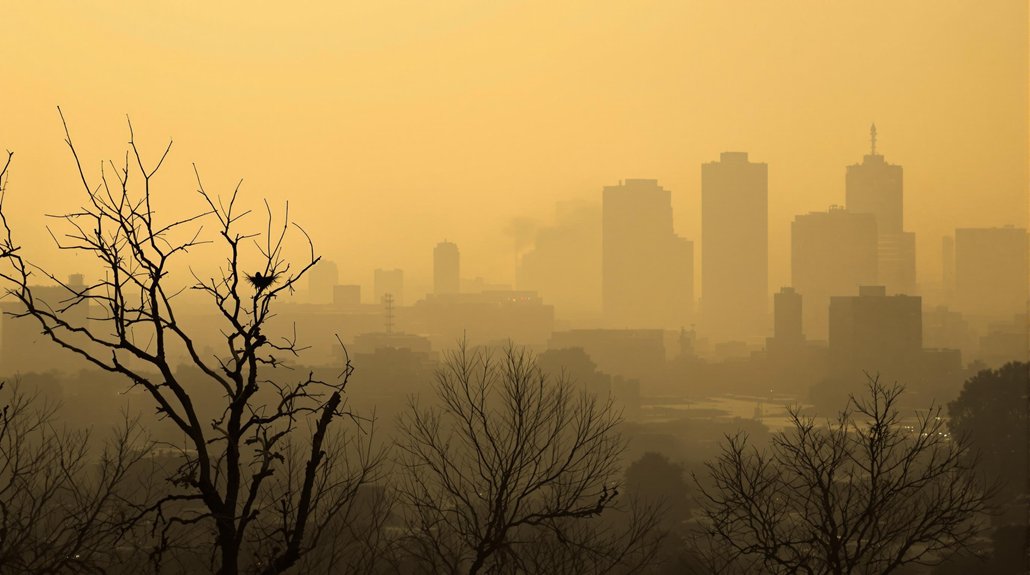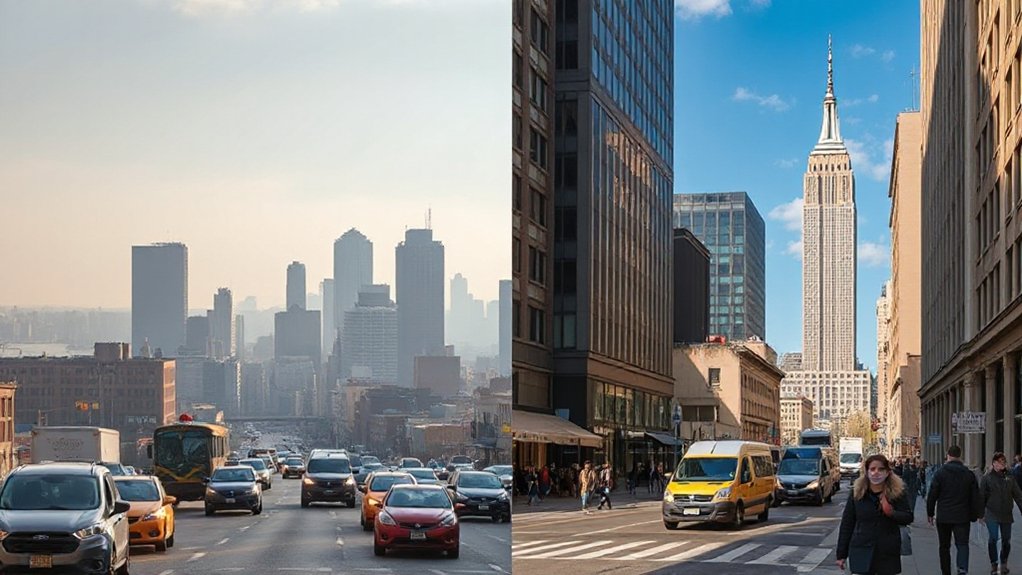
Despite New York City‘s reputation as a concrete jungle of exhaust fumes and skyscraper emissions, the Big Apple has made remarkable progress in clearing its air. Fine particulate matter, the nasty little PM2.5 stuff that burrows into your lungs, has dropped a whopping 40% since 2009. Not too shabby for a city where eight million people are constantly on the move.
The improvements didn’t happen by accident. City officials have been tracking pollution through the New York City Community Air Survey for thirteen years now—the largest urban air monitoring program in any American city. The data doesn’t lie: PM2.5 concentrations fell approximately 60% between 2000 and 2019. That’s what happens when regulations have teeth.
Nitrogen dioxide and nitric oxide levels have plummeted too—38% and 58% respectively since 2009. Thank the multiple local emission control regulations for that. Buildings switching from dirty heating oil to cleaner alternatives made a huge difference. Turns out not burning fossil fuels actually helps people breathe better. Shocking, right? This urban transformation mirrors the national trend where renewable energy sources have surpassed coal in electricity generation, producing 21% of US power while coal’s share continues to decline.
But let’s not pop champagne bottles just yet. June 2023 was a brutal reminder that air quality remains vulnerable. When Canadian wildfire smoke drifted south, PM2.5 levels skyrocketed to 117 μg/m³—more than three times the EPA guideline and eight times the WHO recommendation. Not exactly a great month for outdoor yoga. This record-breaking pollution episode led to significant public health responses including school closures and recommendations to stay indoors.
Vehicle emissions continue to be a stubborn problem despite progress. Truck idling restrictions and fuel standards have helped, but there’s still work to do. The city’s commercial charbroilers aren’t helping either. Nothing says “New York” like the smell of street meat and the particulate matter that comes with it. These pollution issues are particularly concerning as higher concentrations are typically found in industrial zones with heavy diesel truck traffic.
The new EPA standard of 9 micrograms per cubic meter is a step in the right direction, but still falls short of the WHO’s recommended 5 micrograms. In 2022, a dismal 81% of days in NYC exceeded WHO limits. Progress is happening—just not fast enough for many New Yorkers’ lungs.
References
- https://www.nyc.gov/site/doh/about/press/pr2023/new-stats-show-nyc-continues-to-clear-the-air.page
- https://energyandcleanair.org/record-breaking-pm2-5-pollution-levels-in-nyc-in-early-june-2023-regular-occurrence-in-over-350-cities-worldwide/
- https://smartairfilters.com/en/blog/new-york-city-air-quality-aqi-wildfire-readings/
- https://pmc.ncbi.nlm.nih.gov/articles/PMC12166610/
- https://grist.org/health/its-official-us-air-quality-got-worse-in-2023/
- https://nychazardmitigation.com/documentation/hazard-profiles/poor-air-quality/
- https://a816-dohbesp.nyc.gov/IndicatorPublic/data-explorer/air-quality/