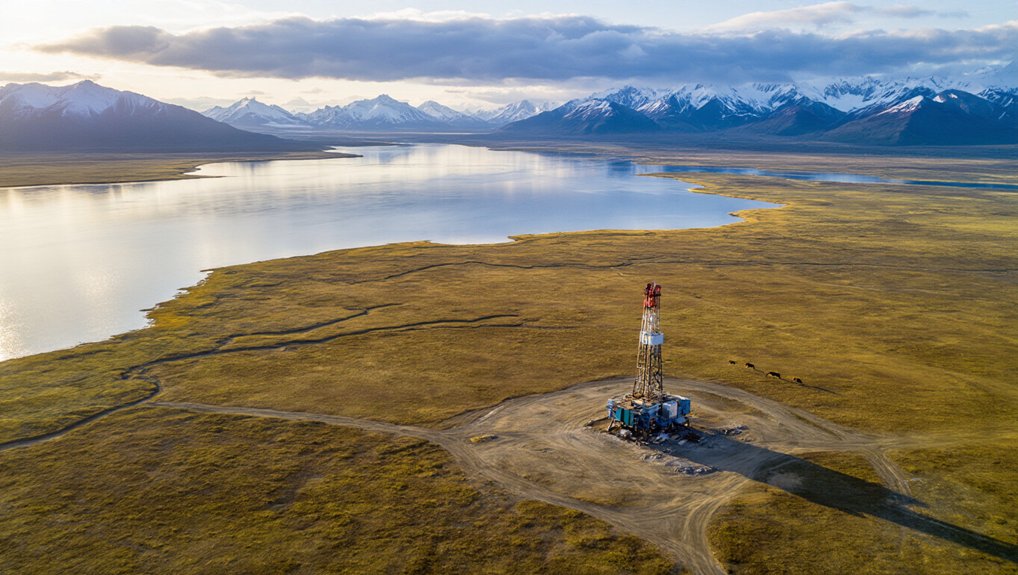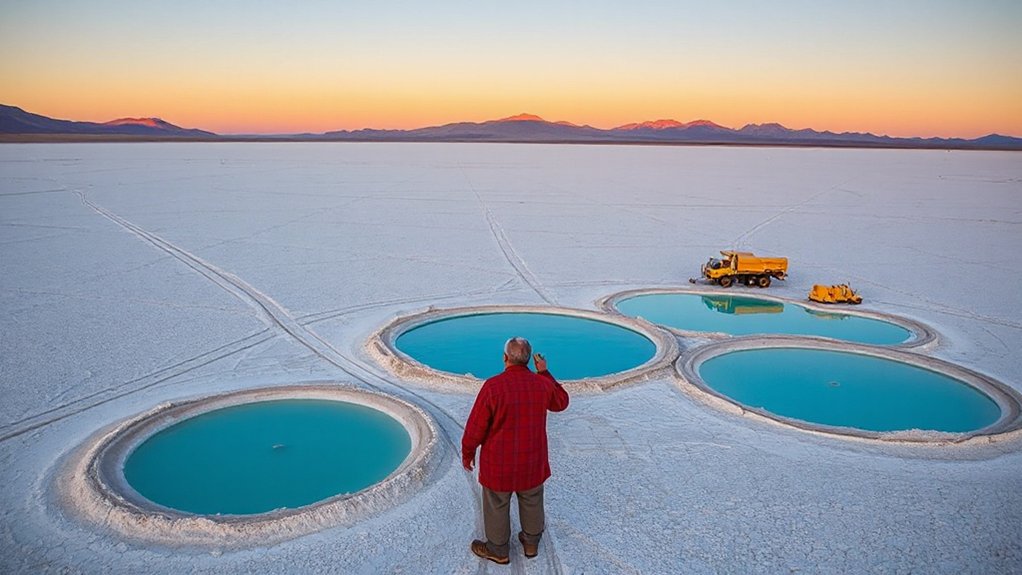

As Chile’s lithium industry explodes to meet global demand, Indigenous communities surrounding the Atacama Salt Flat face an existential crisis. The numbers are impressive, sure – Chile holds a whopping 8.3 million tons of lithium in the Atacama alone. And they’re finding more every day. Recent exploration boosted the country’s reserves by 28% with discoveries in La Isla and Aguilar salt flats. No wonder Chile supplies 30% of global lithium demand annually.
But here’s the ugly truth behind your shiny electric car battery: producing just one ton of lithium carbonate gulps down half a million liters of brine water. That’s 132,000 gallons – gone. Evaporated. Poof! Ninety percent of water simply disappears into thin air during processing. Meanwhile, the Atacama’s groundwater levels have plummeted more than 10 meters in just 15 years. Real sustainable, right?
The land itself is literally sinking under the weight of this extraction. The salt flat drops 1 to 2 centimeters yearly where pumping is most intense. University of Chile researchers confirmed it with satellite data. The evidence is pretty damn clear.
For the eighteen Lickanantay settlements surrounding the salt flat, this isn’t some abstract environmental concern. It’s survival. Their vegetation is vanishing. Ancient lagoons are disappearing. These Indigenous communities watched their water-scarce homeland transform into an industrial playground for companies like SQM and Albemarle – who, by the way, have been charged with irregularities in their extraction practices.
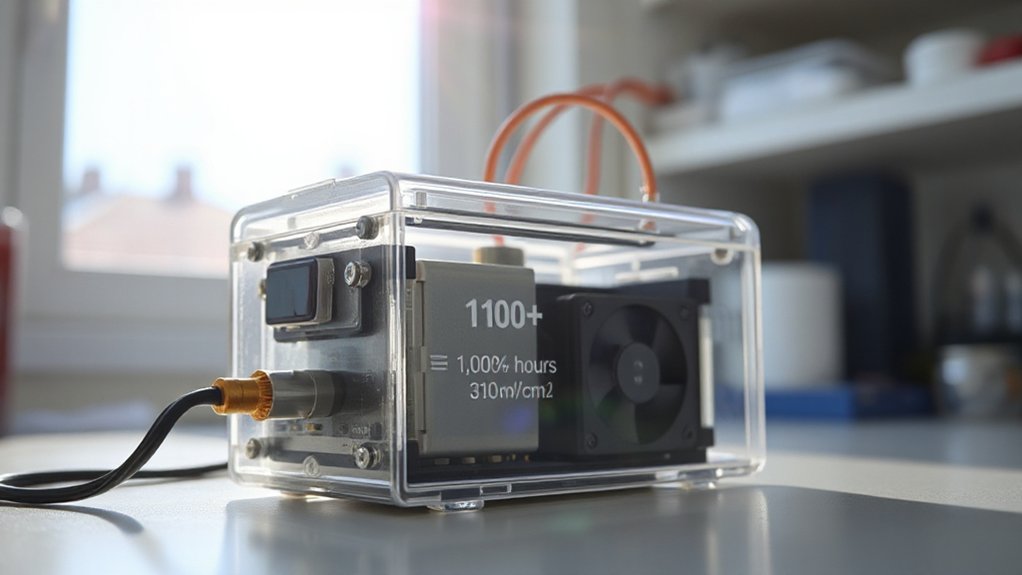
The Lickanantay people face a perfect storm of environmental contamination and resource depletion. Their traditional territories, already water-scarce, are being sucked dry by an industry that prioritizes lithium over life. Companies are now promising to test direct lithium extraction technology that could potentially reduce environmental impact, though this solution remains unproven at scale. Residents express their outrage by displaying black flags on their homes, a visual protest against the devastating impacts of mining operations.
Mining infrastructure – trucks, machinery, evaporation pools – has reshaped the fragile ecosystem they’ve depended on for generations.
References
- https://www.industrialinfo.com/iirenergy/showNews.jsp?newsitemID=340854
- https://www.mining.com/web/lithium-mining-is-slowly-sinking-chiles-atacama-salt-flat-study-shows/
- https://grist.org/energy/chile-lithium-mining-salt-flat-water/
- https://news.mongabay.com/2025/09/lithium-mining-leaves-severe-impacts-in-chile-but-new-methods-exist-report/
- https://iwgia.org/en/argentina/5777-a-just-energy-transition-the-impacts-of-lithium-extraction-on-the-andean-salt-flats-of-argentina
- https://friendsoftheearth.eu/wp-content/uploads/2024/12/Factsheet-Strategic-Projects-Atacama-50225.pdf
- https://gceurope.org/lithium-mining-in-the-salar-de-atacama-chile/
- https://www.miningweekly.com/article/chile-has-28-more-lithium-than-previous-estimates-studies-find-2025-04-08
- https://www.bakerinstitute.org/research/indigenous-communities-and-copper-and-lithium-mining-chile