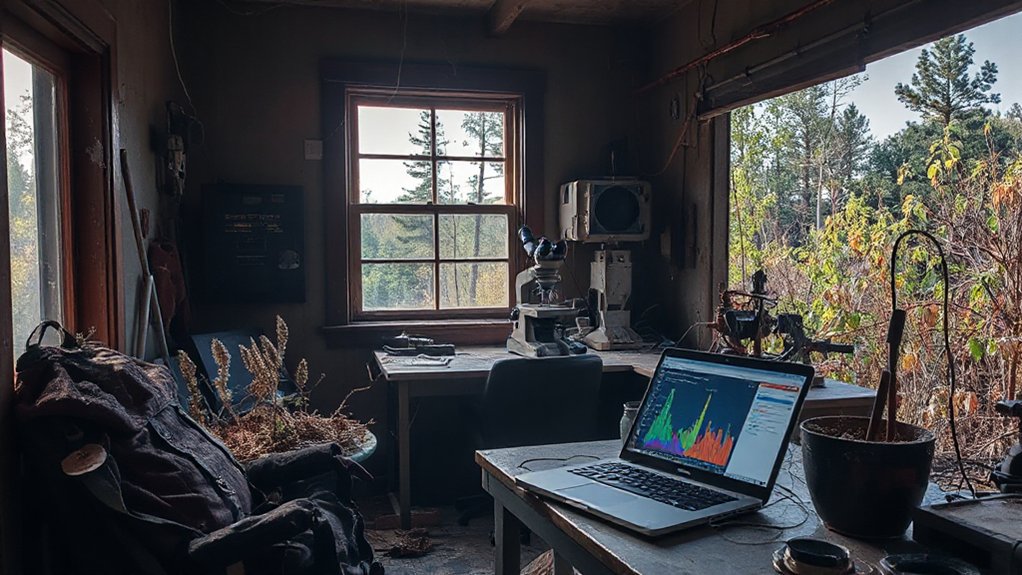
The balance is shifting. Scientists are trading their muddy boots for keyboards as funding agencies pivot toward computational and AI-centric projects. Field studies—those messy, unpredictable endeavors that once defined ecological and environmental research—have been declining since the mid-2010s. Who needs mosquito bites and equipment failures when an algorithm can spit out perfect data?
By 2026, a whopping 75% of enterprises will use generative AI for synthetic data. Why bother with reality when you can have something “highly realistic but fake”? Real-world data collection is hard, expensive, and sometimes dangerous. AI-generated alternatives are clean, cheap, and never complain about working conditions.
The excuses are piling up. Privacy concerns. Safety issues. Budget constraints. Sure, these are legitimate worries, but they’re also convenient justifications for the retreat from field science. Funding institutions now want projects that are “data-intensive” and “AI-ready.” Translation: stay in your lab and let the computers do the heavy lifting.
Field science is vanishing behind screens while funding agencies worship at the altar of algorithms and clean data.
Here’s the kicker—we need those baseline measurements. The ground-truth data. The long-term observations that tell us when our fancy AI models are talking nonsense. Without them, we’re building digital castles on digital sand. Similar to how the energy crisis 1970s sparked renewed interest in alternative energy research, we need a crisis-level awareness about the importance of field data collection.
AI isn’t just analyzing data anymore; it’s creating it. Generating hypotheses. Designing experiments. Some systems can even control instruments and run entire experimental workflows. Physical AI with robotics is expected to “pick up” by 2026, further eliminating the need for human field teams. This shift mirrors the broader evolution toward AI becoming a true collaborative partner in scientific research processes rather than just a tool.
The irony? As we build more powerful AI to understand our world, we’re collecting less actual information about it. Our models become increasingly self-referential, trained on data generated by earlier versions of themselves. It’s like writing a travel guide without ever leaving your apartment. The rise of AutoML technologies is further accelerating this trend by making machine learning accessible even to researchers with limited data science expertise.
Eventually, someone will have to step outside and check if reality still matches our simulations. Let’s hope we remember how to tie our hiking boots.
References
- https://sloanreview.mit.edu/article/five-trends-in-ai-and-data-science-for-2026/
- https://news.microsoft.com/source/features/ai/whats-next-in-ai-7-trends-to-watch-in-2026/
- https://binariks.com/blog/data-science-trends/
- https://www.ibm.com/think/news/ai-tech-trends-predictions-2026
- https://www.dunnhumby.com/resources/blog/ai-science-data/en/ai-and-data-science-2026/
- https://bernardmarr.com/the-8-data-trends-that-will-define-2026/
- https://www.understandingai.org/p/17-predictions-for-ai-in-2026
- https://www.library.hbs.edu/working-knowledge/ai-trends-for-2026-building-change-fitness-and-balancing-trade-offs
- https://www.deloitte.com/us/en/insights/topics/technology-management/tech-trends.html