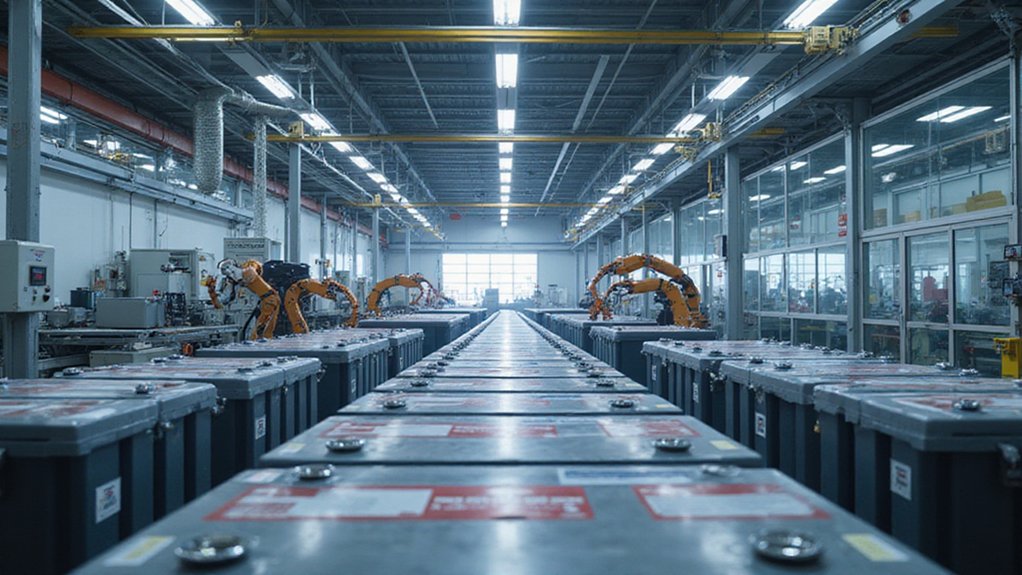
The global battery market is in for a shake-up. Sodium-ion batteries, barely a blip on the radar with less than 1% market share today, are poised for explosive growth. We’re talking about a market projected to balloon from $566.65 billion in 2026 to a staggering $10,656.96 billion by 2040. That’s a 23.32% annual growth rate. Not too shabby for lithium’s overlooked cousin.
China, unsurprisingly, is leading the charge. They’re expected to control over 90% of global sodium-ion production by 2030. Their domestic market alone is forecast to surge from 10 GWh in 2025 to 292 GWh by 2034. The rest of the world? Playing catch-up, as usual.
Cost comparisons are where things get interesting. LFP batteries have dropped below $50 per kWh, which puts pressure on sodium-ion’s value proposition. But sodium-ion still offers 30-40% cost reductions versus conventional lithium-ion cells. Plus, they’re cheaper to maintain for stationary storage. Money talks.
Energy density was sodium’s Achilles’ heel. Not anymore. CATL’s cells now hit 175 Wh/kg and they’re gunning for 200+. That’s enough for your basic EVs and perfectly fine for grid storage. No, you won’t be seeing sodium-powered Teslas anytime soon. Deal with it.
The biggest advantage? Sodium is everywhere. Literally a thousand times more abundant than lithium and not controlled by a handful of countries. Germany has recognized this potential with its SIB:DE FORSCHUNG project, investing €14 million to industrialize sodium-ion technology by 2027. Given China’s chokehold on 64% of refined lithium and 90% of cathode materials, this matters.
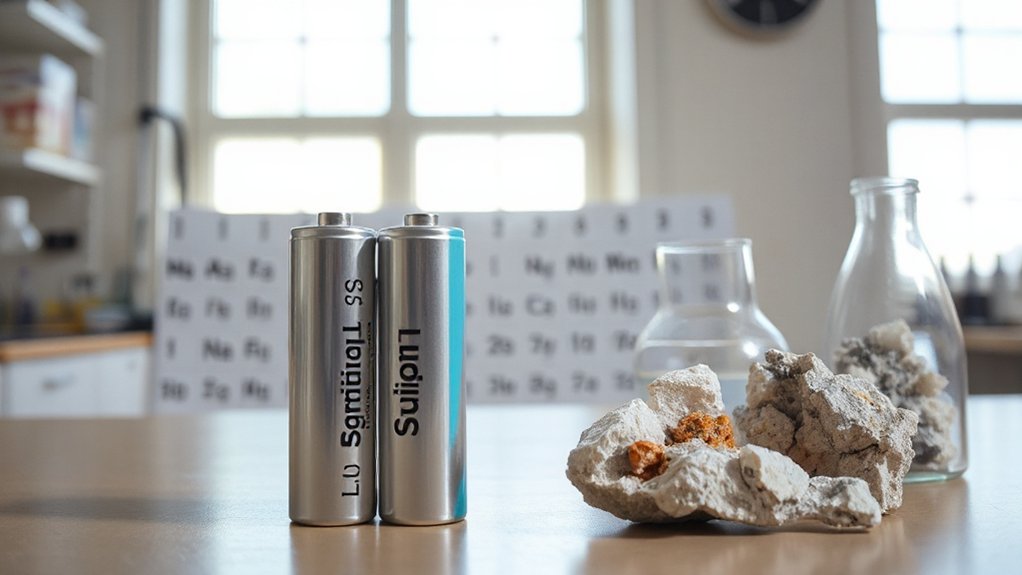
Sodium’s trump card: abundance. Earth’s crust offers 1000x more sodium than lithium, shattering China’s battery material monopoly.
Major players are going all-in. CATL plans mass production by 2026. Sinopec and LG Chem are partnering up. The industrial ecosystem is gaining serious momentum with hundreds of gigawatt-hours of capacity on the horizon.
Sodium-ion won’t replace lithium overnight. But for stationary storage, urban EVs, and applications where safety trumps high performance? The sodium revolution isn’t coming. It’s already here. Europe’s dominant market share of 41.13% demonstrates the region’s commitment to this sustainable battery alternative, driven by strict emission standards and widespread EV adoption.
References
- https://www.global-imi.com/blog/sodium-ion-batteries-will-gain-ground-2026
- https://www.rootsanalysis.com/sodium-ion-battery-market
- https://www.pv-magazine.com/2026/01/28/sodium-ion-batteries-now-competitive-in-niche-markets/
- https://cen.acs.org/energy/energy-storage-/Sodium-ion-batteries-Should-believe/103/web/2025/11
- https://www.woodmac.com/blogs/energy-pulse/sodium-ion-batteries-enter-energy-storage-market/
- https://www.sdle.co.il/product/sodium-ion-batteries-market-report-2018/