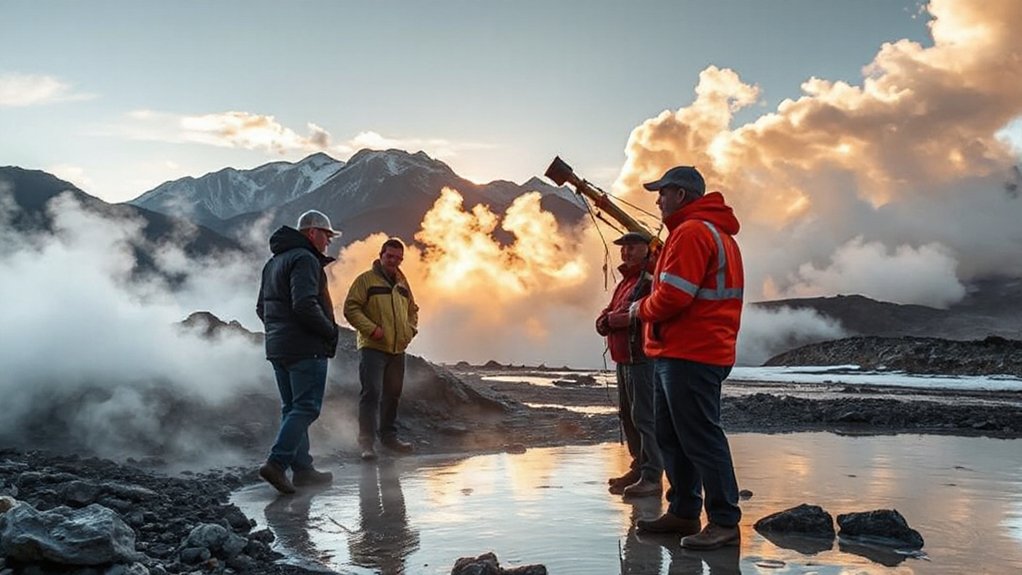
Where else but Iceland would nearly every home be heated by the earth itself? This volcanic island doesn’t mess around with its renewable energy game. A whopping 90% of homes tap into geothermal heat, with over 95% connected to district heating networks—the most extensive system worldwide. Talk about hot property.
Iceland’s relationship with geothermal energy isn’t new. The country transformed from burning imported coal and peat to embracing what bubbles beneath their feet throughout the 20th century. Now they’re sitting pretty with 87% of total energy consumption coming from renewable sources. Not too shabby.
The numbers speak volumes. Iceland’s installed geothermal electricity capacity reached 0.76 million kilowatts in 2023, unchanged from 2022 but still crushing the world average of 0.08 million kilowatts. Iceland has maintained this maximum capacity since 2018 when it first reached this record level. Geothermal electricity generation totaled 6.01 billion kilowatthours last year. That’s a lot of hot water doing serious work.
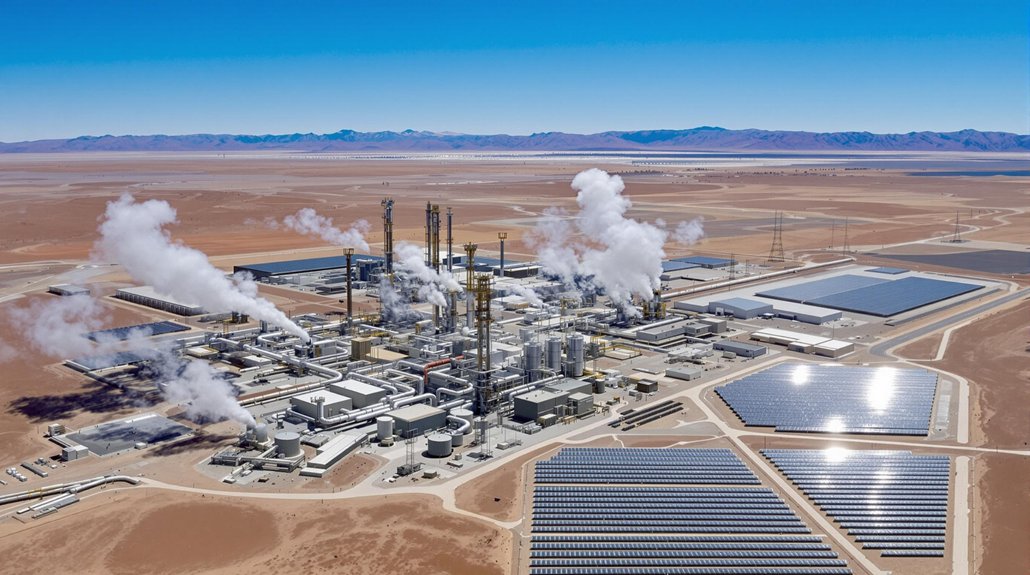
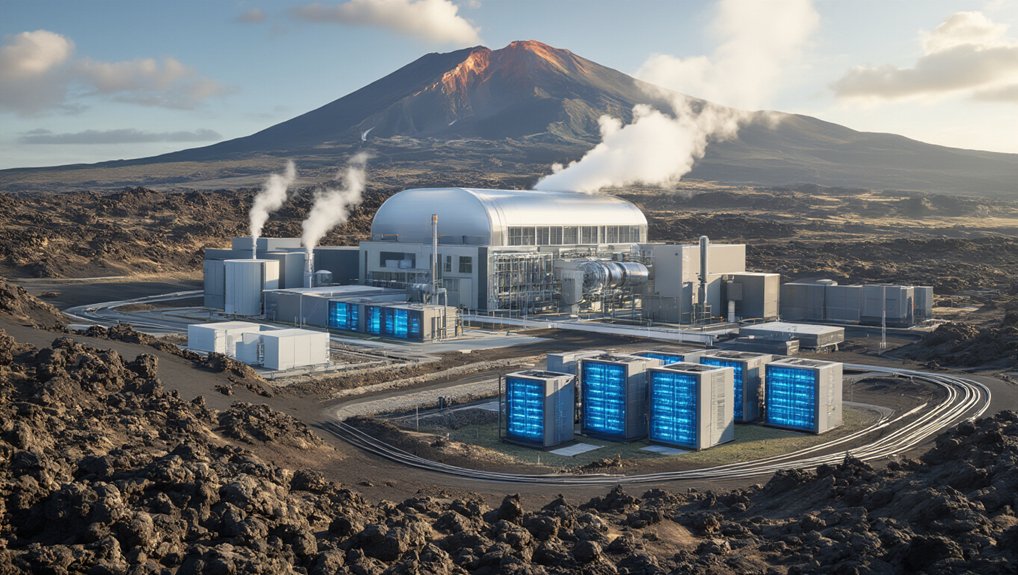
Five major power plants dominate Iceland’s geothermal landscape. Hellisheiði leads the pack at 303 MW, followed by Nesjavellir (120 MW), Reykjanes (100 MW), Krafla (60 MW), and Svartsengi (46.5 MW). These aren’t just electricity producers—Svartsengi and Nesjavellir pull double duty by heating water for homes too. The impressive availability factor of 95% ensures these plants deliver power consistently regardless of weather conditions.
Geothermal currently provides a quarter of Iceland’s total electricity production. The rest? Mostly hydropower at 75%. Together, they deliver nearly 100% renewable electricity. Iceland’s first hydroelectric power plant was constructed in 1904 near Reykjavik with a modest 9 kW capacity. In 2022, total generation hit 20.12 TWh with consumption at 19.6 TWh. Landsvirkjun alone produced 12,469 GWh in 2015, representing 75% of total electricity.
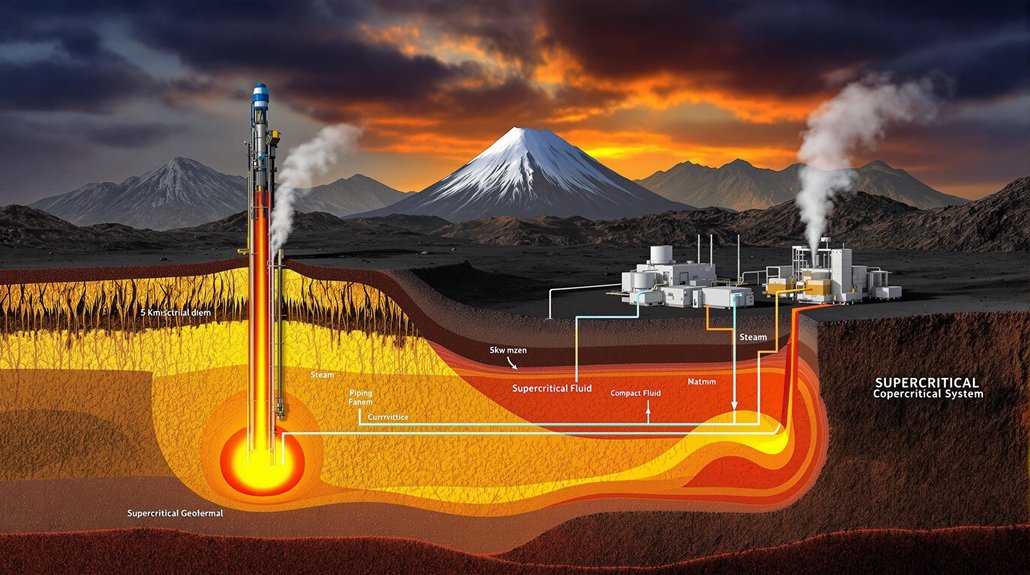
The future looks steamy. Over 20 TWh per year of untapped geothermal energy awaits development. Combined with hydropower’s potential additional 25-30 TWh, Iceland could harness another 50 TWh annually.
Despite geothermal resources being technically non-renewable, unlike hydropower, they represent significant growth opportunities. The Icelandic government has identified numerous untapped sources throughout the country. Iceland’s geothermal treasure hunt continues.
References
- https://www.theglobaleconomy.com/Iceland/geothermal_electricity_capacity/
- https://www.ebsco.com/research-starters/power-and-energy/iceland-and-renewable-energy
- https://statbase.org/data/isl-primary-energy-consumption-geothermal-biomass-other/
- https://en.wikipedia.org/wiki/Energy_in_Iceland
- https://www.eea.europa.eu/en/europe-environment-2025/countries/iceland/renewable-energy-sources
- https://www.government.is/topics/business-and-industry/energy/geothermal/
- https://www.canarymedia.com/articles/geothermal/chart-global-investment-clean-energy
- https://www.ren21.net/gsr-2023/modules/energy_supply/02_market_developments/02_geothermal/
- https://worldgeothermal.org/geothermal-data/geothermal-energy-database