While Africa’s forests have shrunk dramatically over the past fifty years, a growing movement to plant millions of trees is trying to reverse the damage.
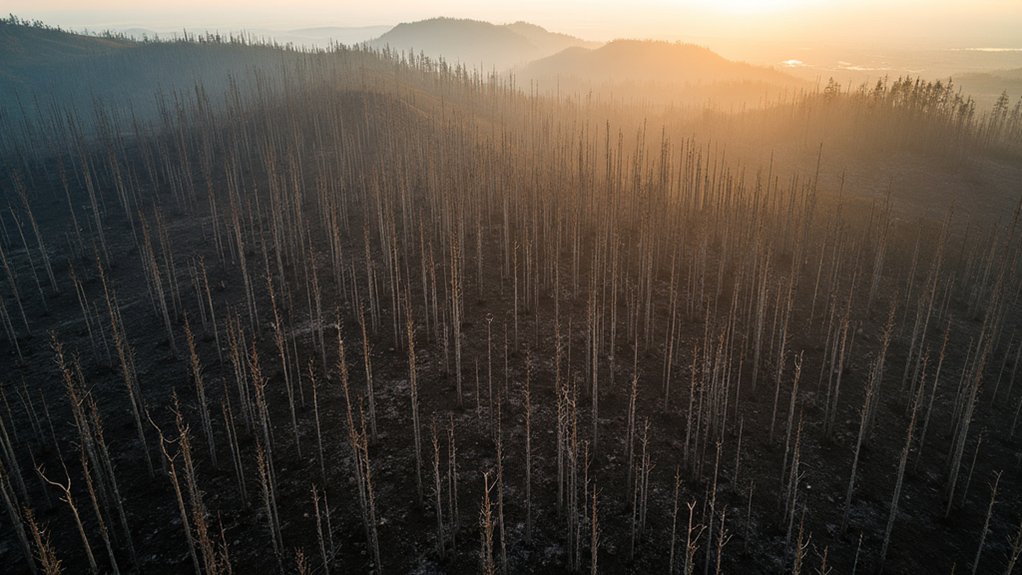
Ethiopia reportedly lost 98% of its forests in just 50 years. Senegal’s mangroves have declined by an estimated 45,000 hectares since the 1970s. Worldwide, roughly 18 million hectares of forest disappear annually—an area the size of Panama.
Worldwide, roughly 18 million hectares of forest disappear annually—an area the size of Panama.
These losses matter because tropical rainforests store an estimated 210 billion tonnes of carbon and support up to 28,000 species threatened with extinction.
Tree-planting projects across Africa are attempting to fight back.
Ecosia has reportedly planted 50 million trees across 21 projects and absorbed 2.5 million tonnes of CO2. Cool Effect’s programs helped 265,000 farmers in East Africa plant over 28.3 million trees. Through GPS-based monitoring, these trees are tracked individually for 30 years to verify carbon removal and ensure transparency.
Ethiopia made headlines by reportedly planting 350 million trees in a single day in 2019. Senegal is reported to have replaced 79 million mangrove trees across 350 villages.
These efforts represent Africa’s potential to remove an estimated 680 million tonnes of CO2 annually through nature-based solutions.
However, serious challenges threaten these initiatives.
Not all seedlings survive due to natural factors such as drought or grazing, though farmers actively manage their trees to improve survival rates. Projects often underestimate local complexity, which leads to payment losses for smallholder farmers who do the planting work.
Carbon markets sometimes create unfair situations where farmers bear the risks while buyers reap most benefits.
GPS monitoring tracks individual trees for 30 years to verify carbon removal, but long-term survival remains uncertain.
Despite these problems, tree-planting delivers important benefits beyond carbon removal.
Agroforestry restores soil health, reduces erosion, and improves crop yields. Trees provide food, fruit, timber, and fuelwood.
They create habitats for endangered animals like chimpanzees and stop desert expansion in the Sahel region. Mangroves protect against flooding and maintain water quality.
About 70% of carbon credit profits go directly to farmers, boosting their harvests and health. Third-party auditors verify emission reductions to ensure the integrity of these credits.
Africa’s tree-planting movement shows real potential but faces real obstacles.
Success requires monitoring trees carefully, protecting farmers fairly, and matching climate goals with local needs.
The continent’s forests won’t recover overnight, but these millions of trees offer hope for a greener future.
References
- https://cleantechnica.com/2026/04/01/millions-of-trees-planted-in-africa-to-remove-carbon-restore-soil/
- https://www.youtube.com/watch?v=qk5erQLu8to
- https://www.weforum.org/stories/2020/06/ethiopia-trees-forests-deforestation-worldwide-climate-change/
- https://www.lunduniversity.lu.se/article/planting-trees-africa-dubious-environmental-strategy-study
- https://cap-a.org/home/the-promise-of-africa/pathways/carbon-removal/
- https://www.farmlandgrab.org/post/31713-green-colonialism-2-0-tree-plantations-and-carbon-offsets-in-africa