
Nuclear regulators are facing a ticking clock they never saw coming. The AI transformation waits for no one, certainly not bureaucrats with their five-to-ten-year approval timelines. Tech giants need power for their hungry AI systems by 2027, not 2035. Tough luck for the traditional nuclear permitting process.
It’s a classic mismatch. AI workloads are projected to devour 3,500 TWh annually by 2030. That’s a lot of juice. These systems run 24/7, demanding constant power—the exact kind nuclear can provide with its impressive 92% capacity factor. But who’s got time for endless environmental reviews and safety analyses?
The regulatory patchwork isn’t helping. State and local authorities all want their say, creating a mess of inconsistent timelines. New restrictions have doubled in just the last year. Meanwhile, AI campuses need 80+ megawatts of baseload power now. Not tomorrow. Now.
A maze of bureaucracy while tech giants scream for power—yesterday, not after your committee meets again next quarter.
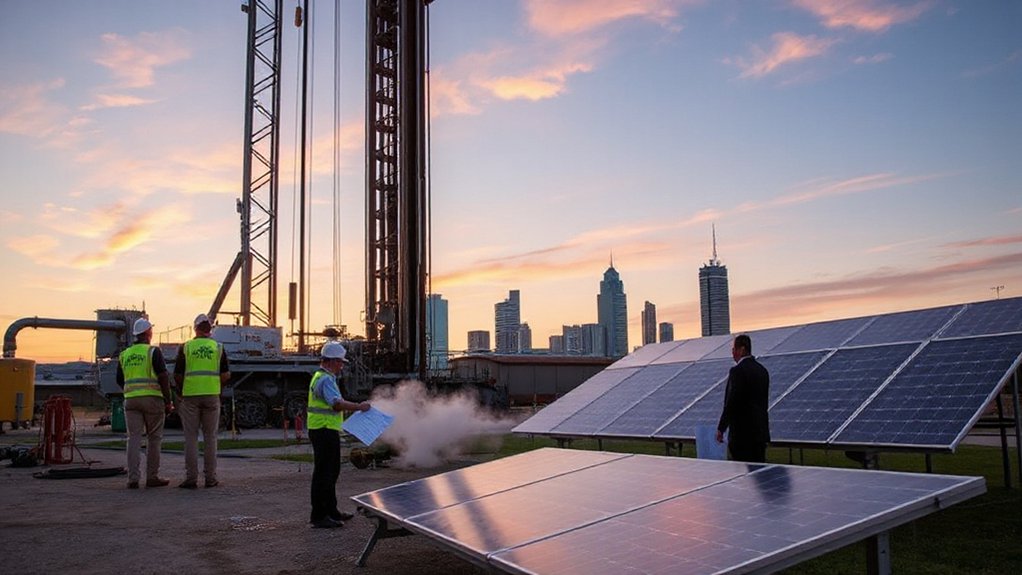
Some clever folks are finding workarounds. ERCOT in Texas can connect large loads within two years—practically light speed in regulatory terms. Behind-the-meter projects that directly link nuclear generators to data centers are gaining traction, bypassing grid permitting headaches. Microsoft’s agreement with Three Mile Island demonstrates how 20-year power agreements can secure stable energy for AI operations. Integrating renewable energy alongside nuclear could provide a more sustainable and diversified power portfolio for tech companies.
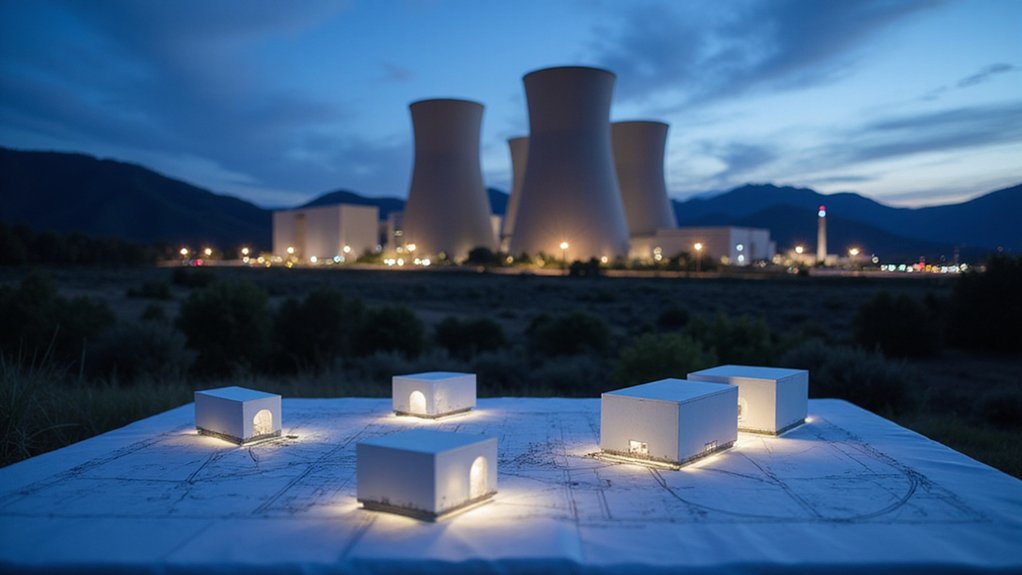
Small Modular Reactors (SMRs) could be the answer, but they’re facing their own regulatory maze. Companies like NuScale are offering VOYGR six-packs that fit on just 4.5 acres with ambitious 24-month build schedules. Different designs, different approval paths. What a headache. Kairos Power got their NRC construction permit in December 2023. Good for them. Others aren’t so lucky.
Money people hate uncertainty. They’re reluctant to fund projects without predictable timelines. Can’t blame them. Most current SMR developments are cozying up to tech companies, looking for guaranteed customers outside traditional utility models.
The transmission problem is another nightmare. Over a decade to build new power lines? AI doesn’t have that kind of patience. Add in space constraints near existing infrastructure, and you’ve got yourself a perfect storm of regulatory bottlenecks.
The race is on. AI’s not slowing down. Regulators better catch up or get left behind.
References
- https://www.vktr.com/ai-technology/why-ai-data-centers-are-turning-to-nuclear-power/
- https://digitaldefynd.com/IQ/role-of-nuclear-power-in-ai/
- https://www.jdsupra.com/legalnews/powering-data-centers-with-nuclear-7018660/
- https://www.deloitte.com/us/en/insights/industry/power-and-utilities/data-center-infrastructure-artificial-intelligence.html
- https://vistergy.com/p/regulatory-navigation