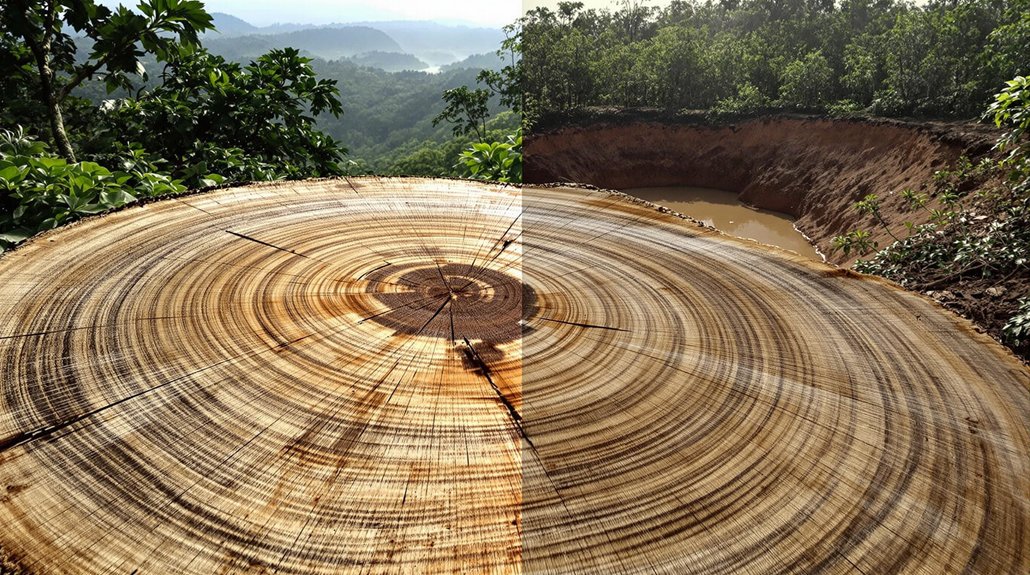

Scientists discovered Amazon trees serve as silent witnesses to gold mining’s toxic legacy. Ficus insipida’s growth rings record mercury contamination timelines, revealing pollution hotspots across the rainforest. Mercury levels have spiked since 2000, creating a health crisis for indigenous communities and wildlife. The trees literally document environmental crimes while humans argue about solutions. Pretty clever how nature keeps receipts when miners thought nobody was watching.
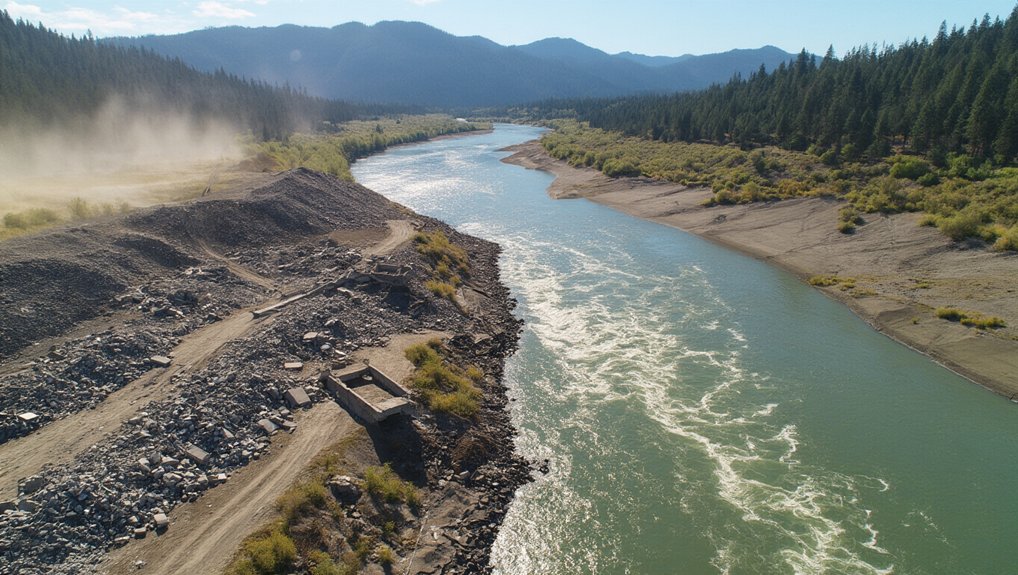
While gold miners rip through the Amazon rainforest in search of riches, they leave behind an invisible poison that’s silently killing everything in its path. Mercury. Tons of it. Artisanal miners use it to extract gold, mixing it with soil to create amalgams that bind to those precious gold particles. Then they burn it off. Great for business, terrible for everything else alive.
The mercury doesn’t just disappear. It drifts into the air, seeps into soil, and contaminates water. Everywhere. And now scientists have found a rather clever witness to this environmental crime scene – trees. Specifically, the Ficus insipida. These silent sentinels have been recording mercury pollution in their rings for decades, creating a detailed timeline of human stupidity.
Each tree ring is like a page in a history book. Scientists can literally track when and where illegal mining operations dumped their toxic waste. Neat trick, right? These trees are showing mercury levels comparable to superfund sites – places so contaminated they require special government cleanup. In a rainforest. Let that sink in.
The human toll is devastating. Indigenous communities rely on the same water and food sources now swimming with mercury. They’re experiencing neurological issues, developmental problems, and a host of other health complications. This poisoning mirrors the broader toxic chemicals from fossil fuels that contaminate water supplies worldwide. Wildlife isn’t faring any better, accumulating mercury in their tissues as they eat contaminated food. The Madre de Dios region, where much of this contamination occurs, is considered a global biodiversity hotspot.
This tree ring technology is proving invaluable for enforcement. It’s hard to deny your illegal mining operation when a tree has recorded your toxic fingerprint. The data is helping identify hotspots previously unknown to authorities and strengthening international efforts to curb mercury use. Researchers found that mercury levels notably increased after 2000, coinciding with the expansion of mining activities in the region.
The UN Minamata Convention on Mercury aims to phase out mercury in mining, but progress is slow. Mercury-free technologies exist, but small-scale miners aren’t exactly rushing to adopt them. Meanwhile, the trees keep recording, the mercury keeps spreading, and the Amazon continues to pay the price for our gold obsession.