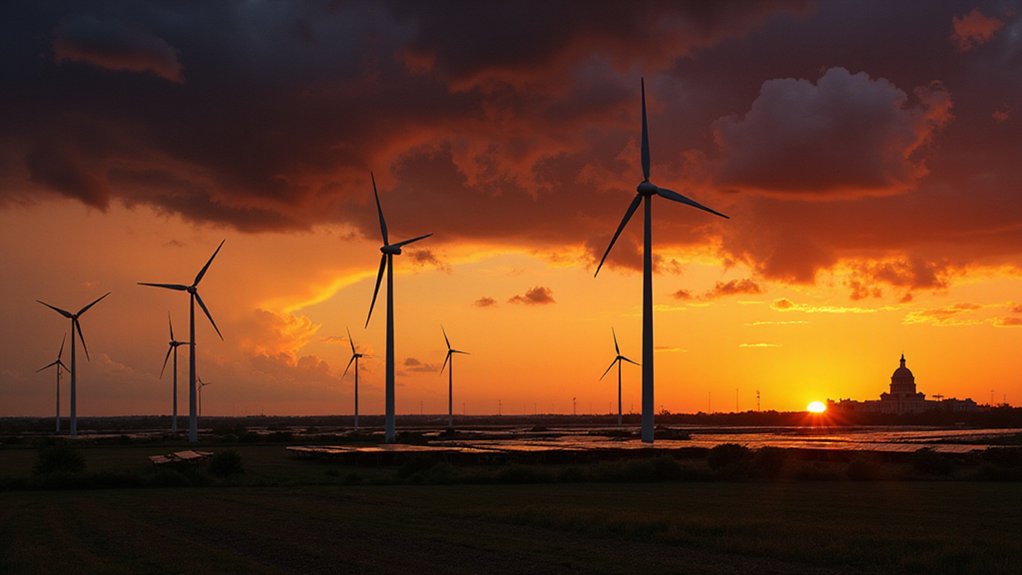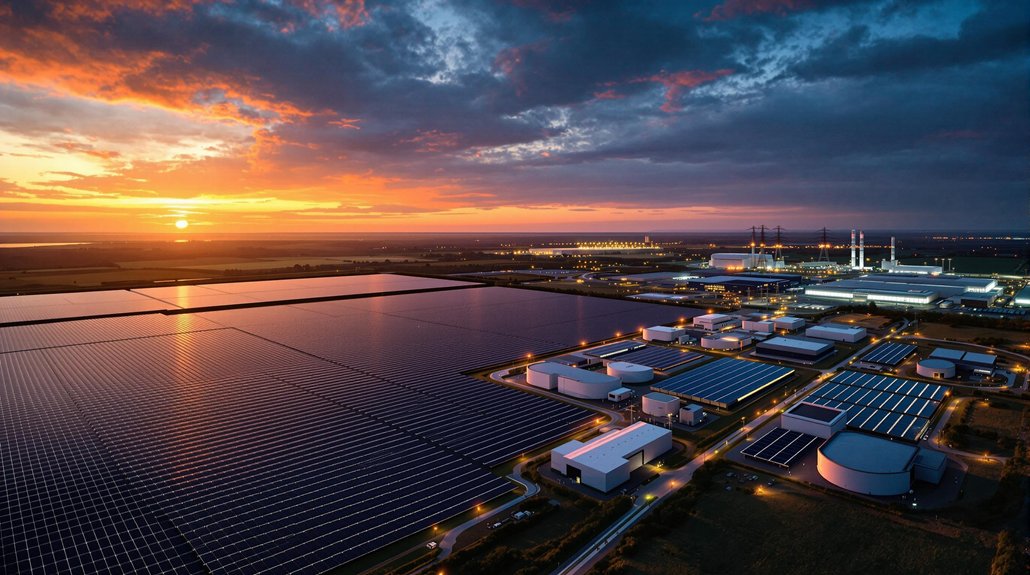
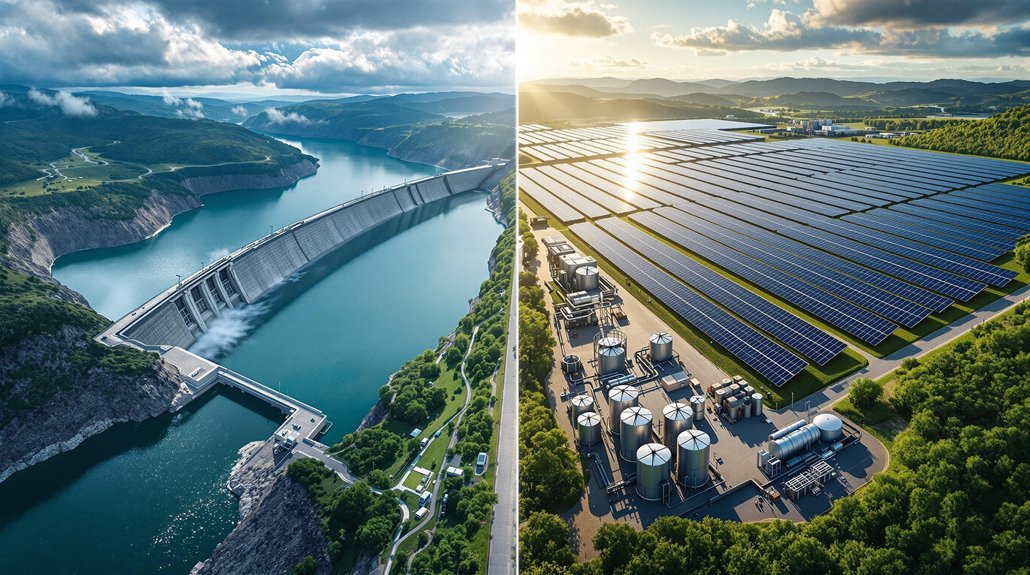
America’s energy landscape is being revolutionized as 63 GW of new utility-scale capacity heads online in 2025. Solar and batteries will make up a whopping 81% of additions. No surprise there. Meanwhile, AI and data centers are guzzling electricity like there’s no tomorrow, driving demand up 3% annually. Texas leads with 11.6 GW of planned solar while natural gas plays backup. The clean energy boom isn’t just powering homes—it’s creating jobs that pay 25% above median wages.
While much of the country remains fixated on political drama, America’s energy landscape is undergoing a dramatic shift. A staggering 63 gigawatts of new utility-scale capacity is expected to come online in 2025, and guess what? A whopping 81% will come from solar and battery storage. That’s not a typo. The fossil fuel dinosaurs are finally facing extinction.
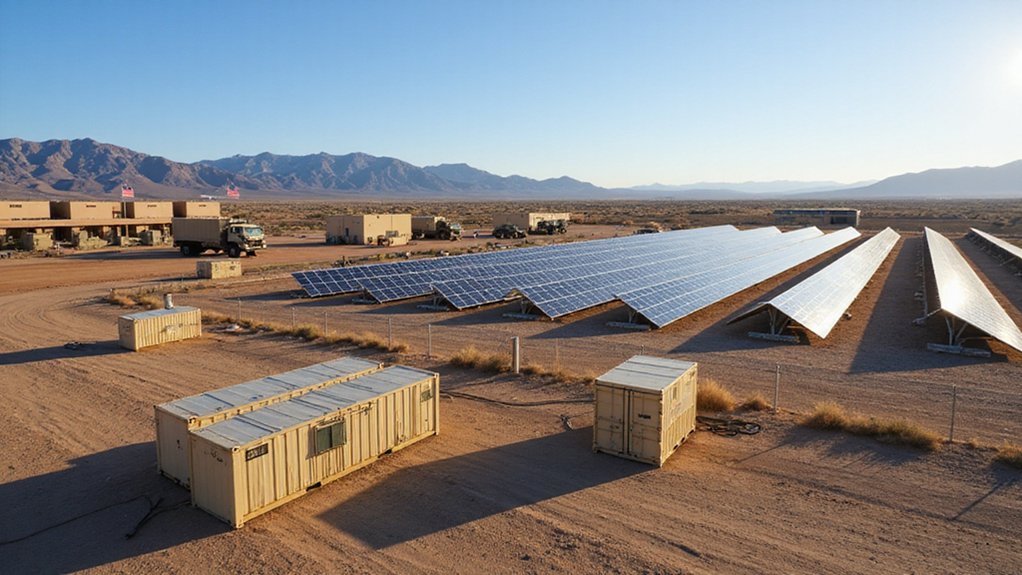
Texas and California are, unsurprisingly, leading the solar charge with 11.6 GW and 2.9 GW of planned additions respectively. Five states will add more than 1 GW each next year. Solar generation jumped 33% in 2024 alone, and it’s on track to dethrone coal as America’s leading power source in 2025. Let that sink in.
Battery storage is having its moment too. A record 18.2 GW of new battery capacity is expected in 2025, building on the 10.3 GW added this year. These aren’t your grandpa’s Duracells. These systems balance the grid when the sun doesn’t shine or wind doesn’t blow. Essential stuff.
Natural gas isn’t completely dead yet. About 4.4 GW of gas-fired capacity is planned for 2025, with half coming from simple-cycle turbines. The largest plants will pop up in Utah (840 MW) and Louisiana (678.7 MW). Gas is basically picking up coal’s funeral costs. This expansion comes as analysts predict power demand could more than double over the next decade due to data centers and AI technologies.
All this comes as U.S. electricity demand surges by 3% annually. Data centers are electrical hogs, with AI and cloud computing gulping down kilowatts like water. Commercial and industrial sectors are projected to grow 2% and 3% respectively in 2026. The timing couldn’t be more critical.
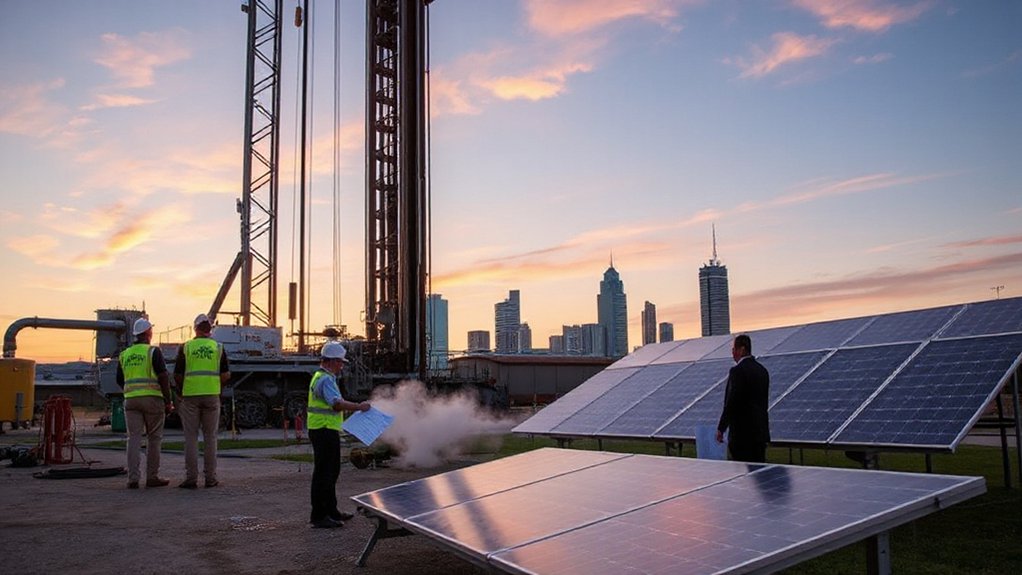
The economic impact is massive. A cool $338 billion invested in energy shift tech. Clean energy jobs grew 4.9% in 2023, adding 149,000 positions. The Inflation Reduction Act is turbocharging investments, with renewables now outpacing fossil electricity investment 10 to 1. This job growth reflects a larger global trend, with renewable energy employment offering 25% higher wages than median jobs across all sectors.
America has climbed from 14th to 3rd in global solar panel production. Not too shabby for a country that once seemed married to oil. Major corporations like Amazon and Google are driving this transformation with substantial commitments to renewable energy purchases.