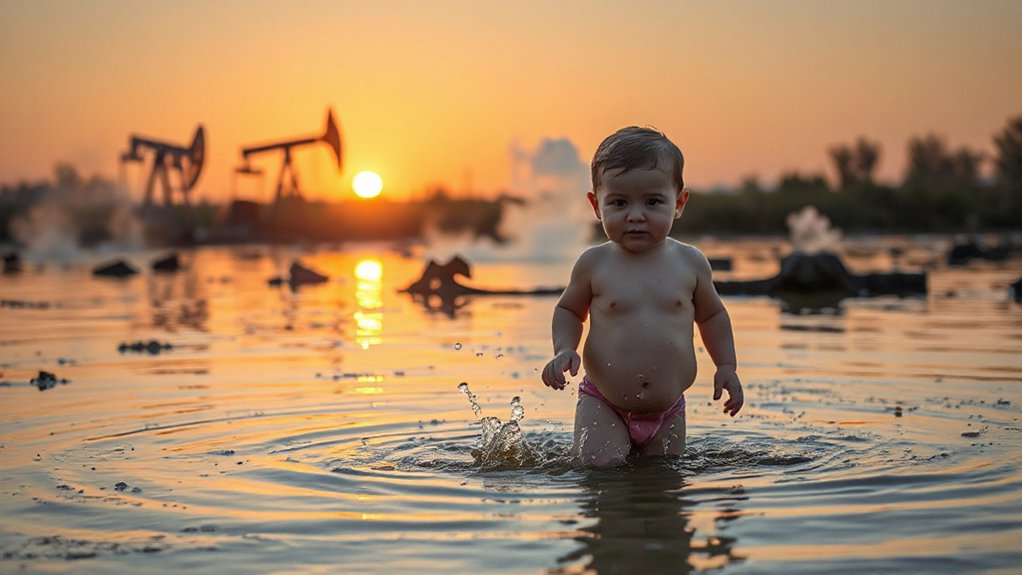
While Americans turn on their taps expecting clean water, millions are unknowingly living on the front lines of a massive, largely invisible threat. From Texas to Pennsylvania, countless families reside in counties directly above major oil and gas basins where toxic spills are well-documented but poorly publicized. Your morning shower? Might contain more than just water and soap.
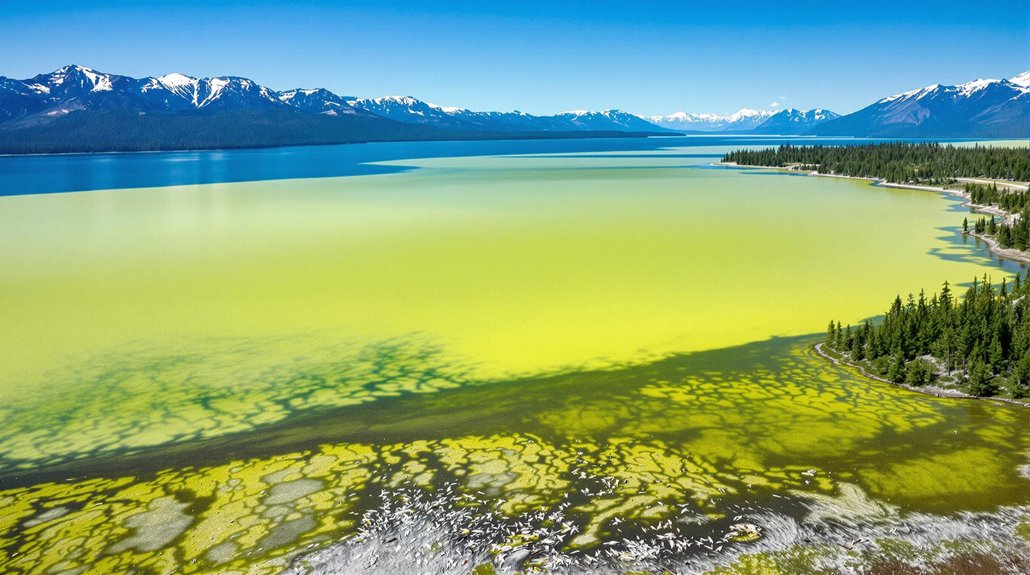
The numbers are staggering. As U.S. oil and gas production has skyrocketed, so has the volume of “produced water” – the industry’s polite term for toxic wastewater loaded with hydrocarbons, heavy metals, and naturally occurring radioactive materials. This stuff isn’t exactly what you’d want in your morning coffee. Yet it’s finding its way into drinking supplies through surface spills, leaky infrastructure, and failed containment systems.
Storage tanks leak. Pipelines rupture. Truck accidents happen. Rain washes contaminants from drilling sites into nearby streams. And somehow, we’re surprised when benzene shows up in well tests? Please.
The health risks aren’t theoretical. Exposure pathways include drinking contaminated water, breathing volatilized chemicals during showers, and even skin contact during everyday activities. Short term, you might just get sick to your stomach. Long term? Think cancer, reproductive issues, and kidney problems. Not exactly the American dream.
What’s particularly troubling is how unevenly this crisis is distributed. Rural communities with private wells often lack regular testing requirements. No test, no problem – at least on paper. Meanwhile, state regulations vary wildly, creating a patchwork of protection that ranges from somewhat adequate to practically nonexistent.
The most vulnerable Americans bear the heaviest burden: families on private wells, communities with aging infrastructure, and workers directly handling these materials. Despite setting record production levels in both oil and natural gas in 2025, the industry continues to downplay contamination risks. With U.S. crude production reaching a peak of 13.6 million barrels per day, the scale of potential contamination has never been greater. They’re the canaries in America’s toxic coal mine.
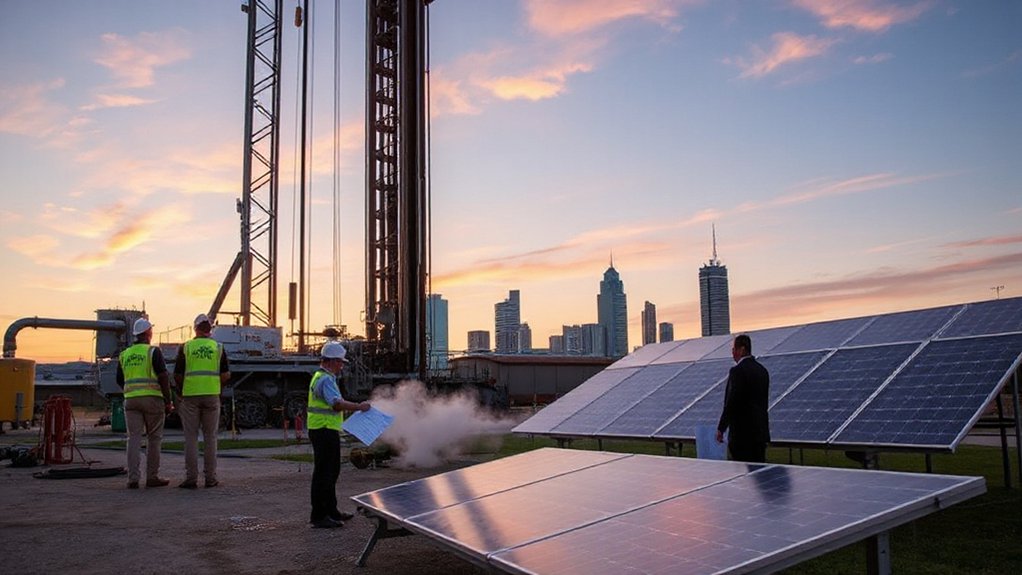
The science is clear. The contamination is documented. The health risks are real. Transitioning to renewable energy sources would significantly reduce these pollution risks while improving community air and water quality. Yet for millions of Americans, this remains a hidden crisis – until they turn on their tap and something doesn’t look, smell, or feel quite right.
References
- https://www.eia.gov/todayinenergy/detail.php?id=66645
- https://www.eia.gov/pressroom/releases/press577.php
- https://peakoilbarrel.com/june-us-oil-production-new-high/
- https://www.deloitte.com/us/en/insights/industry/oil-and-gas/oil-and-gas-industry-outlook-2025.html
- https://www.statista.com/statistics/1109332/us-oil-and-gas-rigs-in-use-covid19/
- https://waterfm.com/bluefield-u-s-midstream-water-market-for-oil-and-gas-is-expanding/
- https://pdf.wildearthguardians.org/support_docs/20250728-Q2-2025-Oil-Gas-Waste-Watch.pdf