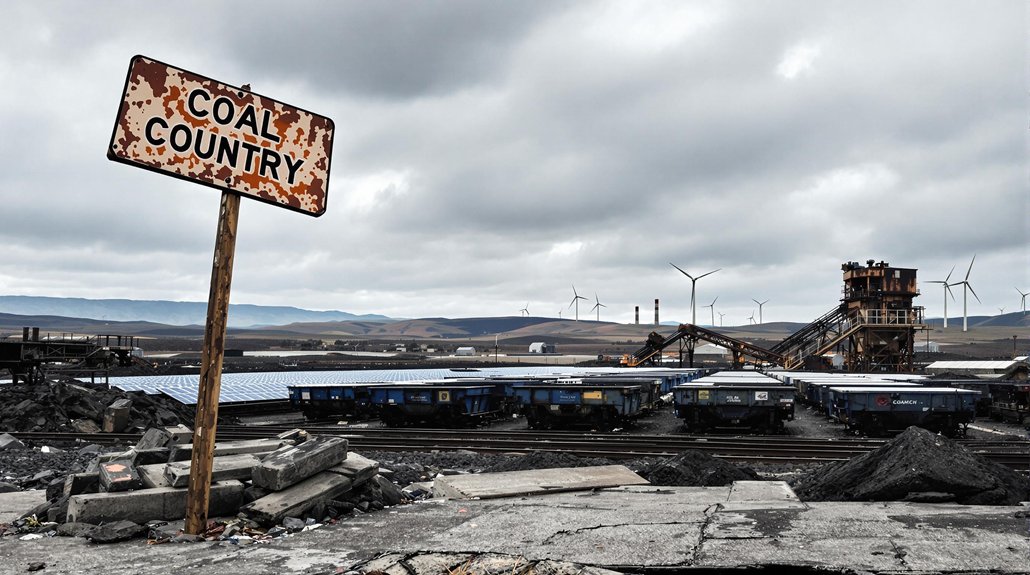
Several counties across the United States have adopted rules to balance renewable energy growth with local community needs. These rules aim to protect residents while still allowing clean energy projects to move forward. The challenge isn’t simple. Counties must weigh private property rights, environmental concerns, and economic growth all at once.
Counties regulate renewable energy through zoning. They can classify projects as use by right, conditional use, or variance. Local zoning boards grant approvals after public hearings. This gives residents a voice before projects break ground. State laws like SB 52 even allow counties to prohibit large wind and solar projects entirely. County approval is typically required before state boards can act on solar and wind proposals.
Local zoning gives counties the power to shape renewable energy growth while ensuring residents have a say before projects begin.
Still, state law can override local control in certain cases. AB 205 supersedes local permitting for large projects over 50 megawatts. This creates tension between state renewable goals and community preferences. It’s a tricky balance that counties continue to navigate. In states like West Virginia and Connecticut, exclusive state jurisdiction preempts local zoning entirely for certain renewable energy projects.
Some counties have created detailed frameworks. Los Angeles County adopted its Renewable Energy Ordinance in 2016. It sets requirements for both small and utility-scale solar and wind projects.
Riverside County developed a program called eRED. It coordinates eligible renewable development at the General Plan level. The program streamlines permitting for projects that align with California’s Desert Renewable Energy Conservation Plan. It encourages solar, wind, biomass, and geothermal energy in an environmentally sensitive manner.
Core principles guide many of these local rules. Sustainable systems should complement natural resources and communities. Self-reliance means helping communities meet their own energy needs. Community-oriented renewable energy prioritizes local production for local consumption. Utility-scale facilities are often limited to areas less desirable for homes, commerce, or industry.
Grid reliability also plays a role. Balancing authorities maintain supply-and-demand equilibrium under national standards. Eligible renewable resources must interconnect properly without substituting other energy sources. Dynamic transfer agreements help guarantee smooth integration. The renewable energy market was valued at $189.5 billion in 2022 and is forecasted to grow to $607.8 billion by 2030, underscoring why reliable grid integration frameworks at every level of government are increasingly critical.
County rules aren’t perfect. But they represent an important link between community rights and renewable progress. They give local voices a seat at the table while contributing to broader clean energy goals. Effective frameworks also require counties to consult with Native American tribes on cultural resource management to ensure renewable energy development respects heritage and sensitive sites.
References
- https://countywideplan.sbcounty.gov/policy-plan/renewable-energy-conservation/
- https://www.babstcalland.com/news-article/the-role-of-local-government-in-the-energy-transition/
- https://www.energy.ca.gov/sites/default/files/2021-09/Final Regulations w.o. underline strikethrough 9.22_ADA.pdf
- https://planning.lacounty.gov/wp-content/uploads/2025/04/REO-Update-Introductory-Meeting-Slides.pdf
- https://planning.rctlma.org/riverside-county-ered-program-1
- https://www.energy.gov/sites/default/files/2023-08/Balancing Authority Backgrounder_2022-Formatted_041723_508.pdf
- https://calmatters.org/environment/2022/08/renewable-energy-california-counties/
- https://solsmart.org/resource/planning-zoning-development
- https://flexpowerhub.com/control-energy-information/?lang=en