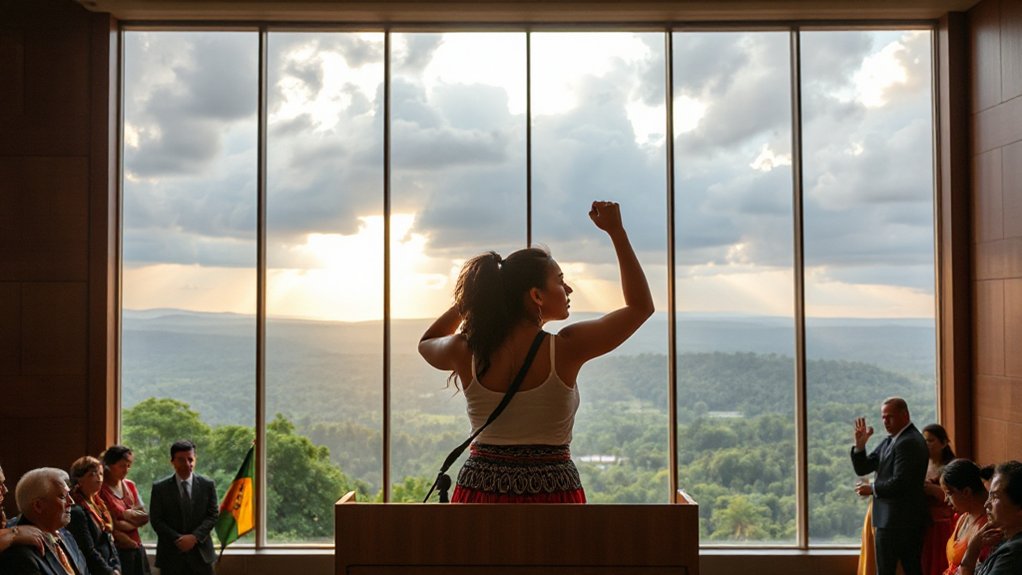

Power shifts rarely happen at climate summits. But COP30 in Belém just made history, with over 3,000 Indigenous representatives showing up – the largest Indigenous presence ever at a climate conference. Not just as observers, mind you. They actually got seats at the negotiating tables. Imagine that.
The numbers tell the story. More than 400 representatives from 361 ethnic groups participated. The Peoples’ Circle pavilion buzzed with climate justice debates while Indigenous leaders pushed their way into rooms where decisions actually happen. Progress? Maybe. But let’s not throw a party just yet.
Only 14% of the 2,500 Indigenous Brazilians who traveled to Belém received Blue Zone accreditation. The rest watched from the sidelines. Typical.
Still, some concrete wins emerged. The Intergovernmental Land Tenure Commitment pledged to recognize Indigenous rights over 160 million hectares of land by 2030. That’s nearly 400 million acres across tropical forest countries including Brazil, Colombia, and the DRC. Cash followed promises, with the Forest Tenure Funders Group renewing a $1.8 billion pledge over five years.
President Lula signed decrees for 28 quilombos and announced the demarcation of 10 Indigenous territories. The Kaxuyana tribe finally saw their vast stretch of old-growth rainforest in Pará officially recognized. About time.
Indigenous communities didn’t just wait for handouts. The Munduruku staged a major blockade demanding land rights. Thousands marched under the banner “We Are the Answer” – because, well, they are.
The final agreement recognized Indigenous land rights and traditional knowledge in the Global Mutirão text. It also highlighted their crucial role in sustainable forest management and guaranteed just change pathways respect their rights to self-determination. These Indigenous territories act as keystone habitats that maintain ecological balance while providing ecosystem services worth billions annually. Protecting these lands could prevent 20% of additional deforestation and significantly reduce carbon emissions by 2030.
Meanwhile, Indigenous leaders demanded direct access to climate funding and implementation of Free, Prior and Informed Consent. They’ve been saying this for decades. Maybe this time someone’s actually listening. The Brazilian government made significant progress by establishing boundaries for six Indigenous Lands, a crucial step toward full recognition and protection of their territories.
References
- https://news.mongabay.com/2025/11/what-was-achieved-for-indigenous-peoples-at-cop30/
- https://www.greenpeace.org/international/story/80006/peoples-cop-belems-legacy/
- https://www.latimes.com/environment/story/2025-11-24/indigenous-peoples-demands-got-more-than-lip-service-at-cop30-climate-summit
- https://www.uwa.edu.au/news/article/2025/november/finally-indigenous-peoples-have-an-influential-voice-at-cop30
- https://www.culturalsurvival.org/news/despite-record-indigenous-presence-brazil-cop30-climate-summit-sparks-frustration-over
- https://earth.org/despite-record-turnout-only-14-of-indigenous-brazilians-are-expected-to-access-decision-making-spaces-at-cop30/
- https://www.canada.ca/en/environment-climate-change/news/2025/11/canada-affirms-indigenous-leadership-and-global-climate-action-at-the-30th-united-nations-climate-change-conference-cop30.html
- https://ricochet.media/climate/climate-justice/shut-out-of-cop30-indigenous-climate-leaders-create-new-independent-advisory-council/