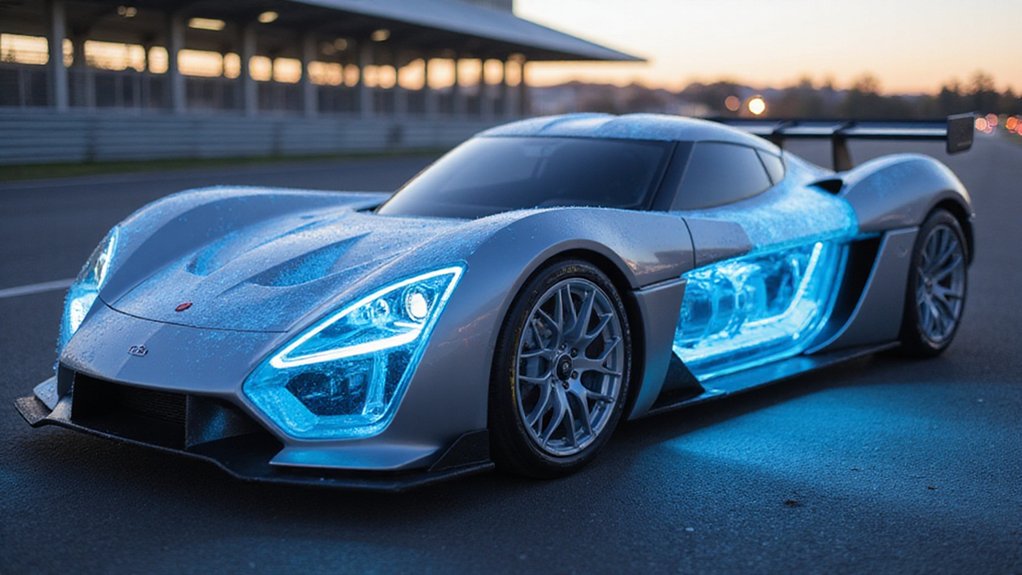

While gasoline-powered monsters have dominated the 24 Hours of Le Mans for decades, Bosch is about to flip the racing world on its exhaust pipe. In June 2025, the legendary endurance race will witness something unprecedented: the debut of the L-HSCU (Liquid Hydrogen Storage Control Unit) technology. Not just any hydrogen system—we’re talking about cryogenic liquid hydrogen stored at a mind-numbing -253°C. Yeah, that’s almost cold enough to freeze your expectations solid.
The future of racing isn’t just green—it’s cryogenically frozen at -253°C. Welcome to hydrogen’s ice-cold revolution.
The H24EVO hydrogen-powered race car will be taking demonstration laps during the June 12-14 event, showing off what might be the future of racing. Let’s face it: sustainability in motorsport has often seemed like an oxymoron. But Bosch isn’t just talking green—they’re engineering it.
The numbers don’t lie. The Ligier JS2 RH2 demonstration vehicle packs a serious punch with 443 kW output and 650 Nm of torque. Skeptical about hydrogen’s staying power? They’ve already run this thing for over 5,000 kilometers in testing—roughly the distance of two complete Le Mans races—and hit speeds exceeding 280 km/h. Not exactly your grandfather’s eco-friendly golf cart.
Safety, obviously, is paramount when you’re basically driving around on a tank of the universe’s most abundant element. The L-HSCU system features real-time leak detection capabilities to ensure top performance without compromising driver safety. This addresses a critical aspect of hydrogen infrastructure that existing pipelines cannot easily accommodate without significant modifications. Bosch has developed extensive multistage systems that monitor everything from storage to potential leaks. The system represents Bosch’s commitment to environmentally conscious technologies while maintaining performance standards. They’ve thought of everything. Must be nice.
This isn’t just some publicity stunt. The partnership between Bosch Engineering and Ligier Automotive represents a serious investment in hydrogen’s future beyond the racetrack. The technology is designed to work in commercial vehicles too, offering advantages in both range and refueling.
Racing has always been a laboratory for tomorrow’s road cars. Now it’s becoming a laboratory for tomorrow’s energy systems. Bosch’s cryogenic hydrogen technology isn’t just changing how we race—it’s potentially changing how we drive. The gasoline era had a good run. But the future? It might just be ice cold.
References
- https://www.hydrogenfuelnews.com/hydrogen-fuel-cells-take-center-stage-at-le-mans-with-boschs-liquid-hydrogen-tech/8570888/
- https://www.bosch-motorsport.com/passion/stories/le-mans-story-technology-highlights-from-bosch/
- https://www.bosch-presse.de/pressportal/de/en/le-mans-24h-innovation-vehicle-of-bosch-engineering-and-ligier-automotive-with-hydrogen-engine-shows-the-sustainable-future-of-motorsport-265408.html
- https://www.bosch-engineering.com/stories/ligier/
- https://pdfcoffee.com/8th-international-munich-chassis-symposium-2017-2017pdf-pdf-free.html