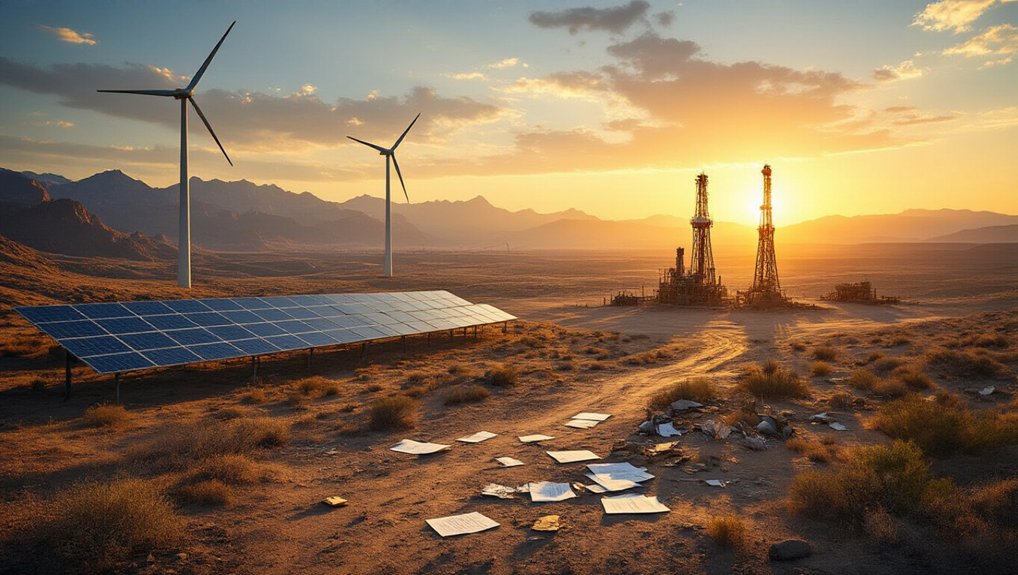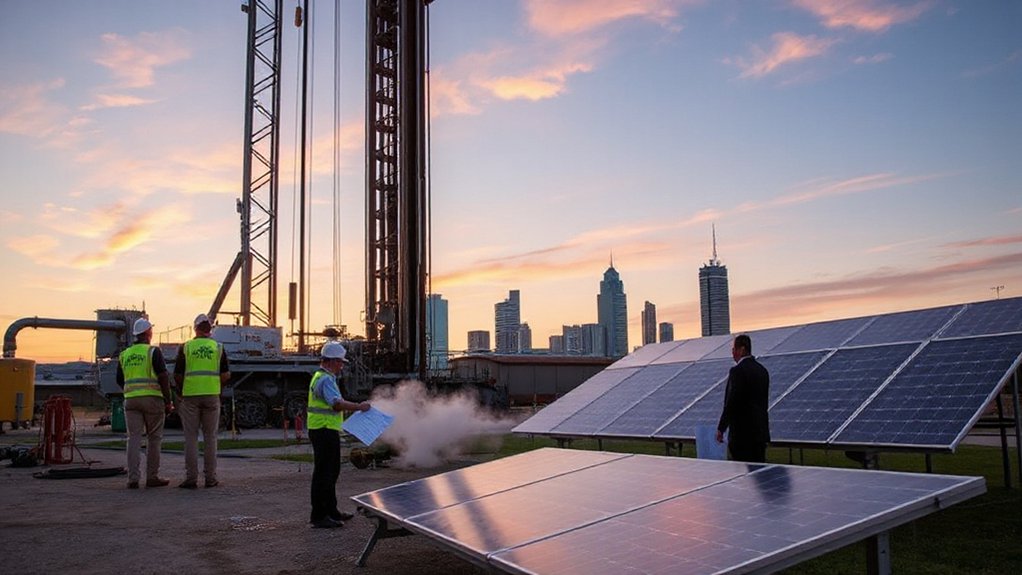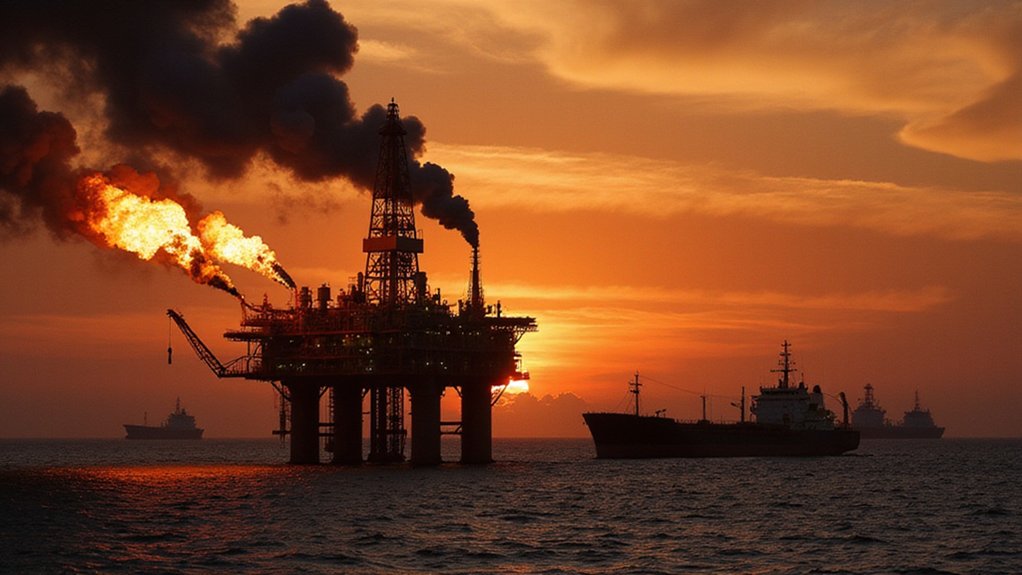
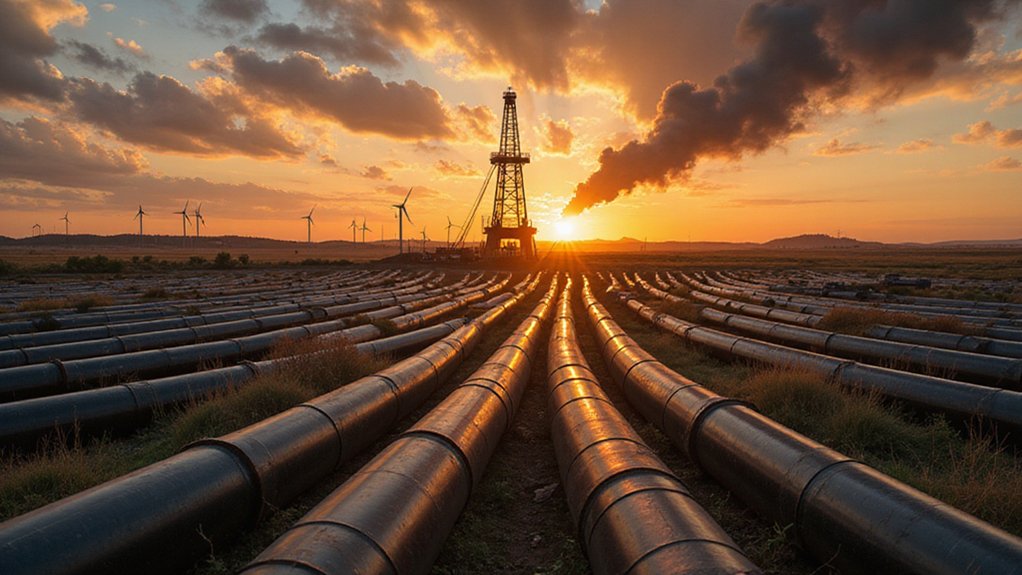
BP is abandoning its ambitious green energy targets, pivoting sharply to boost oil and gas investment by 20% to $10 billion annually. CEO Murray Auchincloss admits they went “too far, too fast” with renewables. The company scrapped plans to cut fossil fuel output by 40%, maintaining production at 2.3-2.5 million barrels daily. BP’s about-face mirrors industry-wide trends as major energy companies prioritize profits over previous climate pledges. The numbers tell a story of corporate priorities shifting.
While energy companies worldwide have been talking up their green credentials, BP has dramatically reversed course with a substantial investment increase in American fossil fuel production. The British oil giant just announced plans to ramp up oil and gas investment by a whopping 20% to $10 billion annually. So much for saving the planet.
CEO Murray Auchincloss didn’t mince words. The company had gone “too far, too fast” in shifting away from fossil fuels. Translation: Making money from renewables is hard. BP has scrapped its ambitious target to slash oil and gas output by 40% by 2030. Instead, they’re keeping production steady between 2.3-2.5 million barrels of oil equivalent per day. February 2025 marked this “strategic reset” to boost performance and cut debt.
Money talks, climate walks. BP’s “strategic reset” chooses profit over planet, abandoning renewable goals for fossil fuel certainty.
The money has to come from somewhere, right? Funding for energy shift initiatives is getting gutted by more than $5 billion, dropping to a measly $1.5-2 billion yearly. BP’s once-impressive goal to grow renewable generation capacity 20-fold to 50 GW by 2030? Gone. They’ve only managed 8.2 GW so far. Not even close. This pullback comes despite the renewable energy boom that added 507 gigawatts of global capacity in 2023 alone.
BP isn’t alone in this fossil fuel renaissance. Shell, ExxonMobil, Chevron – they’re all jumping ship from previous climate promises. It’s a mass exodus. Remember when BP’s carbon-cutting target was industry-leading back in 2020? Ancient history now. The company faces growing pressure from activist investor Elliott holding nearly a 5% stake and demanding tighter cost discipline and reduced green energy spending.
Meanwhile, global oil production hit a record 96 million barrels daily. America leads the pack with production growth exceeding 8%. Global consumption? Also setting records above 100 million barrels a day for the first time. More oil, more gas, more emissions.
Wall Street isn’t complaining. BP’s shares underperformed rivals, creating investor pressure to change course. The company even abandoned its 2024 EBITDA target of $40.9 billion after failing to reach it.
This all happens as global energy consumption reaches an all-time high of 620 Exajoules, with fossil fuels dominating 81.5% of the mix. Emissions? Also record-breaking. Apparently, those climate commitments weren’t worth the paper they were printed on. This strategic shift directly contradicts the IEA’s urgent recommendation to halt new oil and gas field developments to maintain a climate-compatible future.
References
- https://www.bp.com/content/dam/bp/business-sites/en/global/corporate/pdfs/energy-economics/energy-outlook/bp-energy-outlook-2024.pdf
- https://www.bp.com/content/dam/bp/business-sites/en/global/corporate/pdfs/energy-economics/statistical-review/bp-stats-review-2022-full-report.pdf
- https://www.offshore-mag.com/business-briefs/company-news/news/55270267/bp-report-bp-to-ditch-renewables-goals-and-return-focus-to-fossil-fuels
- https://earth.org/bp-increases-oil-and-gas-investments-drops-renewable-targets/
- https://dieselnet.com/news/2024/06energyreview.php