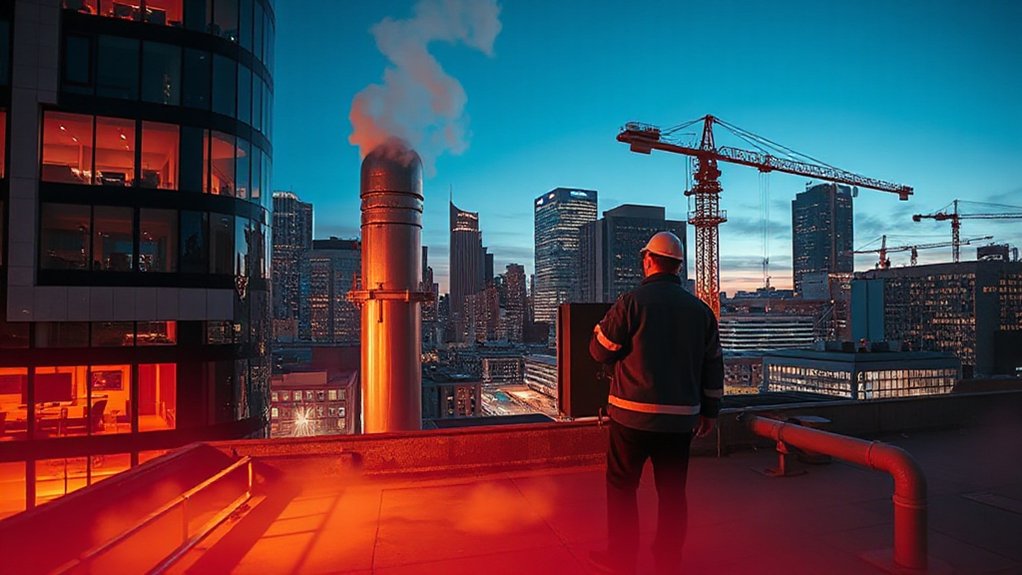
While world leaders talk about climate solutions, the buildings we live and work in are effectively torching our climate goals. The numbers don’t lie. Buildings spewed 12 gigatonnes of greenhouse gases in 2019—a whopping 21% of global emissions. Even worse, they gulped down 32% of global energy in 2023. Not exactly a recipe for planetary health.
Let’s break it down. Operational emissions—the carbon produced just keeping buildings running—hit a record 9.8 gigatonnes in 2023. Add another 2.9 gigatonnes of embodied carbon from materials like cement and steel. Yeah, that’s bad.
Most people don’t realize buildings are carbon factories. Indirect emissions from electricity and heat make up 57% of the problem, while direct on-site emissions contribute another 24%. Homes are the biggest culprits, responsible for half of all building CO2 emissions.
The trend? Dead wrong. Building emissions rose 5.4% between 2015-2023. We needed a 28.1% reduction. Epic fail.
What’s coming is even scarier. Global building stock will double by mid-century as population approaches 10 billion. That’s like adding a New York City every month for 40 years. Construction emissions alone could blow through our entire 1.5°C carbon budget by 2050.
The kicker? Three-quarters of 2050’s buildings haven’t even been built yet. We’re constructing a climate catastrophe in real time.
Energy efficiency improvements are crawling along at half the needed pace—just 2 kWh/m² in 2023 versus the required 119.4 kWh/m² to meet Paris goals.
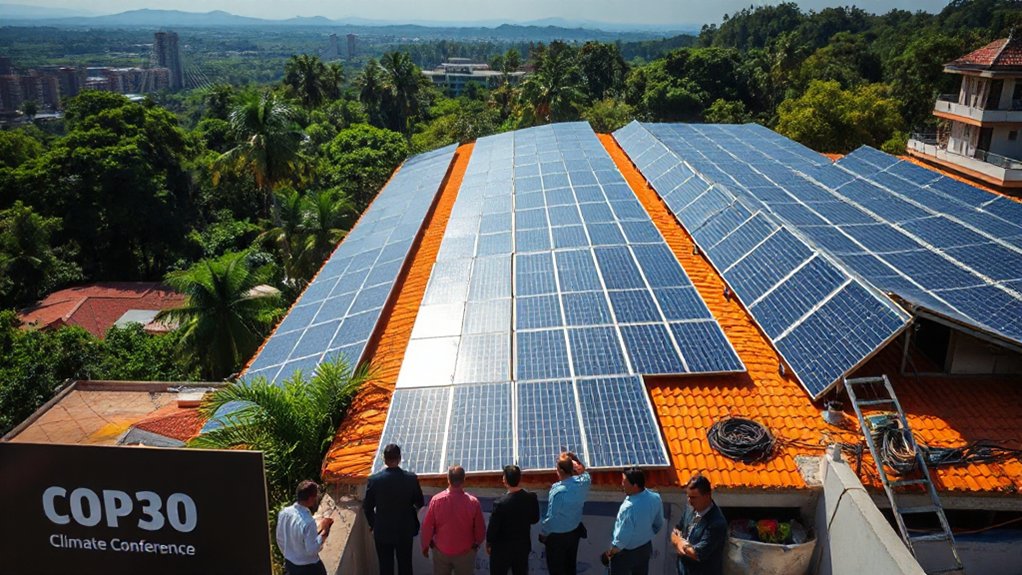
There’s potential here—buildings represent 11% of global mitigation opportunity by 2035, about 4.2 gigatonnes of avoided emissions. But potential means nothing without action. The Sufficiency, Efficiency, Renewables framework offers a hierarchical mitigation approach that prioritizes reducing demand before improving efficiency or adding renewable energy. Transitioning buildings to renewable sources could dramatically reduce their environmental impact while supporting job creation in emerging green industries.
The construction industry has doubled its carbon footprint over three decades. According to the WorldGBC report, 11% of emissions arise from materials and construction processes. Meanwhile, our climate tracker shows we’re nowhere near the decarbonization path needed for 2030 and 2050 targets. Buildings aren’t just missing climate goals—they’re sabotaging them.
References
- https://www.ipcc.ch/report/ar6/wg3/chapter/chapter-9/
- https://www.weforum.org/stories/2025/05/building-construction-emissions-data/
- https://globalabc.org/sites/default/files/2025-03/Global-Status-Report-2024_2025.pdf
- https://worldgbc.org/climate-action/embodied-carbon/
- https://www.architecture2030.org/why-the-built-environment/
- https://www.nature.com/articles/s43247-025-02840-x