While millions of Americans fire up their grills each summer weekend, the sobering reality is that BBQs torch about 8,200 homes annually and kill 15 people. Another 120 folks get injured. That’s a lot of damage for some burgers and hot dogs.
The numbers tell a grim story. July’s the worst month, accounting for 15% of all grill fires. June, May, and August aren’t far behind. U.S. fire departments respond to around 10,000 home fires caused by grills yearly, resulting in $75 million in property damage. The culprit? Usually grease buildup. People forget to clean their grills. Simple as that.
Kids face particular dangers. They wander too close, touch hot surfaces, get burned. Safety experts recommend a three-foot “kid-free zone” around grills. Good luck enforcing that at a family reunion. Emergency rooms treat an average of 21,682 patients per year for grill-related injuries, adding to the mounting healthcare costs. Parents often carry children while juggling hot items, risking serious burns.
Kids wander close, touch hot grills, get burned. Three-foot safety zones? Good luck with that.
Pets suffer too, vulnerable to burns and respiratory problems from smoke. Even worse, those coals stay hot for up to 24 hours. A kid or dog stumbles into them the next morning? Bad news.
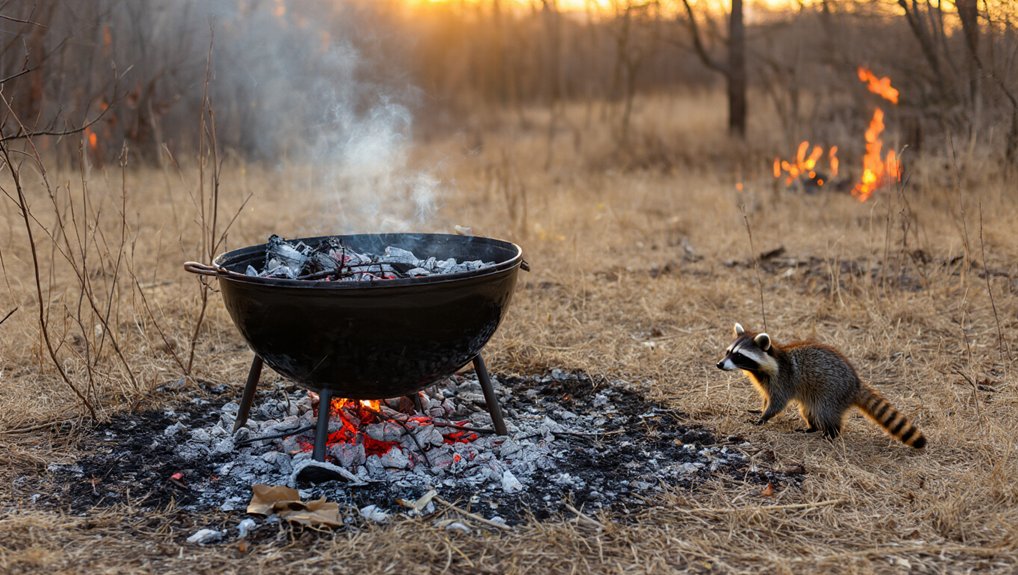
Wildlife gets dragged into this mess too. Food scraps and grilling odors lure animals into residential areas and campgrounds. Bears, raccoons, coyotes – they all come sniffing around. Some get burned. Others ingest toxic materials or choke on food wrappers.
During peak BBQ season, parks see increased wildlife disturbances from all the human activity and waste.
Then there’s the wildfire problem. BBQs contribute to human-caused forest fires, especially in dry conditions. People think they’ve extinguished their coals, but embers can smolder and ignite underbrush hours later.
Summer grilling season coincides perfectly with elevated wildfire danger across many regions. Convenient, right?
Carbon monoxide poisoning adds another layer of risk when people grill indoors or in enclosed spaces. Regular cleaning reduces fire risks from grease buildup, but who actually does that?
Proper coal disposal in designated containers is critical, yet campgrounds are littered with improper dump sites.
Maybe it’s time to ask whether the weekend BBQ tradition is worth 15 deaths, 120 injuries, and millions in property damage annually. Just saying.
References
- https://www.nfpa.org/education-and-research/home-fire-safety/grilling
- https://www.usfa.fema.gov/prevention/outdoor-fires/
- https://riseandshine.childrensnational.org/fire-safety-tips-for-grilling-season/
- https://www.nps.gov/articles/p52-fathers-day-bbq-safety.htm
- https://drexelfire.org/summer-safety-extreme-heat-sunburn-pets-grilling-and-fireworks-safety/