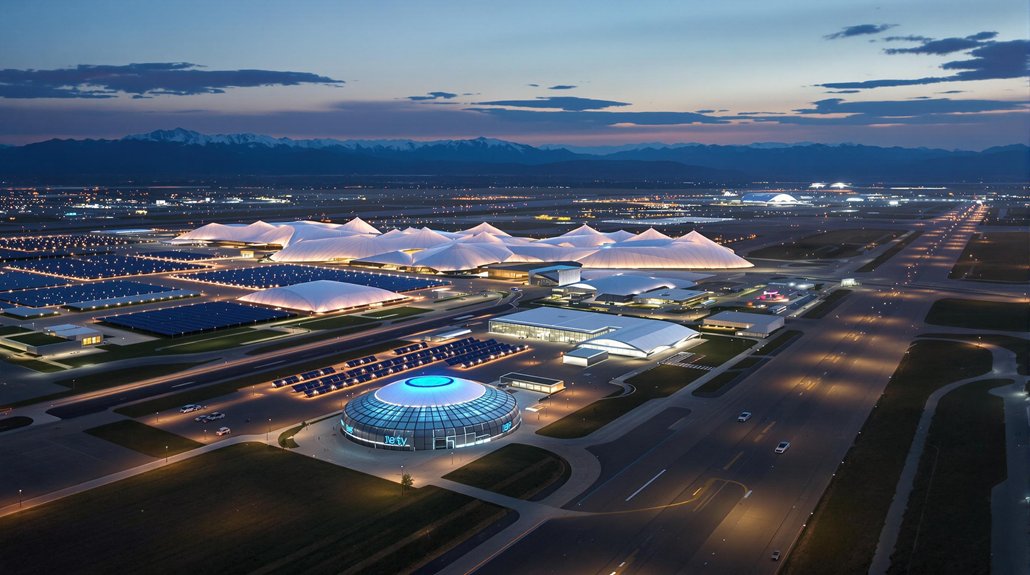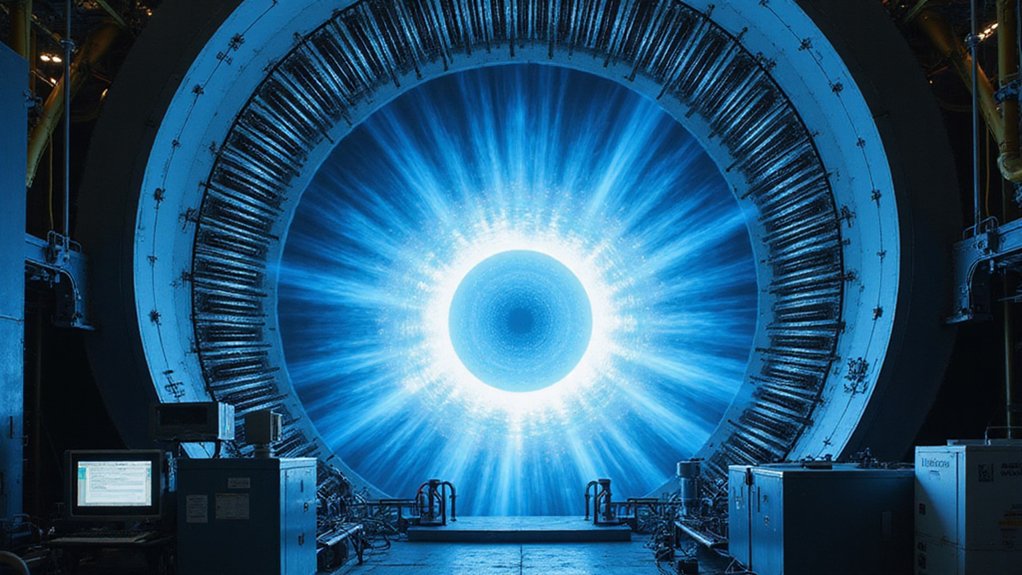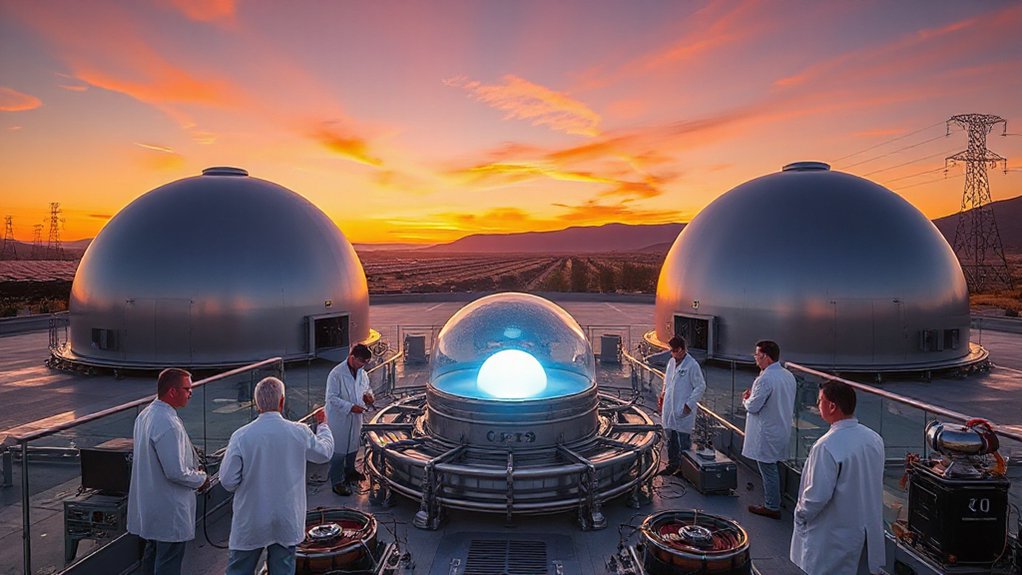
While most Californians were busy surfing waves or fighting traffic, scientists at Lawrence Livermore National Laboratory were quietly making history. They achieved nuclear fusion ignition—the holy grail of clean energy—not once, but eight times since their breakthrough in December 2022. This isn’t some science fiction fantasy anymore. It’s happening in our backyard, and California’s betting big.
How big? Try $2.2 billion in private funding. That’s real money flowing into 16 fusion companies across the state. Not bad for technology that critics have joked is “always 30 years away.” Except no one’s laughing now.
California’s fusion gamble isn’t pocket change—$2.2 billion says this clean energy moonshot is finally ready for prime time.
The economic potential is staggering—up to $125 billion for California’s economy. San Diego has emerged as a fusion hotspot, home to the DIII-D National Fusion Facility, North America’s largest tokamak. It’s like a mini-sun in a donut-shaped magnetic bottle. Seriously.
State lawmakers aren’t sitting on their hands either. They’ve passed resolutions supporting fusion development and are pushing for a pilot plant by the 2030s. Bill SB 80 established requirements for fusion hubs across the state. Politicians actually agreeing on something? Fusion might be performing miracles already.
But it’s not all sunshine and rainbows. California lost the $1 billion Pacific Fusion project to New Mexico, which offered better incentives. High land costs and regulatory uncertainty remain obstacles. The state still lacks a specific regulatory framework for fusion energy—kind of important if you’re trying to revolutionize the power grid.
The University of California is stepping up through its Pacific CREST Fusion initiative, a public-private partnership creating pathways between academic research and commercial deployment. They’re training the workforce that will make fusion a reality. This initiative demonstrates California’s commitment to fusion workforce development as a critical component for future energy innovations.
Unlike traditional nuclear fission, fusion offers the promise of virtually limitless energy without generating long-lasting radioactive waste, making it an ideal solution for our growing energy demands. Unlike geothermal power plants which have availability factors around 95%, fusion technology could potentially provide even greater reliability if successfully commercialized.
Will California’s $2.2 billion gamble pay off by 2035? Maybe. The science is advancing faster than expected. But turning laboratory breakthroughs into reliable power plants requires more than money. It needs political will, regulatory clarity, and continued innovation. The clock is ticking.
References
- https://www.sfgate.com/tech/article/bay-area-project-new-mexico-21076257.php
- https://seuc.senate.ca.gov/system/files/2025-04/sb-80-analysis.pdf
- https://legiscan.com/CA/text/SCR25/id/3132033/California-2025-SCR25-Introduced.html
- https://autl.assembly.ca.gov/system/files/2025-06/scr_25-blakespear-1.pdf
- https://www.kpbs.org/news/science-technology/2025/10/09/california-leads-in-nuclear-fusion-energy-research-and-development
- https://today.ucsd.edu/story/good-news-for-fusion-energy-workforce-development-in-san-diego
- https://envirodatagov.org/project-2025-department-of-energy-and-related-commissions-annotated/
- https://capitolweekly.net/nuclear-fusion-an-expensive-unnecessary-distraction/