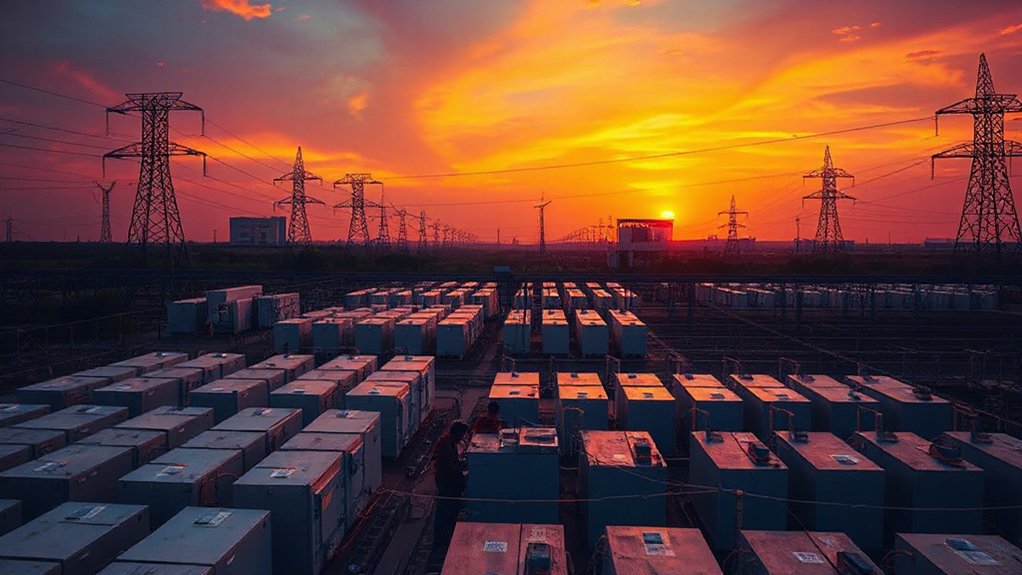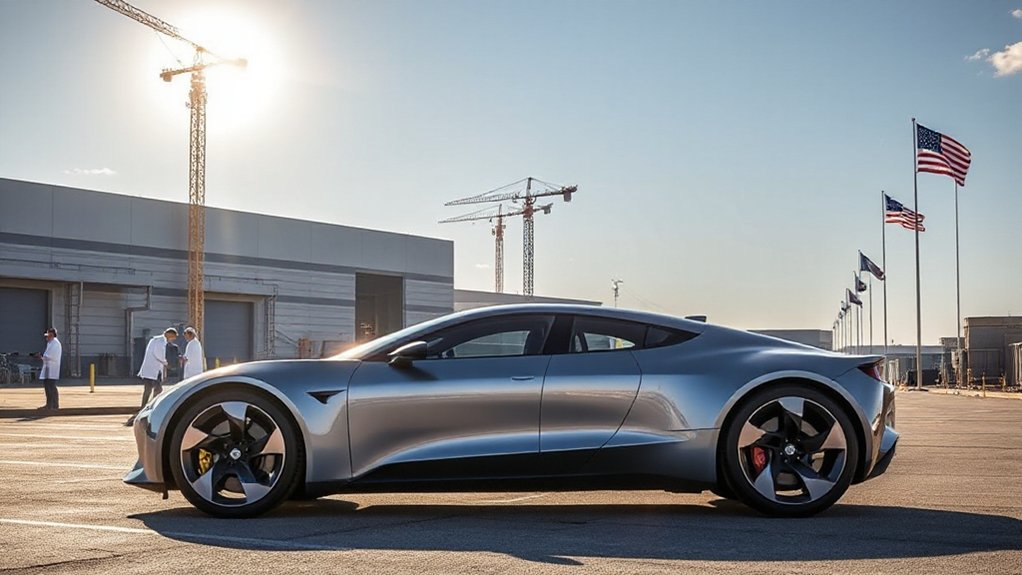
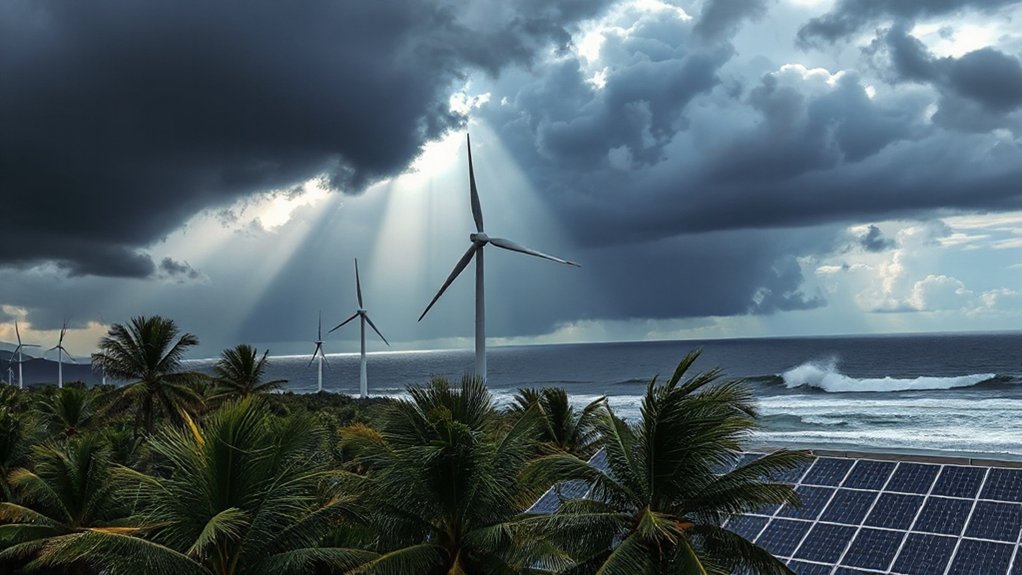
Ambition has a price tag—$650 million to be exact. That’s what Indian company Epsilon is betting on its massive synthetic graphite anode plant in North Carolina. Biggest Indian investment in U.S. EV batteries ever. Bold move? Absolutely. Smart? We’ll see.
A $650 million bet on graphite in America. Epsilon’s audacious Indian gamble on tomorrow’s EV revolution.
The numbers sound impressive. Fifty thousand tons of anode materials annually. Enough for over a million EVs. Fifteen hundred jobs. Revenue projections hitting $500 million by 2031. Great on paper. But paper doesn’t make batteries.
Epsilon isn’t going it alone. They’ve partnered with Phillips 66 for something called “Green and Calcined Needle Coke” from Louisiana. Sounds like something you’d order at a hipster coffee shop, doesn’t it? But it’s actually critical for those synthetic graphite anodes.
Smart move getting domestic supply locked down—especially with China dominating global graphite production.
Uncle Sam is surely pleased. The government wants half of all vehicle sales to be electric by 2030. That’s a lot of batteries. A LOT. Epsilon’s facility fits perfectly into that grand vision of a localized supply chain. Less dependence on foreign parts. Less shipping emissions. More American jobs.
Technically speaking, Epsilon claims some fancy advantages. Quick-charging capabilities. Longer battery life. Safer operation. All wrapped in a bow of ESG principles. Very 2023 of them.
Founder Vikram Handa emphasizes the company’s dedication to bringing patented anode manufacturing technology from India to the American market.
But competition is fierce. Sila Nanomaterials is already racing to produce silicon anodes by 2025. They’re talking 250 GWh capacity within five years. That’s not small potatoes.
The partnership aims to establish a secure supply chain for battery materials, reducing U.S. reliance on foreign sources with weaker environmental and labor protections.
Epsilon isn’t starting production until 2027. That’s four years away. An eternity in tech years. The EV landscape could look entirely different by then. Policy could change. Technology could shift.
With California’s recent implementation of 24-hour reporting requirements for battery incidents, companies like Epsilon will need to factor in increasingly stringent safety regulations nationwide.
Can Epsilon’s million-EV gamble pay off? Maybe. The strategy sounds solid. The partnerships make sense. But timing is everything in this business. And four years is a long time to wait while competitors aren’t standing still.
References
- https://motoring-trends.com/alternative-energy/epsilon-advanced-material-to-build-650-mln-ev-battery-components-plant-in-usa
- https://www.thecooldown.com/green-business/ev-battery-production-materials-carbon/
- https://www.chemanalyst.com/NewsAndDeals/NewsDetails/epsilon-advanced-materials-and-phillips-66-announce-landmark-partnership-39359
- https://cleantechnica.com/2025/11/09/epsilon-advanced-materials-anticipates-ev-batteries-for-1-million-us-made-evs-per-year-are-they-nuts/
- https://www.epsilonam.com/news.html
- https://www.epsilonam.com
- https://batteriesnews.com/epsilon-advanced-materials-phillips-66-partner-to-power-us-ev-battery-manufacturing/
- https://www.starnewsonline.com/story/news/local/2025/07/03/brunswick-ev-battery-plant-delayed-but-still-on-track-epsilon-advanced-materials-india/84430231007/
- https://source.benchmarkminerals.com/article/indias-epsilon-to-build-650-million-anode-plant-in-north-carolina