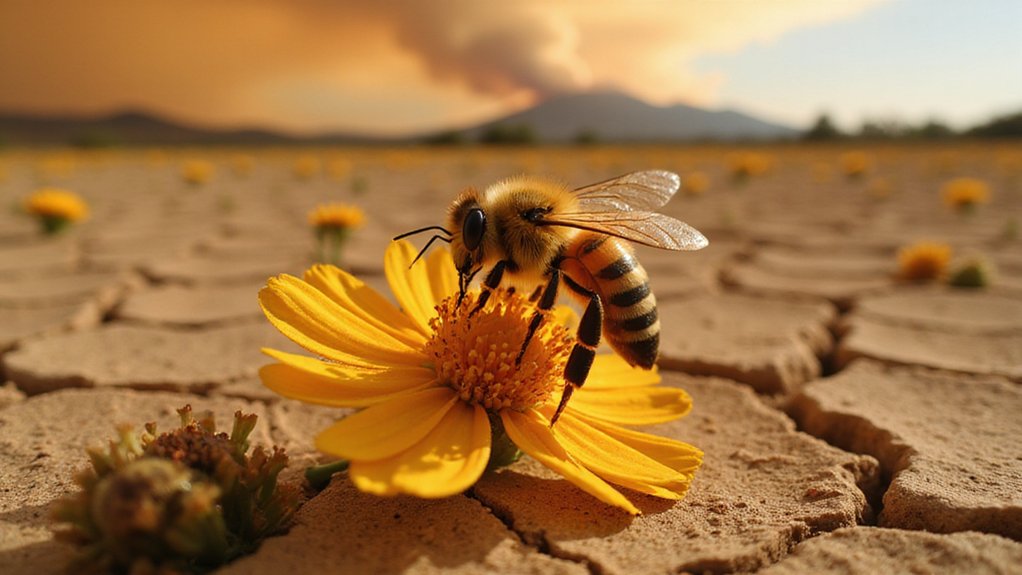

When drought hits Colorado grasslands, the scenery transforms into something that looks like nature’s version of a bad hair day. Brown patches spread like wildfire. Plants shrivel. The whole ecosystem basically throws in the towel.
Colorado grasslands during drought look like nature’s version of a bad hair day.
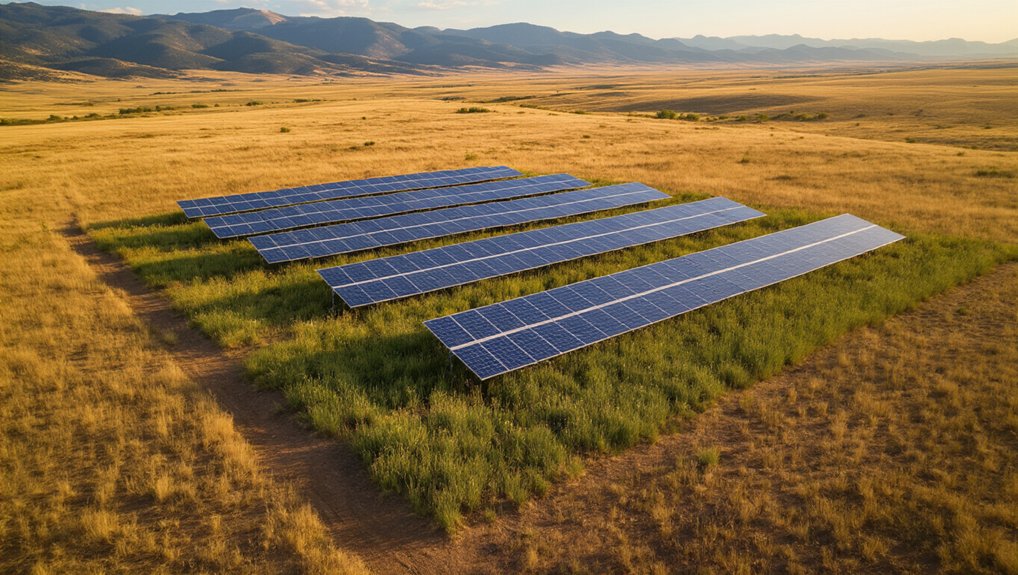
But here’s where it gets weird. Those massive solar panels everyone loves to hate? They’re actually doing grasslands a solid during drought years. Scientists discovered that the shade from these metal giants creates microhabitats that keep soil moisture from vanishing into thin air. The ground beneath panels stays cooler, wetter, and surprisingly productive when everything else looks like toast.
Colorado’s grasslands normally take a beating when precipitation drops by 66 percent. Cool season droughts hammer key grass and shrub species particularly hard. The usual suspects—dominant grasses that run the show—start dying off in droves. But underneath solar arrays, it’s a different story. The productivity gap between shaded and open grasslands shrinks dramatically during dry spells.
The science behind this accidental blessing is straightforward. Solar panels block direct sunlight, which means less evaporation. Less evaporation equals more moisture sticking around in the soil. More moisture means plants don’t completely lose their minds during drought. Simple as that.
C4 grasses, the drought-tolerant heroes of Colorado, thrive even better under this arrangement. They’re already efficient water users, maintaining productivity with minimal hydration. Add some shade to the mix, and they’re practically invincible compared to their C3 cousins who need more water to function. These C4 plants demonstrate more efficient photosynthetic pathways that allow them to produce more biomass with less water input.
Of course, it’s not all sunshine and rainbows—or rather, shade and moisture. Some plants struggle without full sun exposure. Installation can mess up soil structure. Maintenance crews trampling around doesn’t help either. But when drought strikes, these trade-offs start looking pretty reasonable.
The subordinate plant species, usually playing second fiddle to dominant grasses, step up during these water-starved periods. They stabilize production when the big players falter. This biodiversity buffer, combined with solar shade protection, creates an unexpectedly resilient system. With modern solar panels lasting 25-30 years, these beneficial microhabitats provide long-term drought protection for vulnerable grassland ecosystems. Researchers measured leaf carbon exchange from 9 a.m. to 5 p.m. during summer 2022, tracking exactly how grasses beneath panels maintained their photosynthesis when exposed grasslands shut down.
Who would’ve thought that covering grasslands with industrial equipment could accidentally help preserve them during climate extremes?
References
- https://www.seattlepi.com/news/article/solar-arrays-help-boost-colorado-grassland-20352830.php
- https://natsci.source.colostate.edu/research-contrasts-drought-sensitivity-of-eurasian-and-north-american-grasslands/
- https://www.thelimonleader.com/stories/grasslands-and-solar-panels
- https://www.thechronicle-news.com/grasslands-solar-panels/
- https://www.usgs.gov/centers/southwest-biological-science-center/science/colorado-plateau-extreme-drought-grassland