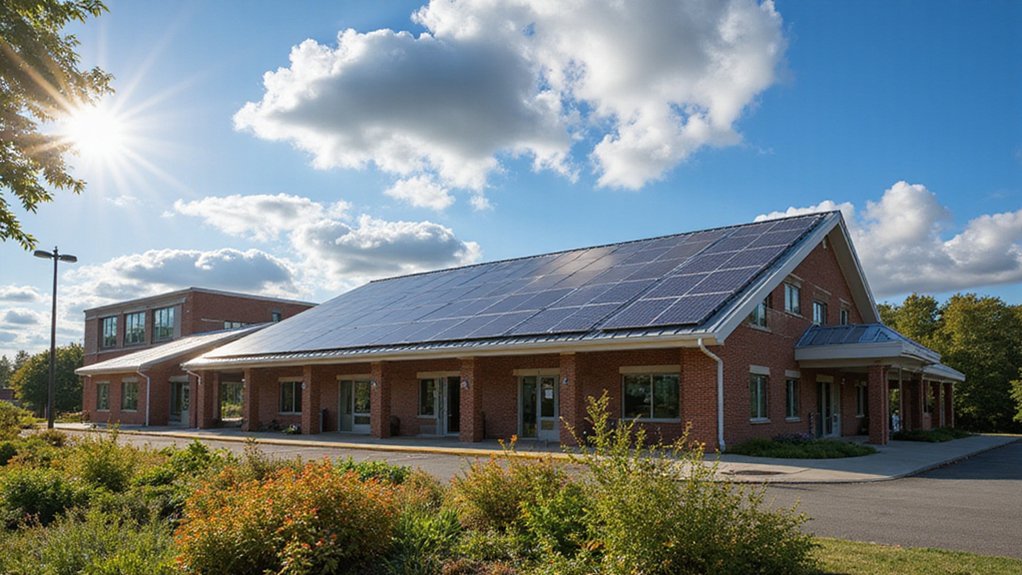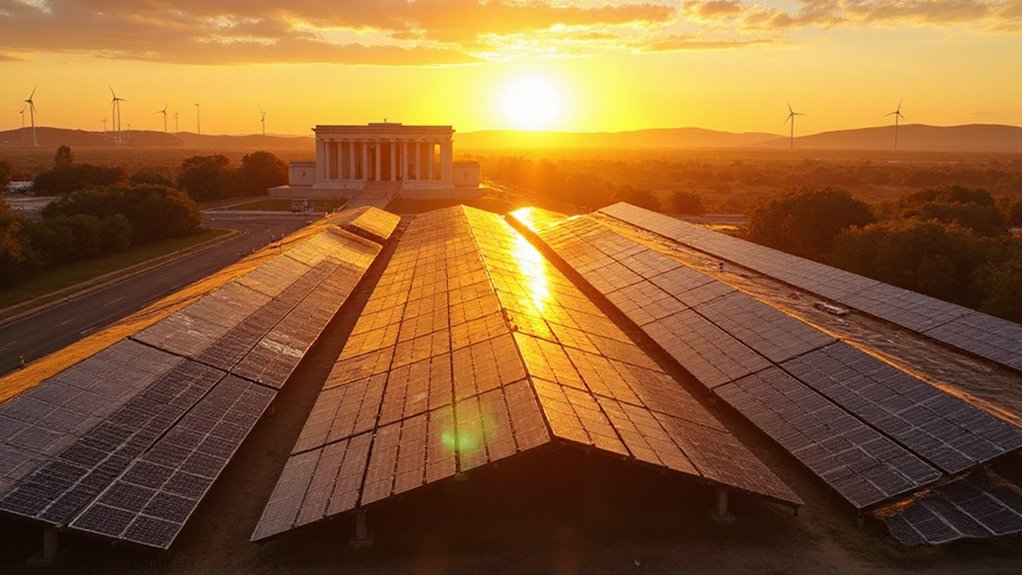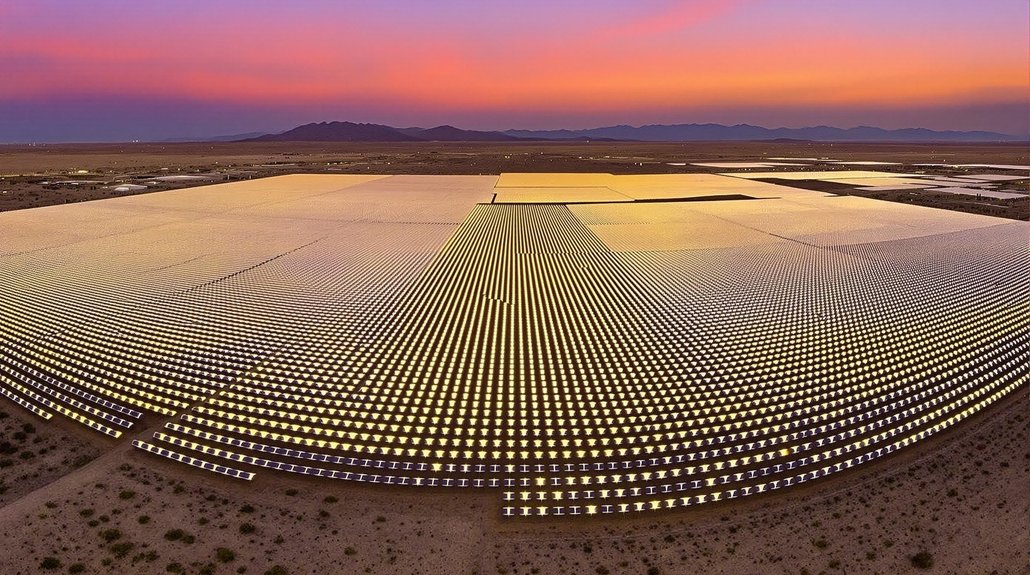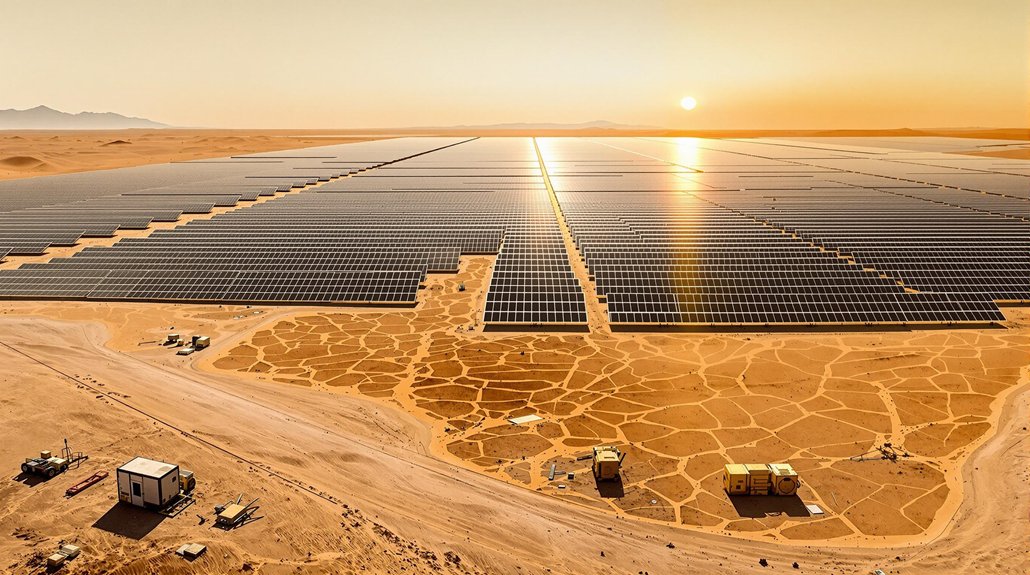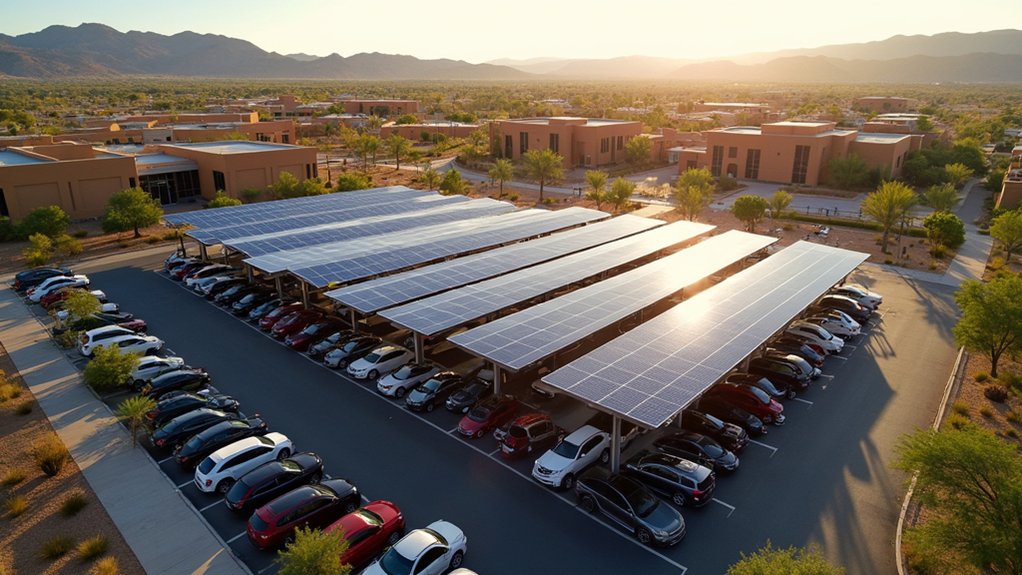
Sunshine, that relentless desert companion, has finally become Desert College’s best friend. The college has installed massive solar parking canopies with a 3.8 megawatt capacity, turning scorching rays into cold, hard cash. Students who once sprinted across blistering parking lots now stroll beneath shaded walkways. Their cars stay cool too. No more burning steering wheels or melted chocolate bars on the dashboard. Progress!
Desert sunshine: once the enemy, now an ally generating power, savings, and blissfully cool parking spots.
The financial impact is impressive. Desert College now saves $141,000 annually on energy costs. That’s not pocket change. Similar projects at other institutions have proven “cash-positive from the get-go,” as Rutgers University discovered with its 8 MW system. The excess power generated can be sold back to the grid, creating an additional revenue stream. Who knew parking lots could be profit centers?
These canopies aren’t just about money, though. They’re a bold statement about sustainability and environmental leadership. Unlike traditional solar farms that can harm ecosystems and endanger species like the western Joshua trees, these installations utilize already-developed land with minimal environmental impact. They reduce greenhouse gas emissions by replacing fossil-fuel electricity with solar power. With a typical lifespan of 25-30 years, these solar installations represent a long-term commitment to sustainability. They combat the urban heat island effect by shading black asphalt that normally absorbs and radiates heat. And let’s be honest—they look pretty cool too. Nothing says “we care about the planet” like massive solar panels looming over your Prius.
Engineering these structures required serious know-how. The canopies combine structural integrity with ideal solar exposure, maximizing every photon without sacrificing stability or safety. They’re custom-designed to blend with campus architecture while still performing their primary function—generating electricity. The college engaged experienced engineers to ensure the system design would meet their specific needs and site requirements.
Many college infrastructure projects go unnoticed by students. Not these. The canopies provide immediate, tangible benefits: protection from heat and snow, potential electric vehicle charging stations, and improved lighting and security features. Students appreciate not having their car interiors reach oven-like temperatures during class. Faculty members enjoy lower energy bills. Administrators love the positive PR. Win-win-win.
Desert College has transformed something mundane—a parking lot—into something groundbreaking.
References
- https://e360.yale.edu/features/putting-solar-panels-atop-parking-lots-a-green-energy-solution
- https://info.ameresco.com/solar-carport
- https://www.greenbuildingadvisor.com/article/why-solar-canopies-on-parking-lots-is-a-smart-green-move
- https://blymyerengineers.com/project-category/solar/
- https://panethos.wordpress.com/2022/06/13/collegiate-carport-solar-energy-production-in-the-usa/