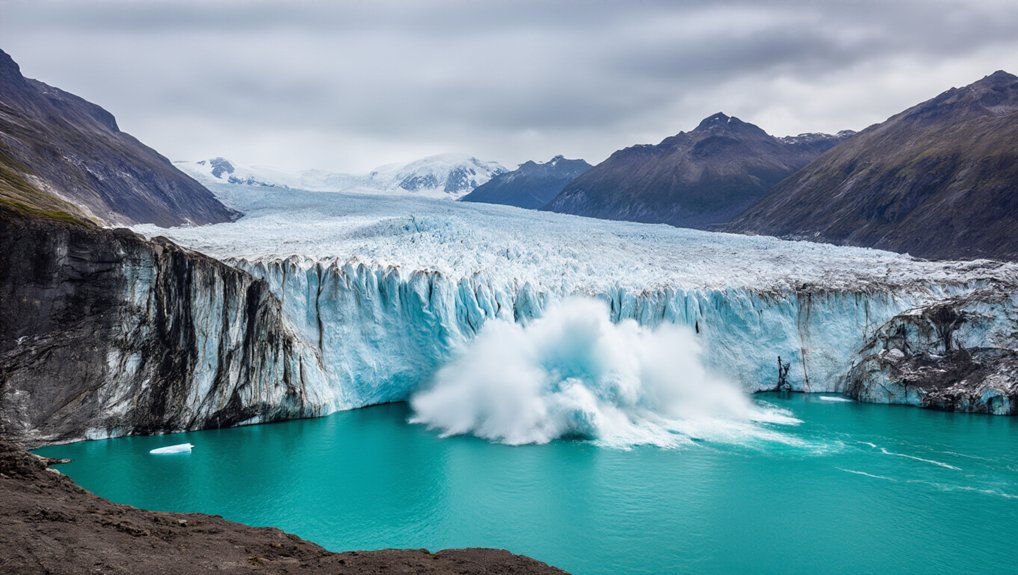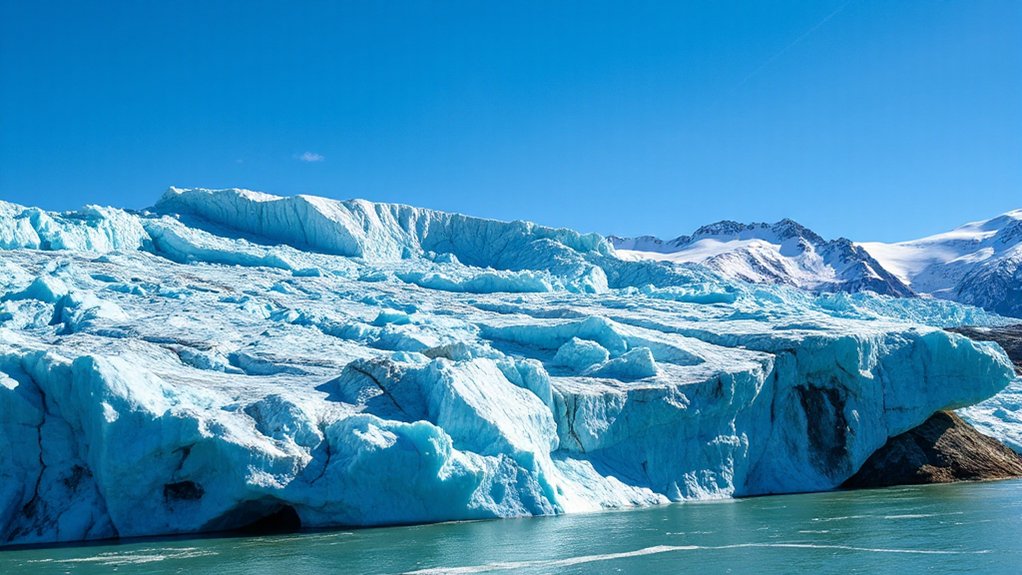
While politicians debate climate policies in air-conditioned rooms, the world’s glaciers are melting at an alarming rate. A new study in Nature Climate Change paints a grim picture—we’re heading toward a “peak glacier extinction” phase in the 2040s-2050s. Thousands of these icy giants could vanish annually. Yeah, thousands. Every single year.
The numbers are stark. Under a 4°C warming scenario, we’ll lose around 4,000 glaciers annually by the mid-2050s. Even the more “optimistic” 1.5°C scenario—which seems increasingly like fantasy—still results in 2,000 glaciers disappearing yearly by 2041. Between 2000 and 2023, glaciers shed 7,211 billion tons of ice. That’s not a typo.
Even in our best-case climate scenarios, thousands of glaciers will vanish yearly while politicians debate if there’s even a problem.
Let’s talk survivors. If we somehow manage to limit warming to 1.5°C, about 100,000 glaciers might survive until 2100—roughly half the current total. Push that to 2.7°C, and only one in five makes it. At 4°C? A measly 18,000 remain, or about 9-10%. Guess which path we’re currently on? Not the good one. This 4°C warming would trigger unprecedented environmental changes across the globe, permanently altering ecosystems.
World Heritage glaciers are already melting at a rate of 58 billion tons yearly. One-third of these iconic formations are toast by 2050 regardless of what we do now. Sorry, Mount Kilimanjaro fans—Africa’s glacier-topped mountains won’t make it past mid-century. The research led by ETH Zurich glaciologist Lander Van Tricht provides compelling evidence of this accelerating crisis. The fossil fuel combustion from transportation and industry continues to release massive amounts of CO2, directly accelerating glacier melt worldwide.
The real kicker? Even if we froze temperatures exactly where they are today, we’d still lose 39% of glacier mass. The damage is baked in. But the difference between 1.5°C and 4°C warming is saving half our glaciers versus saving just one-tenth.
Each vanished glacier means more than just lost ice. It’s disrupted ecosystems, threatened water resources, and erased cultural heritage. Full glacier melt contributes 230 feet to sea-level rise. That’s not happening tomorrow, but the clock is ticking while we argue about whether there’s even a problem. Spoiler alert: there is.
References
- https://www.chosun.com/english/industry-en/2025/12/16/PDMQ7M6JINGODERZFW2EYRFROM/
- https://abcnews.go.com/International/rate-glacier-disappearance-expected-peak-mid-2050s-scientists/story?id=128415173
- https://www.goodmorningamerica.com/news/story/rate-glacier-disappearance-expected-peak-mid-2050s-scientists-128415173
- https://whc.unesco.org/en/news/2488
- https://www.sciencealert.com/earth-estimated-to-lose-3000-glaciers-a-year-at-peak-extinction
- https://www.theenergymix.com/how-many-glaciers-in-canadas-arctic-can-be-saved-from-extinction/
- https://www.aretenews.com/world-headed-toward-peak-glacier-extinction