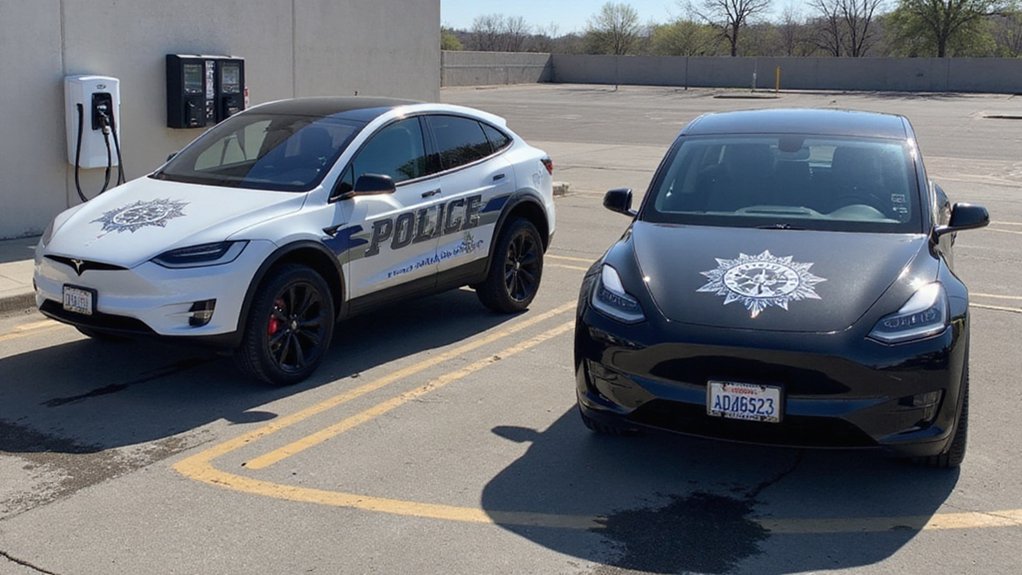

Police departments nationwide are slashing monthly expenses by switching to electric squad cars. EVs save over $5,000 annually per vehicle compared to gas-guzzling counterparts. Maintenance costs plummet too—no oil changes, fewer brake replacements, less downtime. One department spent just $300 charging 13 EVs while dropping $3,100 on four gas cruisers. Yeah, the initial price tag is higher, but Tesla patrol cars hold their value impressively well. The numbers don’t lie, taxpayers.
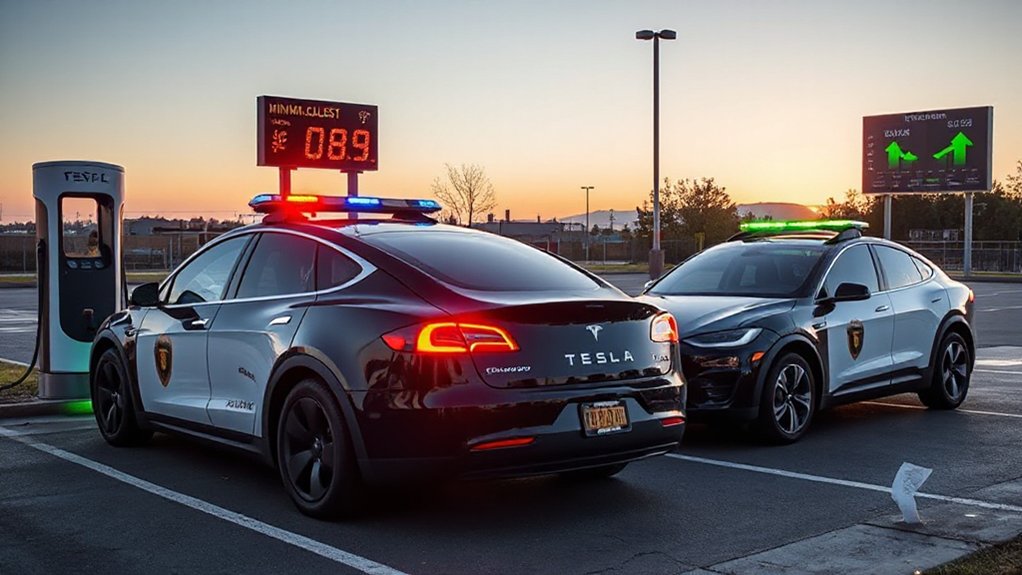
While ballooning police budgets have sparked nationwide debates, a surprising solution is emerging in station parking lots. Electric police vehicles aren’t just good PR—they’re saving departments serious cash. The numbers don’t lie, and they’re pretty impressive.
Police departments switching to electric squad cars report saving over $5,000 annually per vehicle compared to their gas-guzzling counterparts. That’s not chump change. Tesla police fleets have demonstrated a whopping $70,000 to $80,000 in yearly savings for mid-sized departments. More EVs, more savings. Simple math.
The savings pile up everywhere you look. Electricity costs average just $700 annually per patrol car versus about $5,000 for gas and oil. One department spent only $300 charging 13 EVs in a month, while simultaneously dropping $3,100 to fuel just four gas cruisers. Talk about a no-brainer.
Maintenance? Barely exists with EVs. No oil changes, no transmission problems, no exhaust repairs. Police EVs even save on brake replacements thanks to regenerative braking systems. Annual maintenance for EV police sedans runs about $7,901 compared to $12,532 for gas vehicles. Less downtime means more patrolling, more crime-fighting, less taxpayer money wasted.
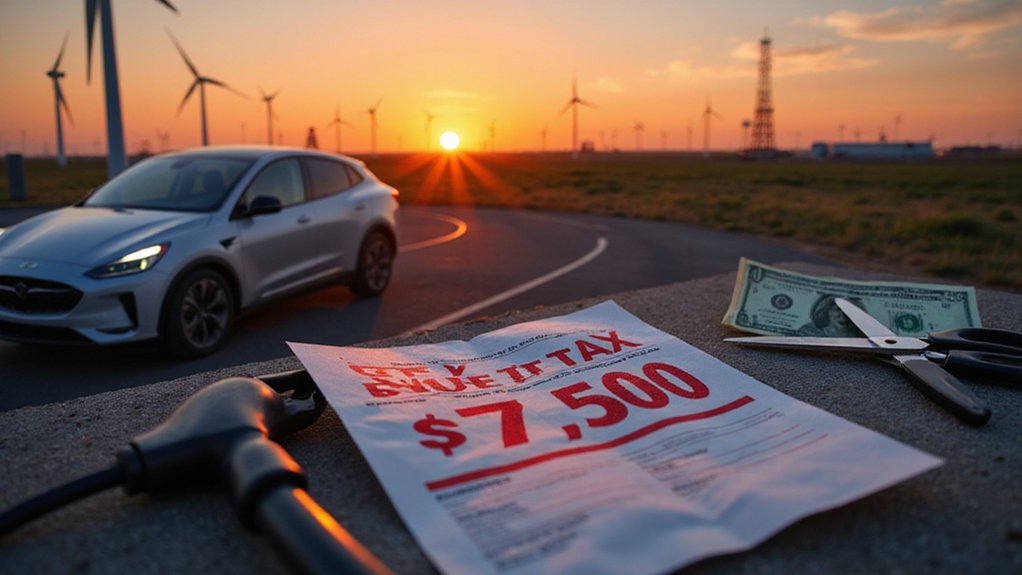
The upfront costs aren’t as scary as they seem. The Inflation Reduction Act offers a $7,500 incentive per eligible EV purchased by municipalities. Additional grants and rebates make the switch even more affordable. South Pasadena has become a pioneer as the first law enforcement agency to completely replace its fleet with electric vehicles. These incentives stack up, accelerating the break-even point.
Tesla patrol vehicles are even holding their value. Some sold for $21,000 after 100,000 miles of service. Tesla police cars require quick repair turnaround time of just three days compared to gas vehicles that often take a week to fix. The initially higher purchase price? Recouped within the first year or two through operational savings.
EVs are three times more energy-efficient than traditional patrol cars, converting around 77% of energy versus a measly 12-30% for gas vehicles. Like geothermal energy with its 300-500% efficiency, EVs demonstrate how modern technology can drastically outperform traditional energy systems. That’s efficiency taxpayers can appreciate.
The bottom line? Electric squad cars are keeping cops on the road while keeping money in municipal coffers. Gas cruisers are just burning cash—and a whole lot of it.