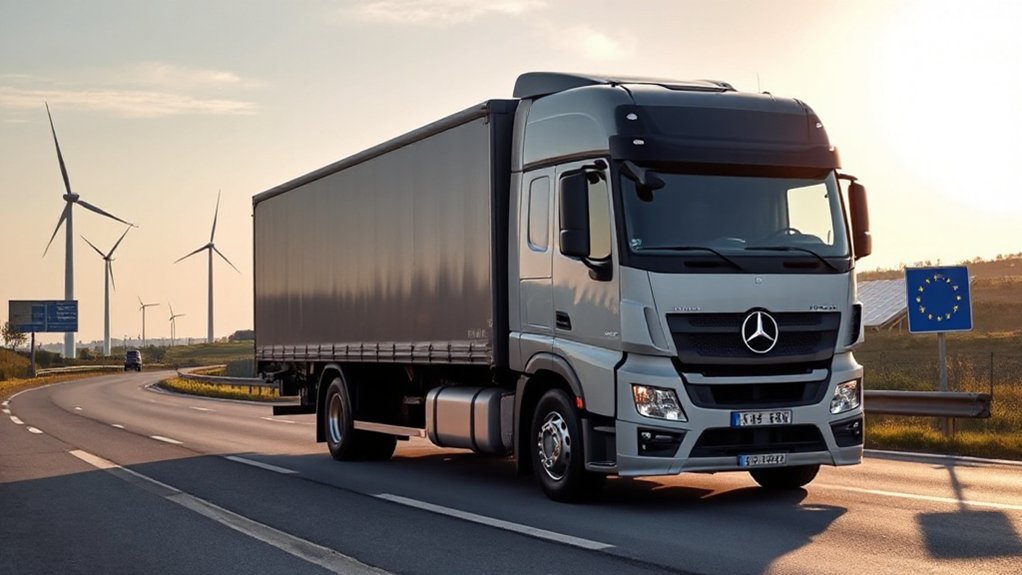

After months of tense negotiations, the European Union has finally reached a breakthrough agreement on zero-emission trucks. The deal allows a 4-tonne weight increase for heavy-duty vehicles that produce zero emissions. About time, right? This change is part of the revised EU Weights and Dimensions Directive, tackling one of the biggest headaches for operators considering the switch to greener options.
Let’s face it—batteries and hydrogen tanks are heavy. Really heavy. Until now, truck operators faced an impossible choice: go green and carry less cargo, or stick with diesel and keep profits flowing. The math simply didn’t work for many businesses. With this weight boost, electric and hydrogen trucks can now haul nearly the same payload as their diesel counterparts.
The agreement applies to all zero-emission trucks and buses, regardless of their category. Rigid trucks, articulated lorries—doesn’t matter. As long as it’s battery-electric or hydrogen fuel-cell powered, it gets the extra 4 tonnes. This aligns with the EU’s ambitious goal of making all urban buses zero-emission vehicles by 2035. The EU clearly wanted to avoid picking winners in the technology race. This initiative mirrors the US transition where renewable energy has already surpassed coal in electricity generation.
Member states must now implement this into national law. Consistency across borders is essential. Nobody wants to deal with a regulatory patchwork when driving across Europe. Been there, done that.
This weight allowance isn’t just a technical footnote. It’s a big deal for the EU’s climate goals—45% CO₂ reduction by 2030 and a whopping 90% by 2040. Without addressing the payload problem, those targets were pipe dreams. The latest data shows that zero-emission HDV market share rose from just 0.1% in 2021 to 1.7% in 2024, indicating promising but still limited adoption.
Industry groups are breathing a collective sigh of relief. They’ve lobbied for this change for years. The solution balances innovation needs against infrastructure limitations. Smart compromise.
For fleet operators, the economics suddenly look a lot better. Higher payload means more revenue per trip. Combined with toll exemptions until 2031, zero-emission trucks are becoming a viable business decision, not just an environmental statement. Money talks, emissions walk.
References
- https://alternative-fuels-observatory.ec.europa.eu/general-information/news/eu-backs-extended-toll-exemption-zero-emission-trucks
- https://globaldrivetozero.org/2024/05/13/european-council-signs-off-on-hdv-co2-emissions-standards/
- https://dieselnet.com/news/2025/09icct.php
- https://theicct.org/pr-eu-truck-manufacturers-on-track-to-meet-first-ever-co2-emissions-targets/
- https://climate.ec.europa.eu/eu-action/transport-decarbonisation/road-transport/lorries-buses-and-coaches_en
- https://www.iru.org/news-resources/newsroom/european-organisations-warn-against-disruptive-zero-emission-truck-mandates
- https://www.transportenvironment.org/articles/truckmakers-lobby-european-commission-to-weaken-their-emissions-targets-and-cut-zero-emission-truck-sales
- https://climate.ec.europa.eu/eu-action/transport-decarbonisation/road-transport/cars-and-vans_en
- https://www.acea.auto/press-release/council-approach-on-weights-and-dimensions-adoption-leaves-key-gaps-for-zero-emission-heavy-duty-vehicles/