
Proposed EU regulations threaten Ethiopia’s ancient coffee heritage, potentially crushing smallholder farmers with impossible compliance costs. Ethiopia, coffee’s birthplace with 5,000 wild varieties, faces bureaucratic hurdles that echo colonial appropriation. Daily ceremonies binding communities for centuries could vanish. Fifth-largest global producer, millions of rural families depend on these beans. European lawmakers apparently know better than farmers tending these plants for a millennium. The story behind your morning cup runs deeper than you’d imagine.
Heritage stands vulnerable at the crossroads of global politics and ancient tradition. Ethiopia’s coffee story—arguably the most significant in the world—faces a modern threat that could upend millennia of cultural practice. European regulatory proposals loom large over the country’s primary export, threatening to crush smallholder farmers who can’t afford compliance costs. Talk about terrible timing.
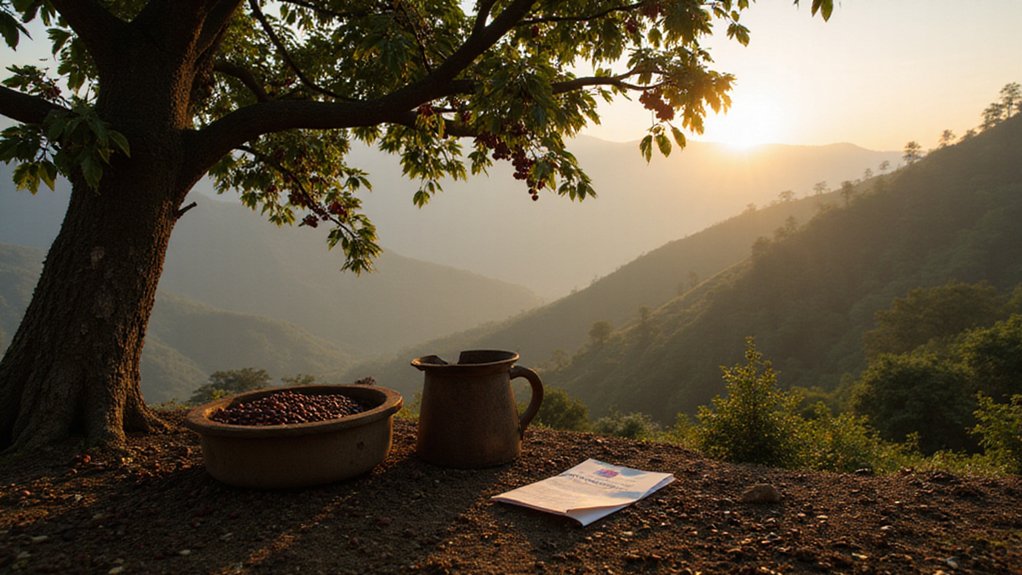
Coffee isn’t just some crop in Ethiopia. It’s literally their birthright. The only place where coffee grows wild, this is where Kaldi’s goats famously got all hyped up on berries back in the 9th century. The Oromo people figured out how to cultivate it first, though they weren’t drinking lattes—they ate it as a paste. Practical folks.
For Ethiopians, coffee transcends mere beverage status. Three times daily, communities gather for elaborate ceremonies where beans are roasted, ground, and brewed right before guests. It’s social media, Ethiopian style. No smartphones required.
Ethiopia ranks fifth in global coffee production, with the industry supporting millions of rural households. But here’s the kicker—they actually drink tons of what they grow. Balance matters, apparently.
What makes Ethiopian coffee special is its mind-boggling diversity. Thousands of varieties exist thanks to unique microclimates and traditional farming methods. The Kafa Biosphere Reserve alone contains close to 5,000 wild varieties of coffee. Many grow in forests, supporting biodiversity that commercial plantations can’t match. Lose these forests, lose the genetic future of coffee worldwide. No pressure.
Colonial powers already did a number on Ethiopia’s coffee communities once, appropriating indigenous practices and forcing farmers to trade beans for peanuts—figuratively speaking. Now European regulations threaten to repeat history, just with fancier paperwork.
If these bans go through, smallholders will struggle against impossible compliance costs. Traditional methods—the very ones that created coffee’s extraordinary diversity—could vanish. The ceremonies, cultural connections, and livelihoods built over centuries hang in the balance. All for some regulations that might miss the forest for the trees. Literally.
Three main regions—Sidamo, Yirgacheffe, and Harrar—contribute their distinct flavor profiles to Ethiopia’s rich coffee landscape.
References
- https://courier.unesco.org/en/articles/ethiopia-home-coffee
- https://www.caffeluxxe.com/blogs/news/story-of-ethiopian-coffee
- https://creaturecoffee.co/blogs/creature-feature-a-specialty-coffee-blog/the-fascinating-history-and-culture-of-ethiopian-coffee
- https://perfectdailygrind.com/2015/06/the-history-legend-of-ethiopian-coffee-the-story-behind-misty-valley/
- https://www.texascoffeetraders.com/history-of-ethiopia