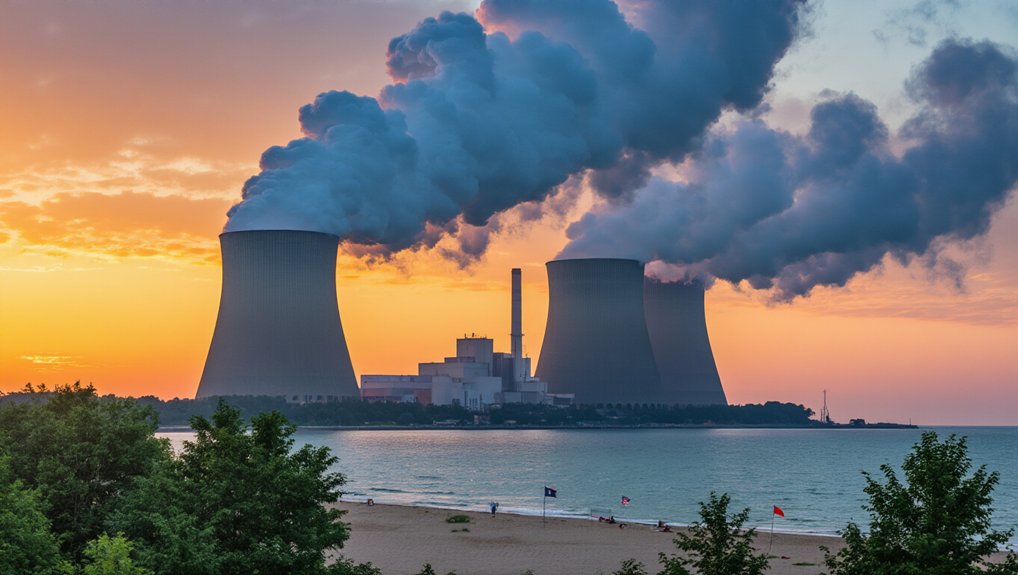
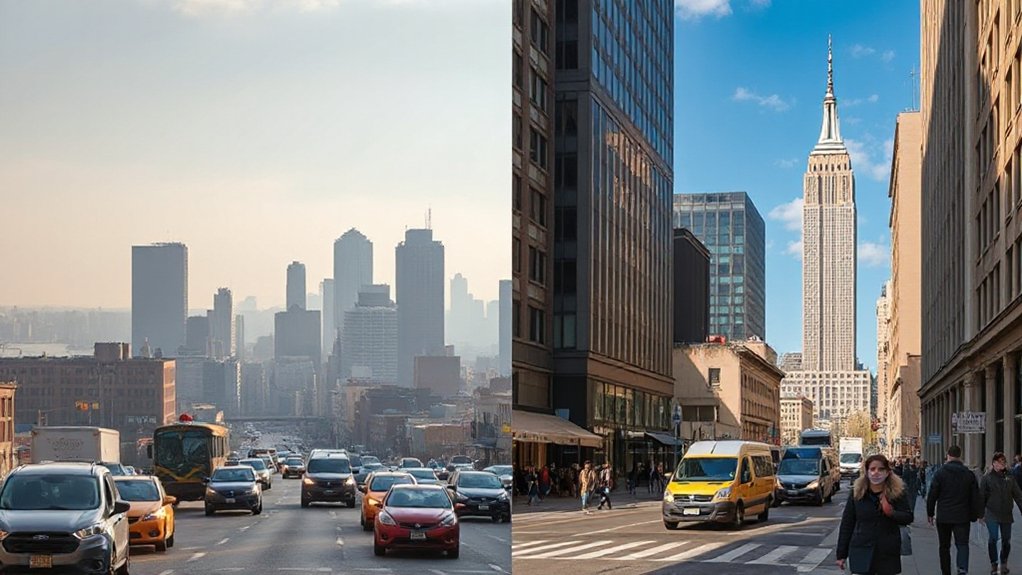
Many port cities across Europe are breathing dirtier air than their neighbors. When wind blows from a port toward a nearby city, nitrogen dioxide levels can double. Fine particle pollution jumps by 74%. These aren’t small differences. They’re signs that shipping traffic is leaving a heavy mark on the air millions of people breathe every day.
International shipping is a major source of the problem. Across Europe, it contributes an average of 18% to NO2 levels. In some seaports, that number is far higher. At Rotterdam’s port entrance, international shipping accounts for 60% of NO2. In Piraeus, Greece, it’s responsible for 34%. Even in Antwerp’s city center, about 24% of NO2 comes from international ships. These figures show that pollution doesn’t stay at the docks. It drifts into neighborhoods, schools, and homes.
Shipping pollution doesn’t stay at the docks — it drifts into the neighborhoods, schools, and homes of millions.
The numbers for particulate matter are also concerning. Thirteen out of 22 European ports already exceed the new PM2.5 limit of 10 micrograms per cubic meter. Nine ports break PM10 limits too. In Piraeus, PM2.5 levels run up to 42% higher in port areas compared to surrounding regions. Shipping contributes between 2.5% and 5% to these fine particles across Europe, but the local impact near ports is much greater.
Some cities stand out for especially poor air quality. Algeciras, Spain, has NO2 levels four times higher than its surroundings. Piraeus and Naples both exceed the 2030 NO2 limit of 20 micrograms per cubic meter. Marseille sits just below it at 19.6. Barcelona was the most polluted European city by sulfur oxides from cruise ships in 2022. Maritime transport now represents 39% of all transport NOx emissions in the EU-27, underscoring the outsized role shipping plays in degrading air quality.
There’s been some progress. NO2 in port areas dropped 45% between 2005 and 2023. Antwerp saw reductions between 29% and 58%.
But there’s a catch. Actual NOx emissions from maritime transport rose 10% between 2015 and 2023. Ships are polluting more, even as overall air quality has slowly improved from other changes. Experts warn that air pollution’s growing toll is reflected in the 8.1 million deaths it causes globally each year, making the continued rise in maritime emissions a serious public health concern.
Monitoring remains a weak spot. Only five of 23 major ports have air quality stations measuring NO2 and PM10 inside the port itself. Without better data, it’s hard to fully understand what port communities are inhaling. The variability in data collection methods across different ports further undermines efforts to build comprehensive pollution profiles and track long-term trends.
References
- https://www.eionet.europa.eu/etcs/etc-he/products/etc-he-report-2024-12-air-quality-around-ports
- https://www.concawe.eu/wp-content/uploads/The-impact-of-shipping-emissions-on-urban-air-quality-in-Europe-a-port-city-analysis.pdf
- https://www.eea.europa.eu/en/analysis/publications/air-quality-around-airports-and-ports
- https://ui.adsabs.harvard.edu/abs/2024AtmEX..2300278T/abstract
- https://www.statista.com/statistics/1048239/cruise-ship-polluted-ports-europe/
- https://lavialibera.it/en-schede-2432-citizen_science_monitoring_air_pollution_europe_port_areas
- https://eprints.soton.ac.uk/479452/1/atmosphere_14_01135.pdf