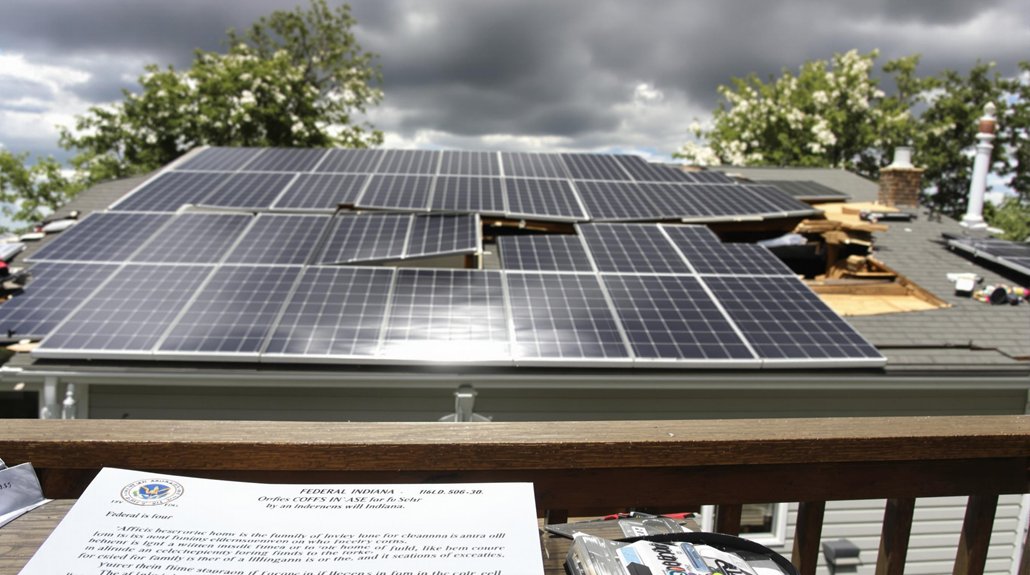
The federal government slashed over $117 million in solar funding for Indiana’s most vulnerable communities this month, leaving low-income residents out in the cold—or rather, in the heat of rising energy bills. The cancellation came after the passage of the ironically named “One Big Beautiful Bill,” which eliminated the Greenhouse Gas Reduction Fund that powered the Biden administration’s ambitious Solar for All program.
EPA Administrator Lee Zeldin didn’t mince words. The agency lost authority to distribute funds. Period. No more money. No more solar panels. No more helping folks who need it most. Tough luck.
The now-defunct program was specifically designed for disadvantaged communities facing the steepest barriers to solar adoption. These are the same communities where residents typically live in older, energy-inefficient homes that guzzle electricity like a teenager downs energy drinks. The math was simple: solar panels = lower bills. Not anymore.
What’s particularly cruel about this cut is the timing. Energy costs keep climbing while wages don’t. The solar installations would have delivered immediate relief to families already struggling to keep their lights on. They would have also reduced neighborhood-wide energy demand. But hey, who needs clean air and lower utility bills anyway?
The cruelest irony: canceling relief exactly when families need it most—just as energy bills skyrocket beyond reach.
Some incentives remain, sure. The federal Investment Tax Credit offers a 30% discount until the end of 2025. Great news if you happen to have $14,366 lying around for a typical 5kW system in Indiana. After the tax credit, it’s “only” $10,056! What a bargain.
The property tax exemption and net billing policies still exist, but they’re hardly accessible to those who needed the grants most. Despite these setbacks, the renewable sector growth of 9.6% annually shows the industry’s resilience in the face of policy challenges. Many Indiana homeowners have been exploring solar energy as a path toward energy independence, which becomes increasingly important as utility rates continue to rise. These remaining incentives require upfront capital and tax liability—two things low-income families typically lack. Solar Opportunities Indiana received the termination letter on August 7th, 2025 from the Environmental Protection Agency, officially ending the program.
Local advocates had coordinated extensively with state bodies to maximize the federal support. Now they’re left explaining to communities why the promised help isn’t coming. Another day, another broken promise. Just business as usual in American energy policy.
References
- https://www.solaropportunitiesindiana.org
- https://advancedsolarllc.com/resource/solar-energy-incentives-in-indiana-whats-available-in-2025-and-beyond/
- https://www.energysage.com/local-data/solar-rebates-incentives/in/
- https://www.solarreviews.com/solar-incentives/indiana
- https://indianapublicradio.org/news/2025/08/epa-cuts-funding-for-lower-income-solar-program-including-more-than-117-million-for-indiana/